

May 30, 2026
In March 2026, more than 30,000 tourists gathered at Angkor Wat for a single equinox sunrise (Khmer Times). On a normal peak-season morning, 3,000 to 5,000 people crowd the northern reflecting pool for the same photograph. Most of them are standing in the wrong place.
I grew up at Angkor Wat. As a child, I watched the temple reveal itself at dawn from the outer approach, before the moat, long before any tourist arrived. The silhouette sharpens. The towers catch gold. The full detail emerges slowly, like a photograph developing. That gradual reveal is the real show, and you don’t need to fight a crowd to see it.
This guide shares exactly when to arrive, where to stand, and five spots most visitors never consider. If you’re planning your trip, start with our complete Angkor Wat guide for the full picture.
KEY TAKEAWAYS
- Best spot: Stay outside the main temple, before the moat. Watch the full silhouette-to-gold reveal.
- Arrival time: 30-45 minutes before sunrise. Gates open at 5:00 AM year-round.
- Sunrise range: 5:30 AM (June) to 6:20 AM (January). Sunset: 5:35 PM to 6:20 PM.
- Ticket tip: Buy your pass online at Angkor Enterprise. Secure platform, soft copy on your phone, no risk of losing the pass.
- After sunrise: Explore the bas-reliefs and upper level, then return to your hotel for breakfast and a fresh shower before restarting.
GATES OPEN
5:00 AM
Year-round, every day
SUNRISE RANGE
5:30-6:20
June earliest, January latest
1-DAY PASS
$37
3-day $62 / 7-day $72
UNDER 12
Free
With passport at the gate
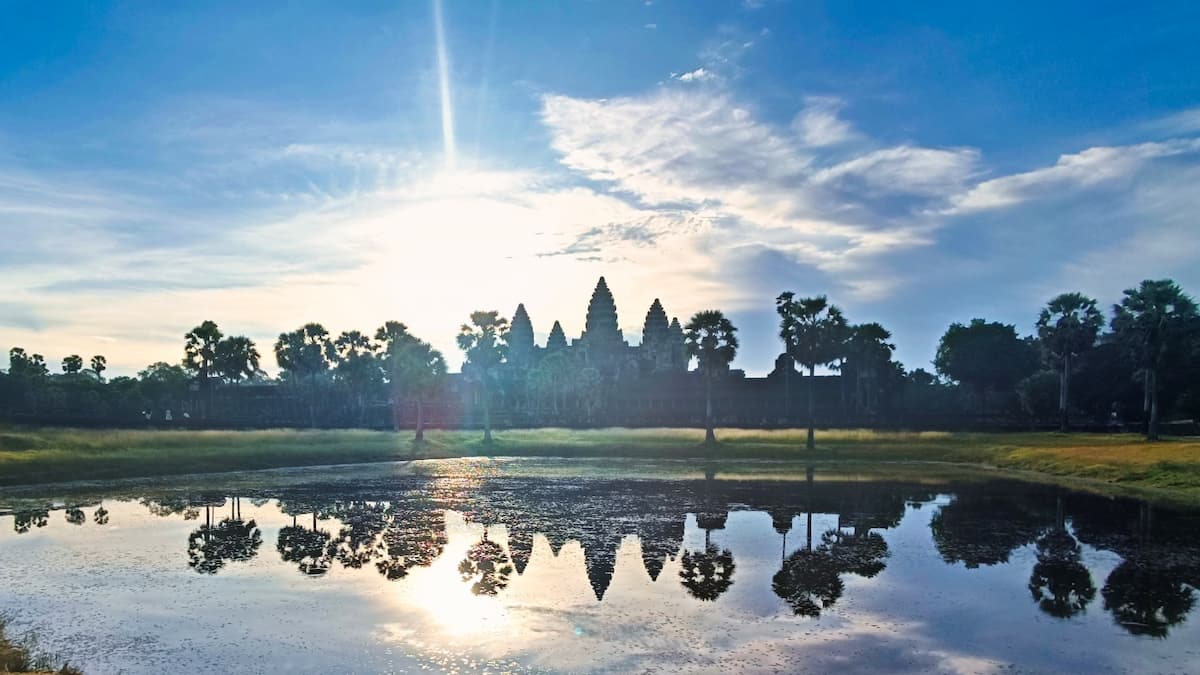
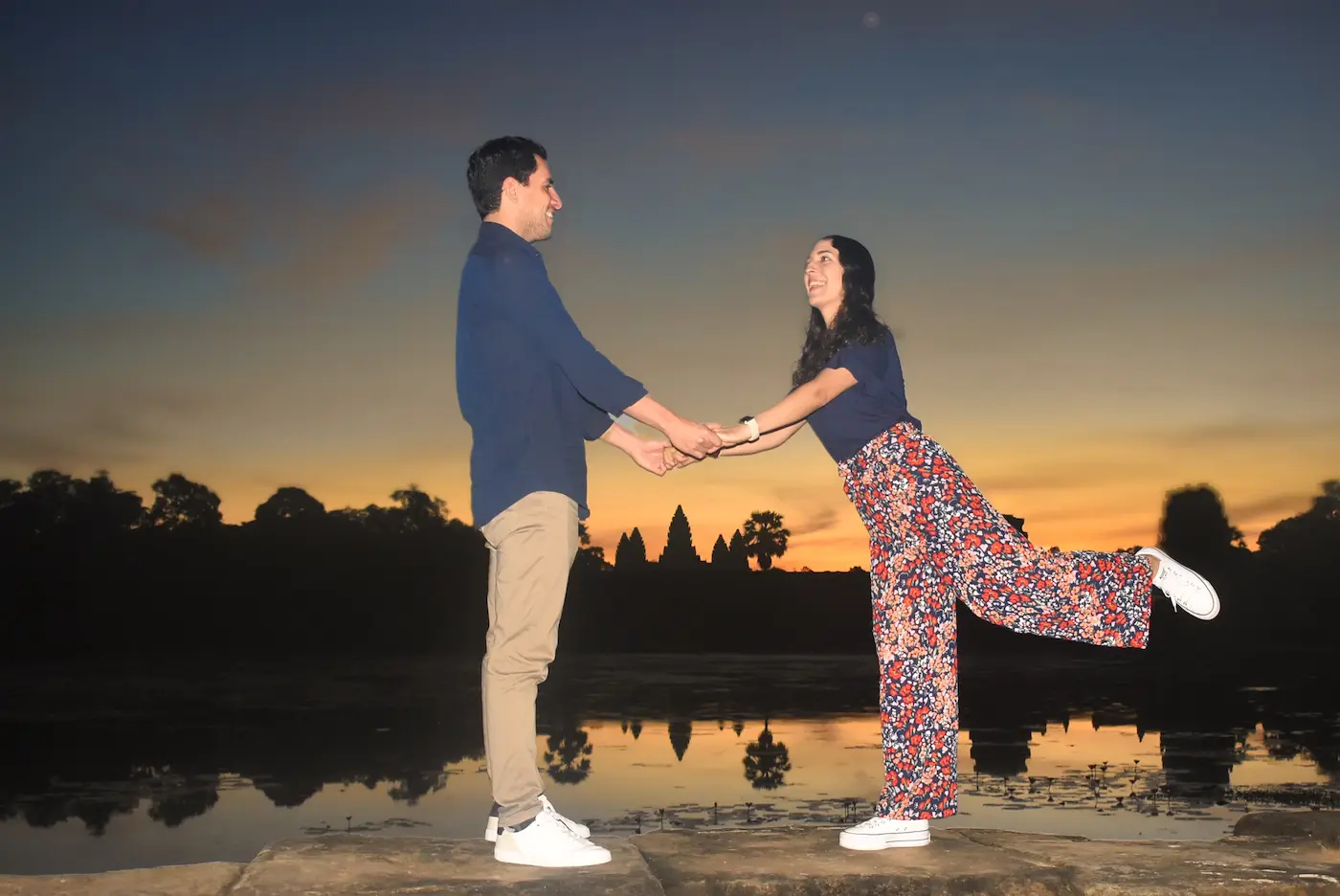
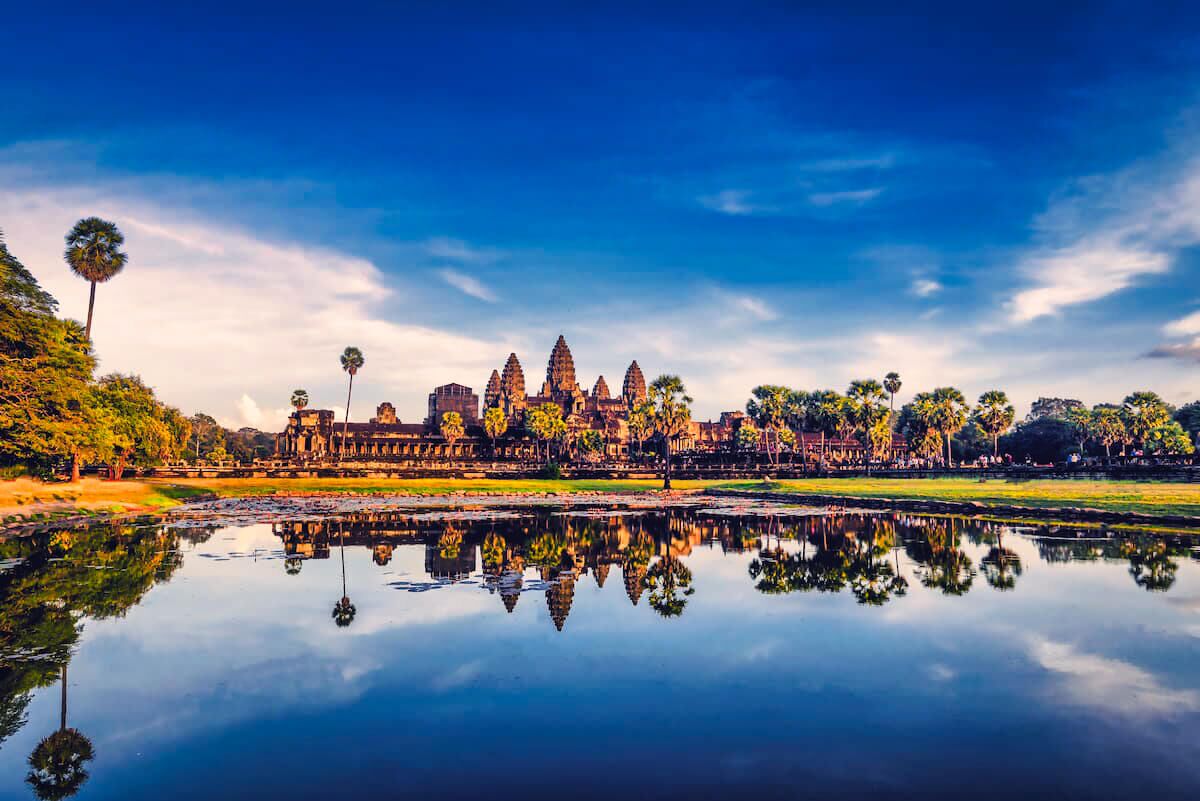
The classic reflection at dawn.
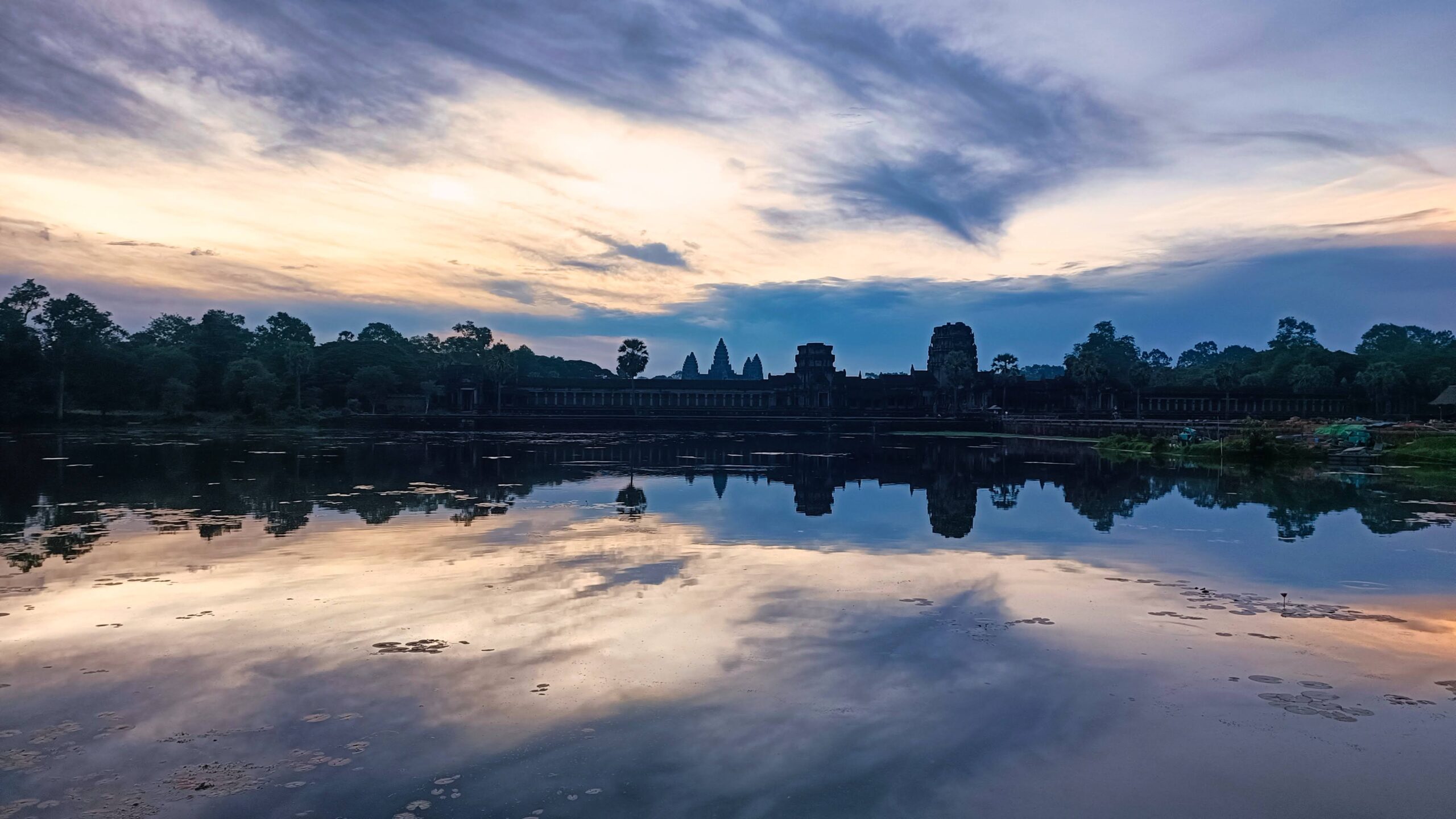
Five towers reflected in the moat at first light.
What Time Is Sunrise at Angkor Wat?
Sunrise at Angkor Wat ranges from 5:30 AM in June to 6:20 AM in January (TimeAndDate). The temple gates open at 5:00 AM year-round. Sunset varies even more than most visitors expect, from 5:35 PM in November to 6:20 PM in June, a 45-minute swing that changes how you plan your entire day.
The table below shows sunrise and sunset times, recommended arrival times, and crowd levels for every month. Use this to plan both your morning and your afternoon.
| Month | Sunrise | Arrive By | Sunset | Season | Crowds |
|---|---|---|---|---|---|
| January | 6:20 AM | 5:15 AM | 5:45 PM | Dry / Peak | Very High |
| February | 6:10 AM | 5:10 AM | 6:00 PM | Dry / Peak | Very High |
| March | 5:55 AM | 5:00 AM | 6:05 PM | Equinox | Extreme* |
| April | 5:40 AM | 4:50 AM | 6:10 PM | Hot | Moderate |
| May | 5:30 AM | 4:45 AM | 6:15 PM | Wet / Low | Low |
| June | 5:30 AM | 4:45 AM | 6:20 PM | Wet / Low | Low |
| July | 5:35 AM | 4:50 AM | 6:20 PM | Wet / Low | Low |
| August | 5:40 AM | 4:50 AM | 6:10 PM | Wet / Low | Low |
| September | 5:50 AM | 5:00 AM | 5:55 PM | Equinox | Extreme* |
| October | 5:55 AM | 5:05 AM | 5:40 PM | Shoulder | Moderate |
| November | 6:05 AM | 5:10 AM | 5:35 PM | Dry / Shoulder | High |
| December | 6:15 AM | 5:15 AM | 5:40 PM | Dry / Peak | Very High |
Sources: TimeAndDate, siemreap.net
*Extreme crowds only around the equinox dates (1 day before to 1 day after). The rest of March and September are moderate.
Buy your Angkor pass online before your visit at Angkor Enterprise. It’s a secure platform with a new queuing system. You receive a soft copy directly on your phone, so there’s no risk of losing the pass and no wasting pre-dawn time in the ticket queue. A one-day pass costs $37, a three-day pass is $62 ($21 per day), and a seven-day pass is $72. Children under 12 enter free with a passport.
If you’re planning a full day of temples, note the sunset column. A 30-minute rest at your hotel before golden hour recharges you for the best light of the day. The difference between a 5:35 PM sunset in November and a 6:20 PM sunset in June is significant for planning your afternoon.
Where Should You Stand? 5 Sunrise Spots Ranked
Skip the crowded northern reflecting pool. During peak season, 3,000 to 5,000 visitors per day pack that spot before dawn (GoCambo). The best sunrise experience is outside the main temple, before the moat, where you watch Angkor Wat slowly reveal itself as the sky shifts from black to purple to gold. That gradual reveal is what sunrise here is really about.
| Spot | Location | Crowds | View | Best For |
|---|---|---|---|---|
| West approach, before the moat | Angkor Wat | Low-moderate | Full temple reveal, silhouette to gold | The complete experience |
| South reflecting pool | Angkor Wat | Low | Classic reflection, fewer people | Photography without elbows |
| Northeast corner (outside) | Angkor Wat | Low | Side-lit temple, unique angle | Different perspective |
| Srah Srang | Separate temple (3 km east) | Very low | Water reflection, peaceful | Day-one alternative |
| Pre Rup | Separate temple (5 km east) | Very low | 360-degree views, dramatic stone | Solitude seekers |
Source: siemreap.net
The northern reflecting pool gives you the classic postcard shot, but the experience is miserable during peak season. Elbows, selfie sticks, and tour groups shouting over each other. The south pool offers the same reflection with a fraction of the crowd. But my recommendation is different entirely.
MY PICK
Don’t rush to the reflecting pool with everyone else. Stay outside the main temple, before the moat. Watch Angkor Wat reveal itself. First a dark silhouette against deep purple. Then the towers catch gold. Then the full detail emerges, stone by stone, carving by carving. That slow reveal is what sunrise here is really about. No photograph captures it. You have to be there, standing still, watching it happen.
Srah Srang and Pre Rup are both open before dawn and make excellent alternatives. More on those in the section below.
What Is the Equinox Sunrise at Angkor Wat?
Twice a year, on March 21-23 and September 21-23, the sun rises directly over Angkor Wat’s central lotus tower. This is not an accident. King Suryavarman II, whose name literally means “Sun King,” built the temple between 1113 and 1150 CE with precise astronomical alignment (UNESCO). NASA lists Angkor Wat as an ancient observatory, recognizing its alignment to the equinoxes, solstices, and lunar standstills.
I’ve watched the equinox sunrise dozens of times. The light hits the central tower first, then spills down the western causeway like liquid gold. As a child, before any tourists arrived, this was just what dawn looked like from home. Now more than 30,000 people gather to witness it (Khmer Times).
If your visit falls near the equinox dates, arrive by 4:30 AM. Expect extreme crowds but a once-in-a-lifetime moment. The alignment is slightly off-center by 2-3 degrees (siemreap.net), so the most precise alignment happens one to two days before or after the official equinox date, depending on the year. Those adjacent days are significantly less crowded.
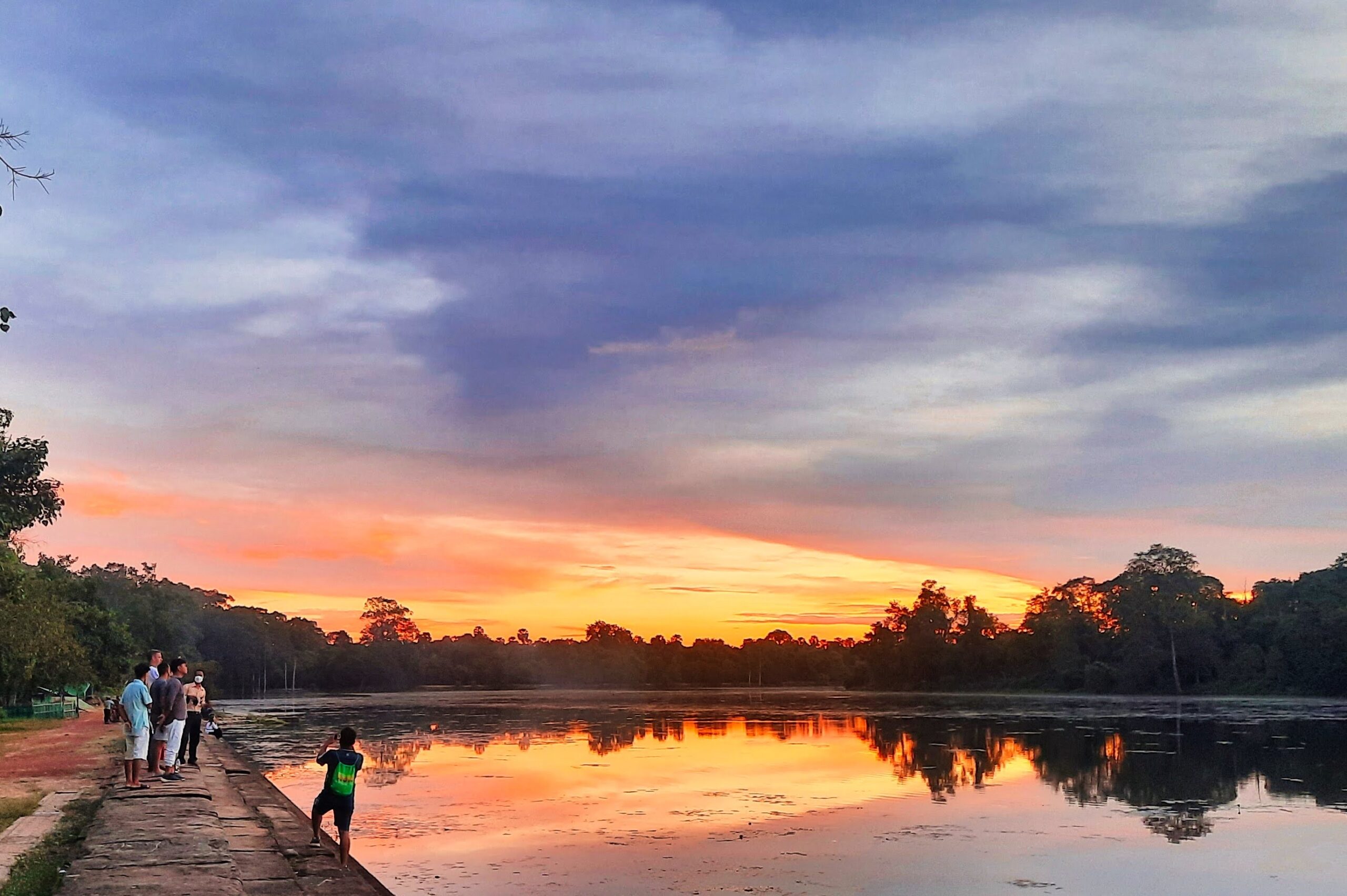
The moat turns gold on the best mornings.
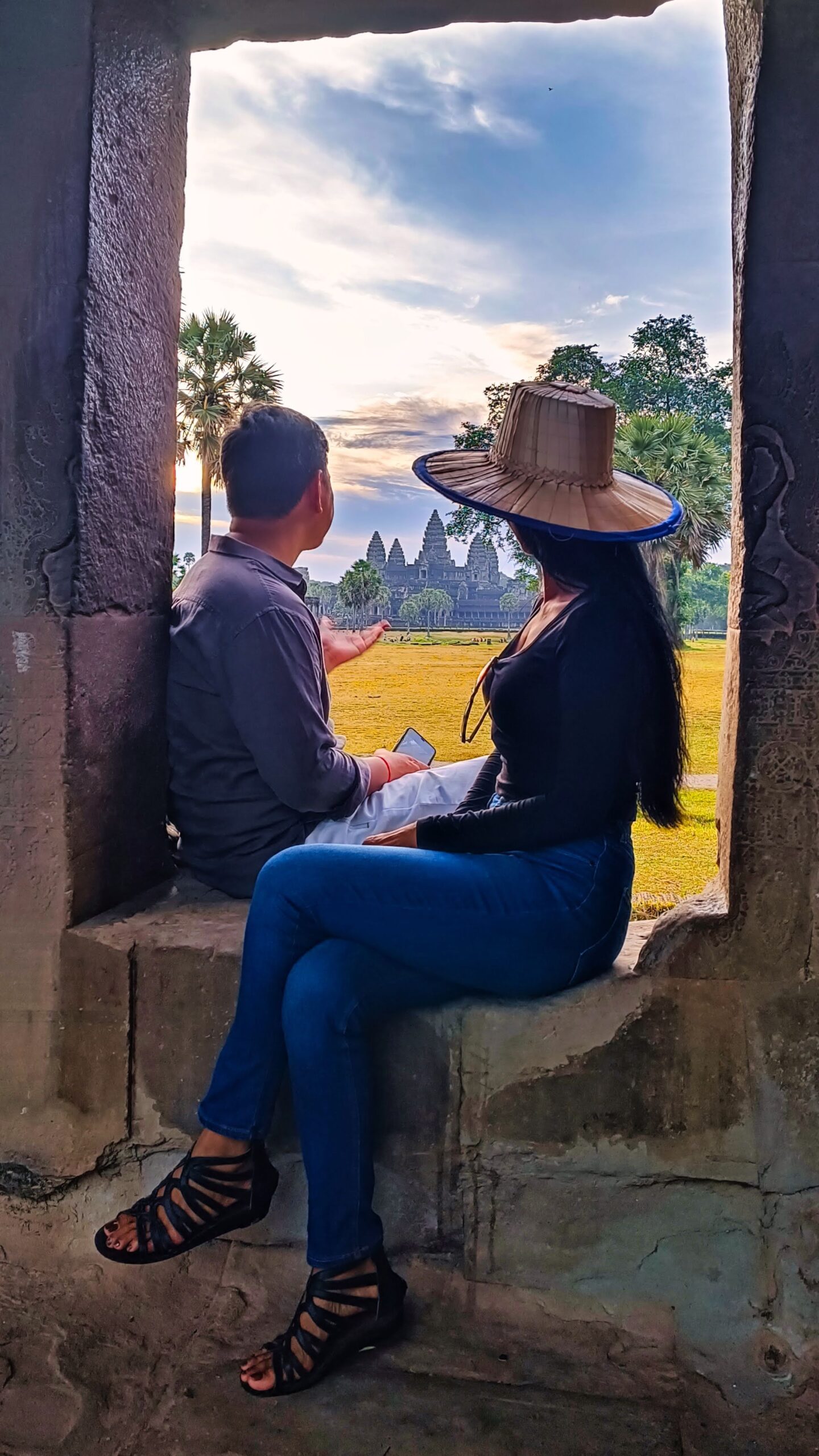
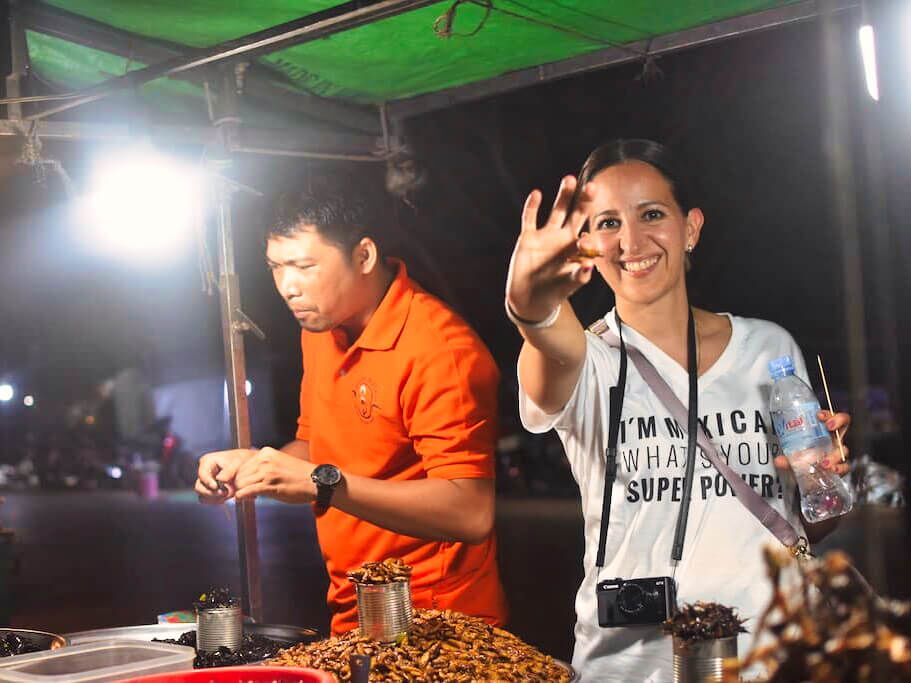
The best seats are the ones nobody fights for.
Should You Skip Angkor Wat Sunrise Entirely?
No. But consider doing it on your second or third day, not your first. Pre Rup sunrise tours jumped 28.9% in Q1 2025 (Journey Cambodia), and there’s a reason. Savvy travelers are discovering that seeing sunrise at a quieter temple first, then visiting Angkor Wat later in the morning, creates a better overall experience.
Pre Rup receives 70% fewer visitors than Angkor Wat at sunrise. It’s a 10th-century temple-mountain with 360-degree views, open before dawn. After watching the sun rise over the treetops, head straight to Banteay Kdei or Ta Prohm next door. You’ll have them nearly empty.
Srah Srang is a royal bathing pool with peaceful water reflections at dawn. Almost nobody goes there for sunrise. The water is still, the light is soft, and Ta Prohm sits right behind it. Walk over after sunrise for a crowd-free visit before the tour buses arrive at 8:30 AM.
Both alternatives let you see a temple at sunrise AND get a head start on the small circuit before the crowds arrive. For more on temple itineraries, see our complete Angkor Wat guide.
MY PICK
If you have a 3-day pass, see sunrise at Srah Srang on day one. The water is still, the light is soft, and Ta Prohm is right behind you for a crowd-free visit. Save Angkor Wat sunrise for day two or three, when you know the layout and can go straight to the quiet spots. This is how we plan our 2-day sunrise and grand circuit tours.
What Should You Bring to Angkor Wat Sunrise?
Your temple pass is the most important item. Buy it online at Angkor Enterprise before your visit. It’s a secure platform, you receive a soft copy directly on your phone, and there’s no risk of losing a paper ticket. Beyond the pass, pack light. You’ll be on your feet for hours.
- Temple pass (buy online at Angkor Enterprise, soft copy on your phone)
- Water bottle (no vendors are open before sunrise)
- Headlamp or phone torch (the paths are completely dark pre-dawn)
- Light long-sleeve layer (mornings are 22-24 degrees C in dry season)
- Camera (smartphone works fine for most people; if bringing a proper camera, a wide-angle lens and tripod are ideal for reflections)
- Clothing that covers shoulders and knees (the dress code is enforced at the upper level)
- Mosquito repellent (pre-dawn insects are active near the moat)
Leave behind: Flash photography is disrespectful and ruins others’ shots. Drones are banned in the park. A heavy backpack becomes a burden by 9:00 AM. Travel light, explore longer.
IMPORTANT: DRESS CODE ENFORCED
Guards at the upper level of Angkor Wat (the Bakan) check every visitor. Shoulders and knees must be covered. Many sunrise visitors arrive in shorts and tank tops, then get turned away at the stairs. Pack lightweight trousers and a light long-sleeve layer in your day pack so you can change before climbing.
How Do You Get to Angkor Wat for Sunrise?
Leave central Siem Reap by 4:30-4:45 AM. Angkor Wat is 6 kilometers north of the city, about 15-20 minutes by private tuk-tuk. The ride is cool, dark, and quiet. One of the last peaceful moments before a full day of temples.
Private tuk-tuk ($20-25 per day) is the most popular option. Your driver waits while you explore, and you can move between temples at your own pace all day. Arrange it through your hotel the night before.
Private car with air conditioning ($35-50 per day) is worth considering if you’re doing a full day. The ability to cool down between temples makes a real difference, especially from March through May when temperatures hit 35 degrees C or higher.
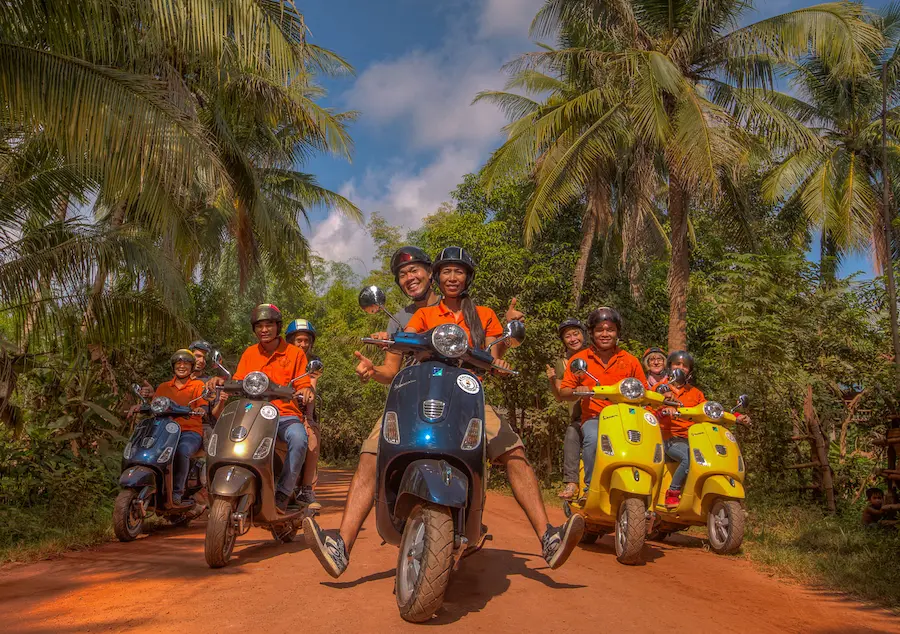
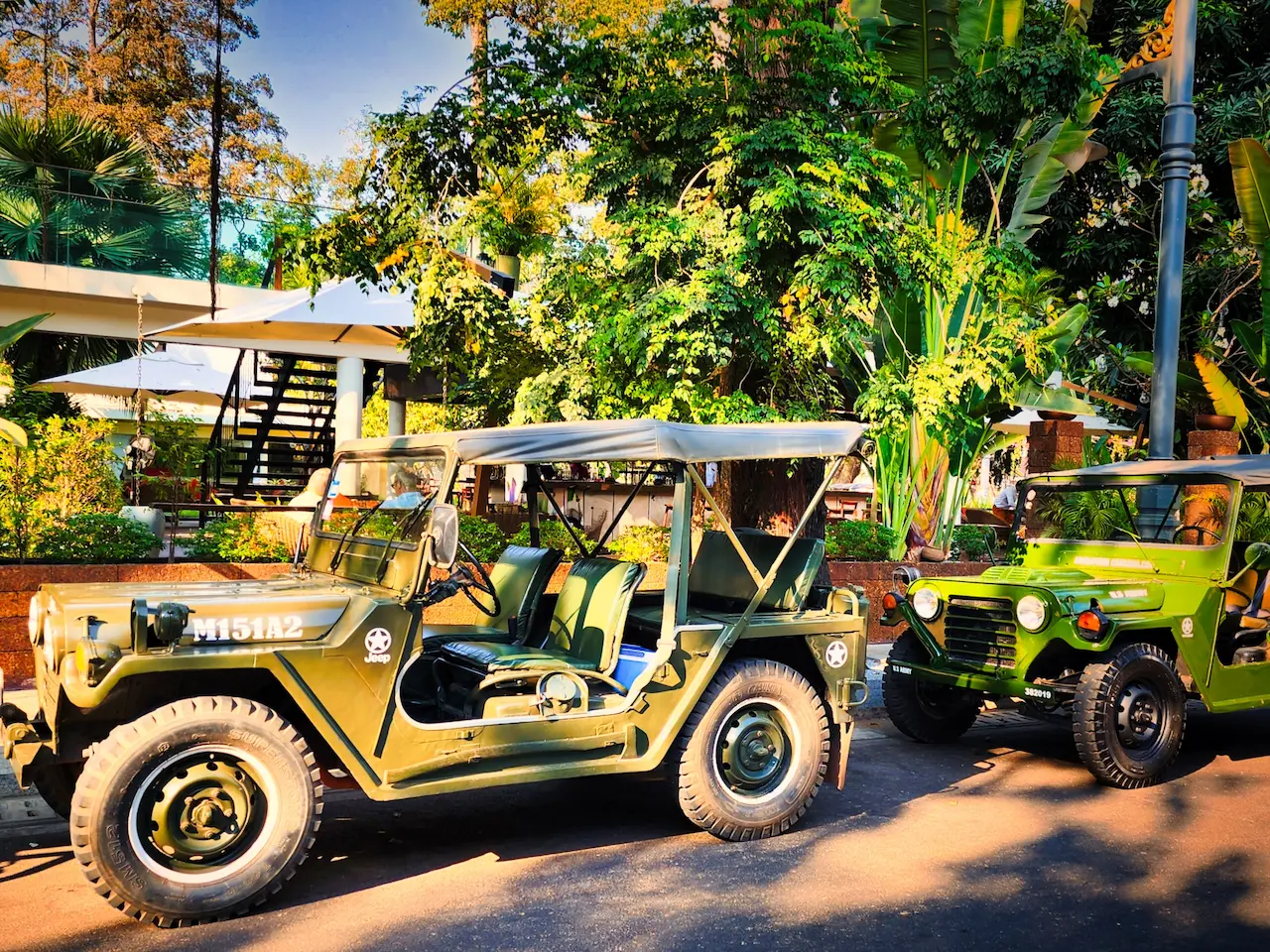
For something more memorable, we run e-mountain bike tours that include sunrise. We pick you up at your hotel, drive to Angkor Wat for the sunrise together, then explore the temple before a picnic-style breakfast inside the park. After that, you hop on the e-bikes and continue the tour through the temples. It’s one of the best ways to experience the full day. We also offer Vespa tours and private Angkor tours with experienced local guides.
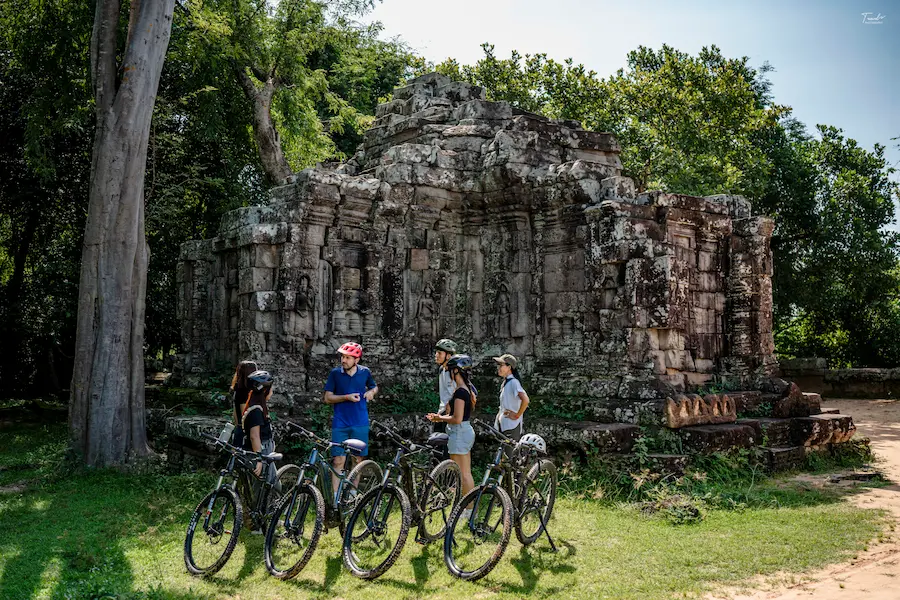
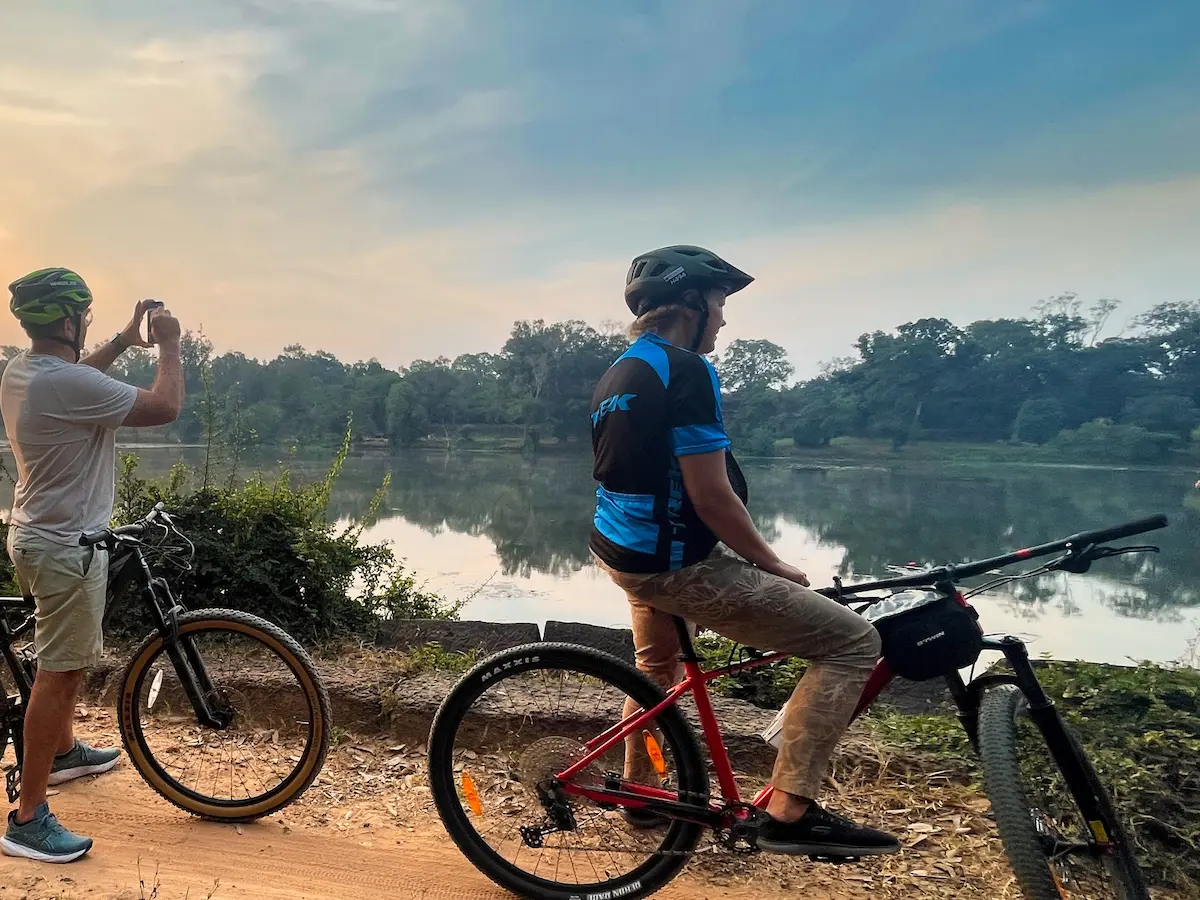
E-mountain biking along Angkor Thom’s ancient walls.
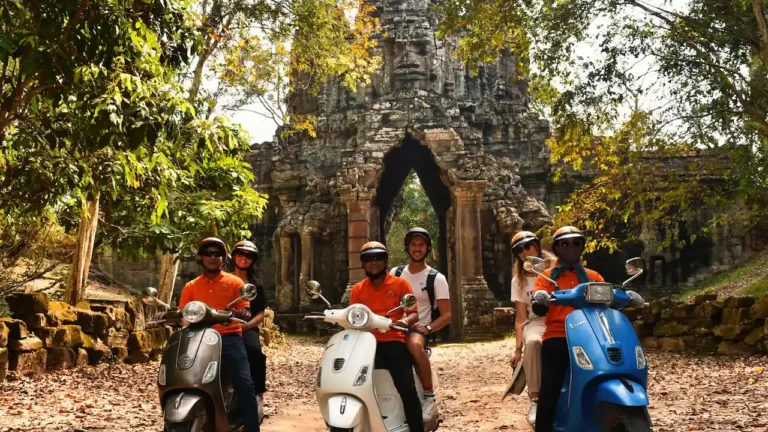
Our Vespa tours through the temple complex.
What Happens After Sunrise?
After sunrise, explore Angkor Wat while it’s still quiet. The bas-reliefs are best in early morning light, and the upper level (the Bakan) has almost no queue before 8:30 AM. Read our guide to what the bas-reliefs mean before you go. Understanding the stories carved into the walls changes the entire experience. Take your time with both the galleries and the upper level. This is the best window to see Angkor Wat properly, without the midday crowds.
Then do something most visitors don’t: go back to your hotel. The food options inside the park are limited. If your hotel is in central Siem Reap or nearby, you’re only 15-20 minutes away. Have a proper breakfast, take a fresh shower, recharge. You’ve been awake since 4:30 AM, and the day is just starting. When you tour with us, we have private transportation so this reset is built into the day. We either organize a picnic-style breakfast inside the park or drive you back to your hotel. The choice is yours. Our sunrise tours typically wrap up around noon, so you still have the full afternoon free.
Here’s the flow I recommend:
- 6:30-8:30 AM: Explore the bas-reliefs and upper level of Angkor Wat (near-empty, best morning light on the galleries)
- 8:30-9:30 AM: Return to your hotel. Breakfast, fresh shower, recharge. Siem Reap is only 15-20 minutes away.
- 9:30 AM onward: Head to Bayon then Ta Prohm refreshed, while the sunrise-only visitors have already moved on.
If you’re doing a full day of temples, plan a mid-afternoon break at your hotel as well. A 45-minute nap and cold water work wonders. Then return for golden hour. Sunset varies from 5:35 PM in November to 6:20 PM in June, so check the table above and plan accordingly. The role of water at Angkor is never more visible than during that last hour of light, when the moats and reservoirs turn gold.
MY PICK
The hour after sunrise is the real gift. While everyone else packs up their tripods and heads to breakfast, you have Angkor Wat’s bas-reliefs and upper level almost to yourself. The morning light through the galleries is extraordinary. Take your time exploring, then go back to your hotel. Shower. Eat well. The temples will still be there at 10:00 AM, and you’ll actually enjoy them.
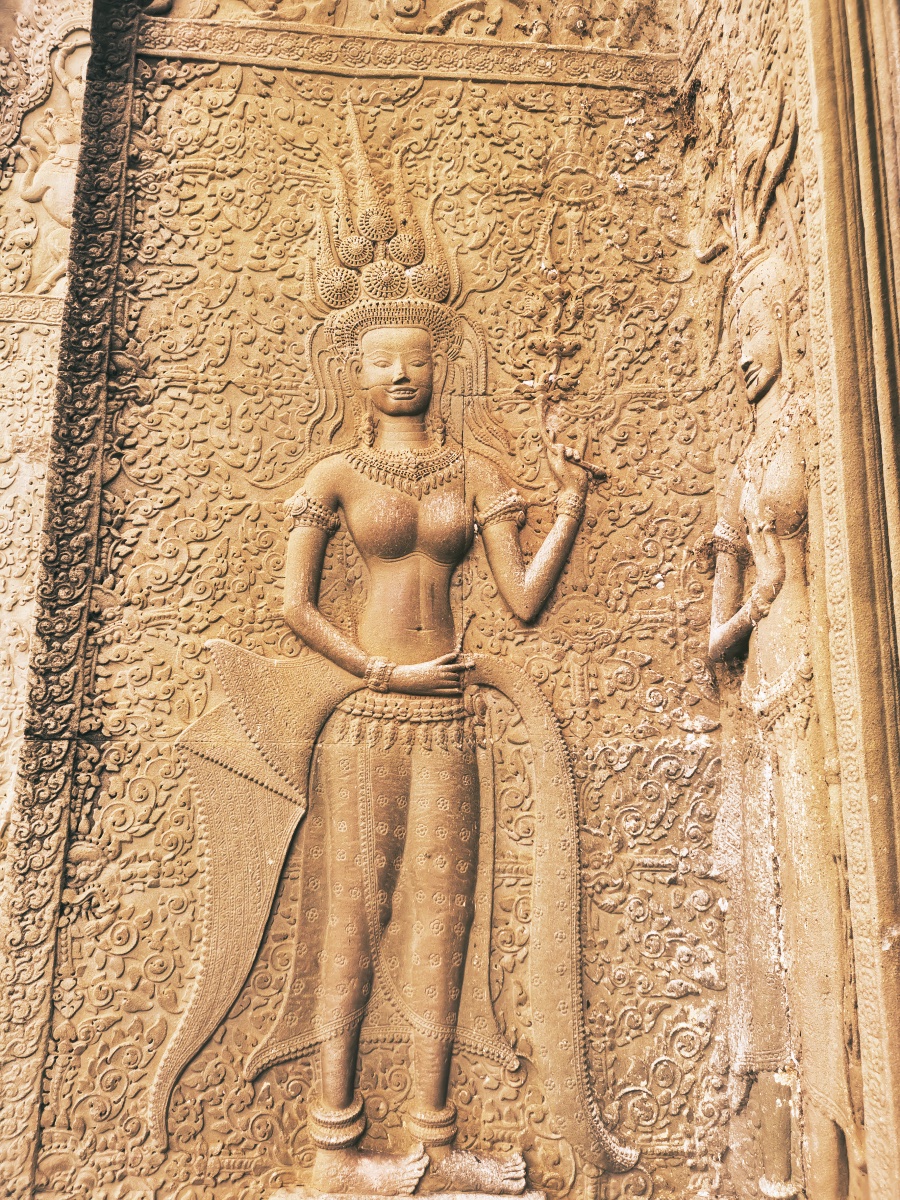
An apsara in the morning galleries, one of 1,800 unique carvings on these walls.
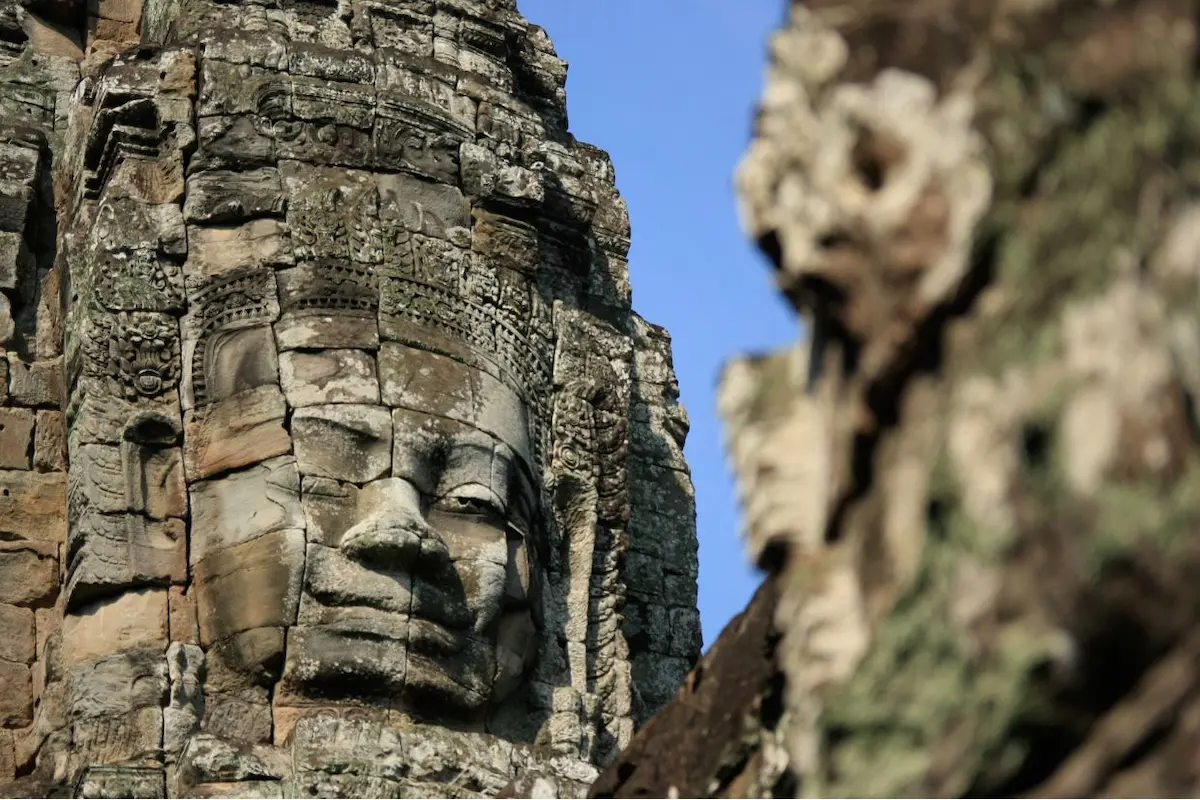
The stone faces of Bayon await after breakfast.
Frequently Asked Questions
Is Angkor Wat Sunrise Worth It?
Yes. Even with crowds at the reflecting pool, Angkor Wat at dawn is extraordinary. The key is positioning: stay before the moat and watch the full reveal instead of fighting for a pool spot. The experience of watching this 900-year-old temple emerge from darkness is something you’ll remember for the rest of your life.
Can You See Sunrise at Angkor Wat in Rainy Season?
Yes. Rain typically falls in the afternoon, lasting one to two hours. Mornings are usually clear. Dramatic cloud formations make rainy-season sunrises more photogenic than dry-season ones, and crowds are 50-70% smaller. May through October is genuinely underrated for sunrise.
Do You Need a Guide for Angkor Wat Sunrise?
Not required, but a knowledgeable guide knows where to position you for the best light and least crowds. They also provide context that transforms the experience from “watching a pretty sunrise” to understanding the astronomical alignment and cultural significance of what you’re seeing. Our guides at Adventures Cambodia have been running sunrise tours for over 10 years.
How Much Does an Angkor Wat Sunrise Tour Cost?
A private sunrise tour with a tuk-tuk costs $20-25 per day. A private car with air conditioning runs $35-50. Guided e-mountain bike tours and Vespa tours that include sunrise are also available through Adventures Cambodia. The Angkor pass itself is separate: $37 for one day, $62 for three days, or $72 for seven days (Angkor Enterprise).
What Is the Best Month for Angkor Wat Sunrise?
November through February offers the clearest skies and best light, with temperatures between 22 and 32 degrees C. The March equinox is dramatic but extremely crowded. May through October is underrated: fewer crowds, greener landscapes, and equally beautiful light. Read our complete Angkor Wat guide for a full month-by-month breakdown of weather and conditions.