
20 septembre 2026
Mis à jour en août 2026.
Oui, avec des conditions. La cuisine de rue cambodgienne est sûre lorsqu'elle est cuisinée à la commande devant vous et servie chaude, dans un stand suffisamment fréquenté pour vider ses pots toutes les heures. Ce qui rend les voyageurs malades ici est rarement le gril. C'est l'eau. C'est l'accompagnement cru posé à côté du gril, et le pot qui a été gardé au chaud depuis le déjeuner. Entre 2014 et 2023, l'Organisation mondiale de la santé a enregistré plus de 7 000 cas de maladies d'origine alimentaire et près de 200 décès au Cambodge, et elle a nommé les quatre éléments responsables, dont aucun n'est l'acte de cuisiner en plein air (OMS Pacifique occidental, 3 octobre 2024).
J'ai grandi dans la pagode située à l'intérieur des murs d'Angkor Wat, où mon grand-père occupait la fonction de grand abbé. J’ai fondé Adventures Cambodia en 2013, et depuis, je réponds à cette question à chaque dîner. Voici donc la réponse que je donne à mes invités, plutôt que celle qui sert à vendre un tour.
La version courte
- La règle : chaud, préparé à la commande devant vous, provenant d'un stand avec une file d'attente locale.
- Le nombre : plus de 7 000 cas de maladies d'origine alimentaire et près de 200 décès au Cambodge, de 2014 à 2023 (OMS, 2024).
- Les quatre causes des épidémies : une mauvaise hygiène lors de la préparation, une température de stockage incorrecte, une contamination croisée et de l'eau ou des ingrédients impropres à la consommation (OMS, 2024).
- Eau : En bouteille ou filtrée uniquement, jamais l'eau du robinet.
- Vaccins : Le CDC recommande le vaccin contre l'hépatite A pour les voyageurs non vaccinés âgés d'un an ou plus, et le vaccin contre la typhoïde pour la plupart des voyageurs se rendant au Cambodge.
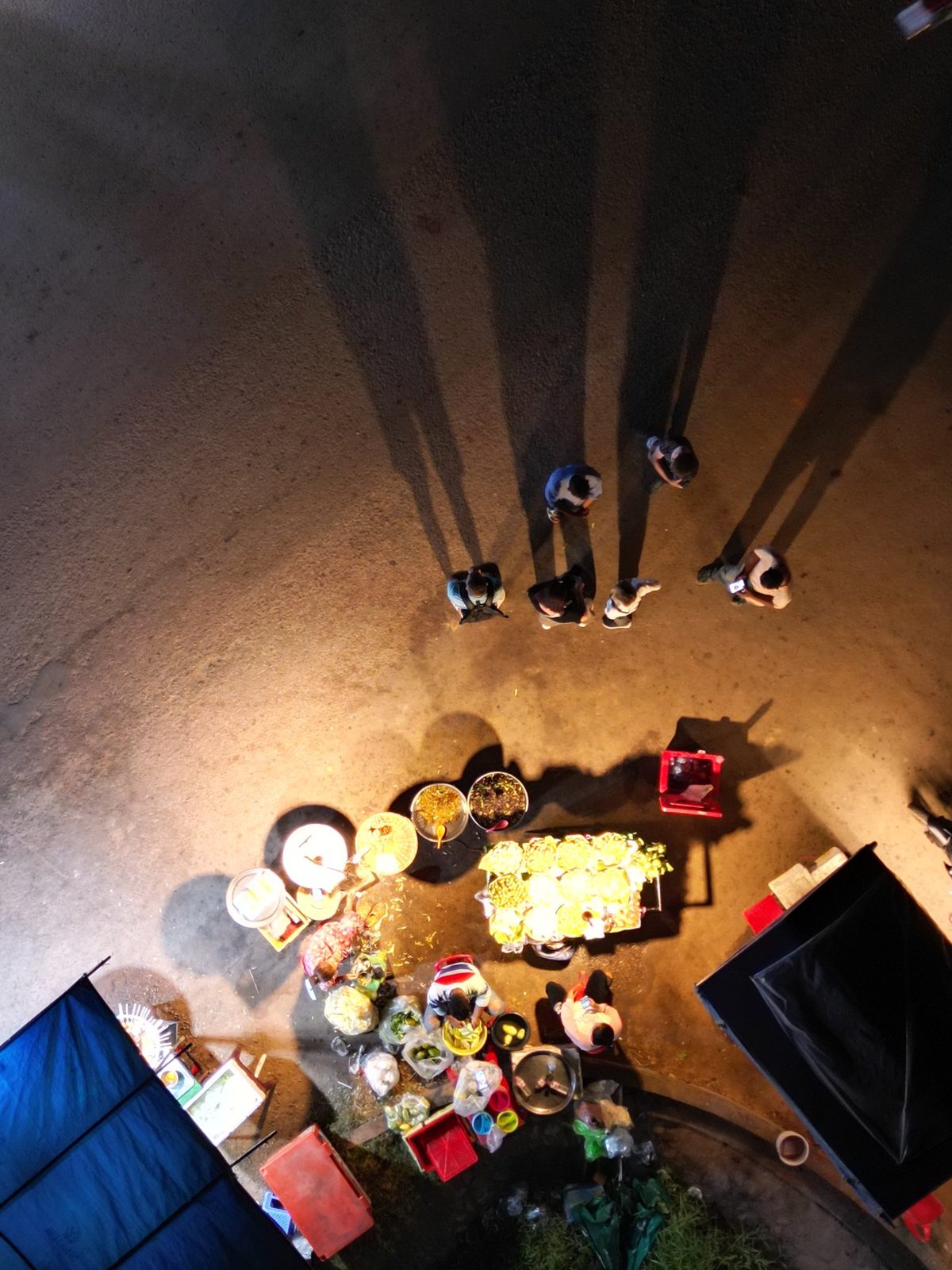
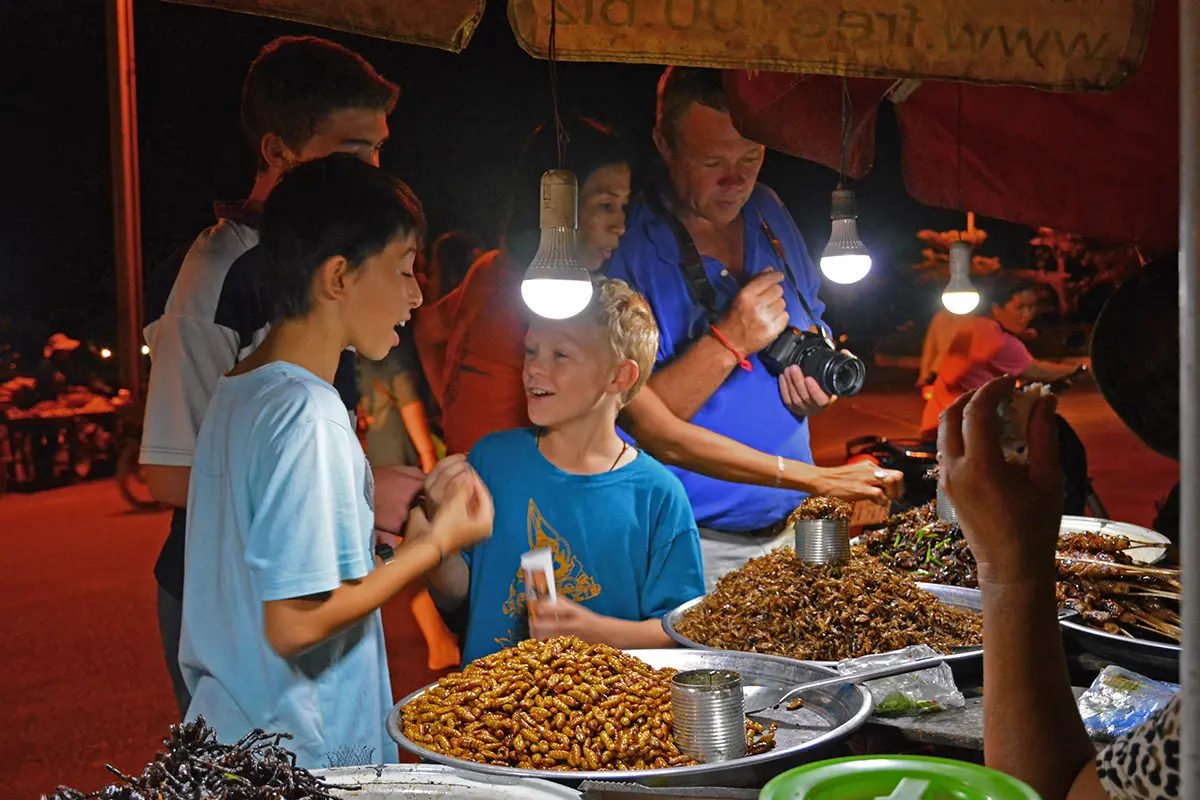
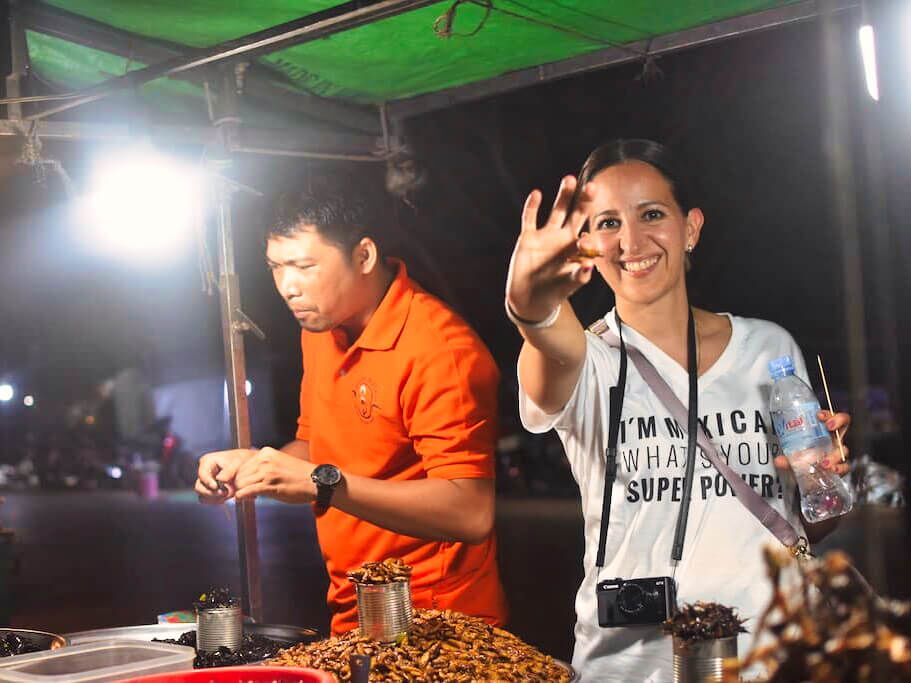
Cuit à la demande, devant le client.
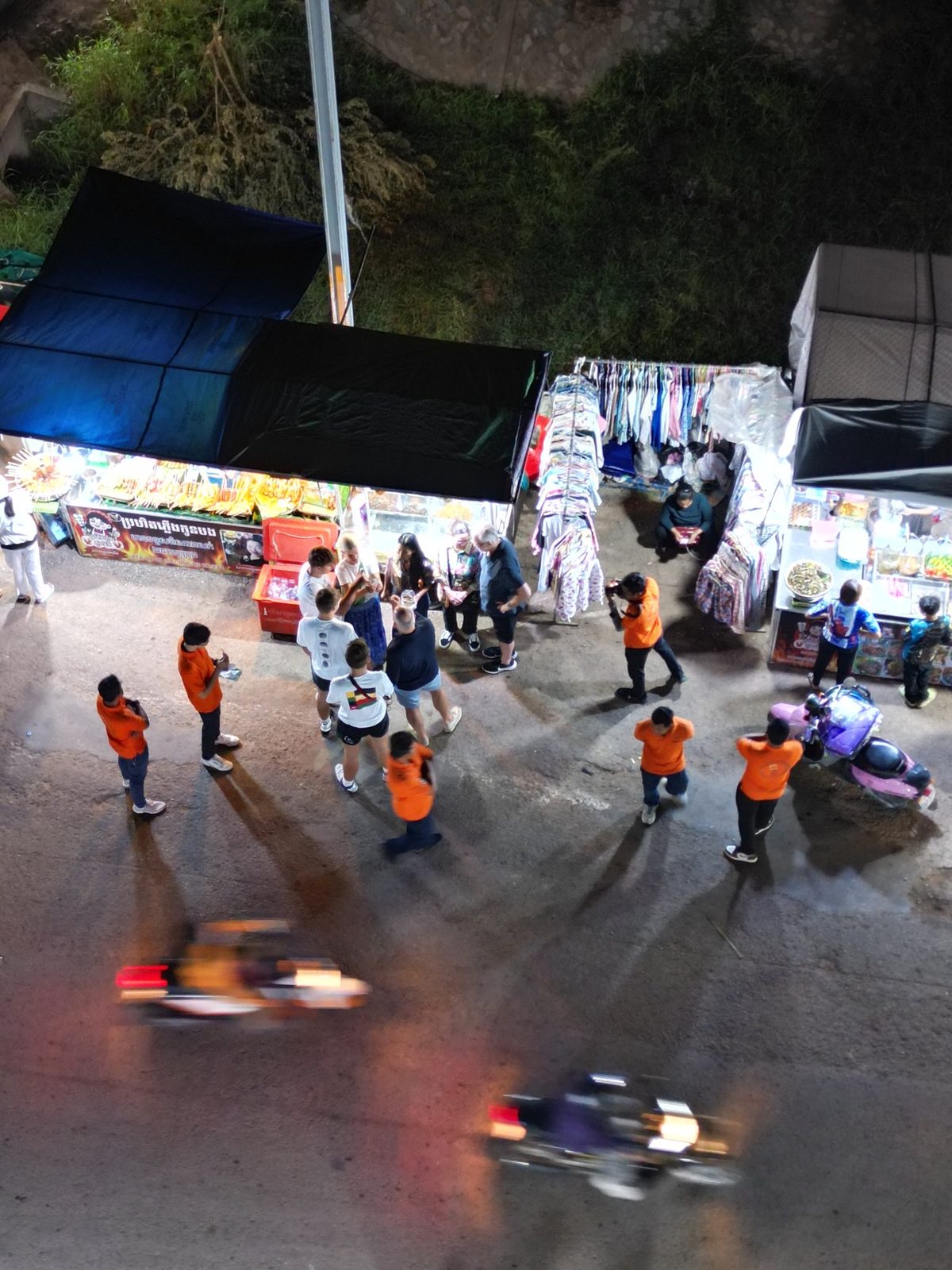
Le marché de nuit de Siem Reap, vu d'en haut.
La cuisine de rue est-elle sans danger au Cambodge ?
Cela dépend du stand, pas du pays. Un stand qui cuisine votre assiette pendant que vous y êtes, au-dessus d'une flamme, avec des Cambodgiens qui font la queue derrière vous, est à peu près aussi sûr que de manger n'importe où sur terre. Maintenant, imaginez un plateau qui est resté sous une lampe depuis l'après-midi. Même rue, même nuit, tout autre chose. Sur une photographie, les deux se ressemblent comme deux gouttes d'eau, et c'est bien là tout le problème.
Je ne vais pas vous dire que c'est sans risque. Ce n'est pas le cas. Le Cambodge a enregistré 134 flambées de maladies d'origine alimentaire entre 2014 et 2019 (OMS Pacifique occidental, 3 octobre 2024). Ce que je vais vous dire, c'est que le risque réside dans un petit nombre de choses spécifiques, et vous pouvez presque toutes les éviter sans renoncer à la nourriture. Si vous voulez savoir quoi commander réellement une fois que vous aurez confiance, notre guide sur le meilleure nourriture cambodgienne propose les plats qui valent le détour en ville.
Quelle est la fréquence des intoxications alimentaires au Cambodge ?
C'est plus courant que ne le laisse entendre une brochure tour, et bien mieux documenté que ne le prétendent la plupart des blogs de voyage. Vous lirez sur d’autres sites qu’il n’existe aucune statistique sérieuse concernant la cuisine de rue cambodgienne. Or, elles existent bel et bien. L’Organisation mondiale de la Santé les a publiées en octobre 2024, et je préfère que vous découvriez les chiffres réels par mon intermédiaire plutôt que d’aller les chercher sur un forum.
| Qu'a-t-on enregistré | Figure | Période couverte |
|---|---|---|
| Cas de maladies d'origine alimentaire au Cambodge | plus de 7 000 | 2014 à 2023 |
| Décès dus à des maladies d'origine alimentaire | presque 200 | 2014 à 2023 |
| Épidémies de maladies d'origine alimentaire signalées | 134 | 2014 à 2019 |
Source : OMS Pacifique occidental, “ Améliorer la sécurité sanitaire des aliments : leçons tirées d'une épidémie d'intoxication alimentaire ”, 3 octobre 2024. Les chiffres concernent l'ensemble du Cambodge, et non la seule cuisine de rue.
Relisez cette dernière phrase à deux reprises, car elle a de l'importance. Les chiffres de l'OMS ne sont pas ventilés selon l'origine de la nourriture, ils englobent donc les cuisines des restaurants et des particuliers ainsi que les stands. Quiconque vous les cite en tant que chiffre de la nourriture de rue y ajoute quelque chose que la source ne dit pas.
Ce qui cause réellement les épidémies
L'OMS a identifié quatre causes à l'origine des flambées épidémiques enregistrées au Cambodge :
- Une mauvaise hygiène lors de la préparation des aliments. Mains, planches et torchons, avant que quoi que ce soit n'approche de la chaleur.
- Contrôle incorrect de la température de stockage. Les aliments cuits maintenus tièdes au lieu d'être chauds, ce qui est l'échec de la cuisine de rue le plus courant partout sous les tropiques.
- Contamination croisée. De la viande crue et des aliments prêts à être consommés qui partagent une surface, un couteau ou une paire de pinces.
- Eau et ingrédients non potables. Eau de rinçage, glace et produits qui y ont été lavés.
Une seule de ces quatre étapes concerne la flamme. Les autres se produisent avant que la nourriture n'atteigne le feu, ou après qu'elle en soit retirée. C'est pourquoi “ est-ce cuit ? ” n'est que la moitié de la question que vous devriez vous poser, et c'est pourquoi la garniture crue sur le côté d'une broche parfaitement grillée est ce que je surveille, et non la broche.
Comment éviter de tomber malade au Cambodge ?
Mangez là où la nourriture bouge. Cette simple habitude élimine la majeure partie du risque, car un stand qui vide ses casseroles toutes les heures n'a jamais besoin de garder quoi que ce soit au chaud. Cela explique également pourquoi le comptoir le plus fréquenté du marché de nuit de Siem Reap est généralement le meilleur pari, même lorsque le plus calme semble plus propre.
- Suivez la file d'attente locale, pas le menu en anglais. Une file de Cambodiens vous en dit plus que n'importe quel panneau sur l'étal.
- Commandez ce qui doit être cuisiné. Si ça passe du cru à votre assiette sur une flamme pendant que vous regardez, vous avez éliminé la plus grande partie de ce que l'OMS a répertorié.
- Prenez-le fumant. La règle du CDC pour les voyageurs est que les aliments chauds doivent être servis chauds, et le tiède est le signal d'alarme (CDC, Sécurité des aliments et de l'eau).
- Passez la garniture crue. Les feuilles de salade, les herbes hachées et les tranches de concombre avaient été lavées dans quelque chose, et ce n'était pas de l'eau en bouteille.
- Buvez de l'eau en bouteille, toujours. Cela inclut ce avec quoi votre glace a été faite et ce avec quoi votre frappé aux fruits a été mélangé.
- Surveillez les mains. Une personne à l'argent et une autre à la nourriture est un bon signe. La même main qui fait les deux, c'est la contamination croisée répertoriée par l'OMS, qui se produit sous vos yeux.
Rien de tout cela ne vous oblige à manger timidement. Bien au contraire. Les règles ci-dessus sont ce qui vous permet de dire oui au grill au lieu de vous réfugier dans un buffet d'hôtel, ce qui est là où les visiteurs nerveux ont tendance à finir, en payant plus pour la nourriture la moins intéressante du pays.
Quels aliments devez-vous éviter au Cambodge ?
Évitez les aliments crus et tout ce qui a été en contact avec de l'eau non potable après la cuisson. Le CDC formule les choses clairement pour les voyageurs : “ Évitez de manger des aliments crus. Les fruits ou les légumes sont parfois plus sûrs à consommer si vous pouvez les peler vous-même ou les laver dans de l'eau en bouteille ou désinfectée ” (CDC). Voici ce que cela donne dans une rue de Siem Reap.
| Ce que vous regardez | Verdict | Pourquoi |
|---|---|---|
| Viande ou poisson grillé à la demande | Mange-le | Du cru à l'assiette au coin du feu sous vos yeux |
| Plats de nouilles ou de riz cuisinés devant vous | Mange-le | Chaleur du wok, rotation rapide, rien n'est maintenu au chaud |
| Fruit que l'on épluche soi-même | Mange-le | La peau a fait le travail |
| Salade fraîche et herbes crues émincées | Passer | Lavé à l'eau du robinet, et le lavage ne résout pas le problème (CDC) |
| Fruits prédécoupés d'un plateau | Passer | Coupé avec quoi, rincé dans quoi, assis pendant combien de temps |
| Coquillages et fruits de mer d'un chariot | Passer | Siem Reap est à l'intérieur des terres et une charrette n'a pas de chaîne du froid |
| N'importe quoi restant au chaud sous une lampe | Passer | La température de conservation figure sur la liste des causes de l'OMS |
| L'eau du robinet, et de la glace dont vous ne connaissez pas l'origine | Passer | Voir la section sur l'eau ci-dessous |
Sources : CDC, Sécurité des aliments et de l'eau et OMS Pacifique occidental, le 3 octobre 2024.
Est-il sûr de manger de la salade au Cambodge ?
Pas d'un étal de rue, non. Le CDC est direct à ce sujet : “ Évitez de manger des salades fraîches, même si elles sont finement coupées ou râpées. Elles peuvent être contaminées par des déchets humains ou animaux que même une eau propre ne peut pas éliminer ”CDC). Dans un bon restaurant disposant de sa propre alimentation filtrée, la salade est une autre question et va généralement bien. Sur un chariot, partez du principe que non. Les feuilles ont fini dans le même seau que les assiettes.
La même logique s'applique aux fruits prédécoupés. Une mangue tranchée devant vous à partir d'un fruit entier, c'est très bien. Une barquette de morceaux laissée ouverte dans la chaleur de l'après-midi, c'est celle dont je détournerais le chemin, et la mangue cambodgienne est de toute façon bien assez bonne pour que vous ne vous contentiez pas de la barquette. Si vous voulez explorer les fruits cambodgiens plus en profondeur, nous avons écrit sur durian séparément.
La glace est-elle sans danger au Cambodge ?
En général, et il y a un test visuel. La glace commerciale au Cambodge est fabriquée en usine et se présente sous forme de cylindre avec un trou au milieu. C’est la glace que l’on trouve dans les restaurants, les bars et la plupart des stands de boissons, et elle est fabriquée avec de l’eau traitée. La glace pilée en vrac provenant d’un sac sans étiquette ou d’un seau est celle qu’il faut refuser, et la règle générale du CDC pour les voyageurs s’applique toujours : n’utilisez pas de glace là où l’eau potable pose problème, car elle a sans doute été fabriquée avec (CDC).
Les œufs durs sont-ils sans danger à manger au Cambodge ?
Les œufs durs comptent parmi les aliments les plus sûrs dans une rue cambodgienne, pour la même raison que partout ailleurs : ils ont cuits à cœur dans leur propre coquille hermétique et vous les écalez vous-même. Achetez-les auprès d'un vendeur dont le panier a un bon taux de rotation, mangez-les le jour même, et évitez ceux qui sont déjà écalés et qui trempent dans l'eau. C'est au moment d'écaler qu'un œuf sûr cesse de l'être.
Les insectes sont-ils sans danger pour la consommation ?
Oui. Les grillons et les tarentules que vous verrez empilés en pyramides sont frits à feu vif, ce qui est la méthode de préparation la plus sûre dans la rue. Personne n’est obligé d’en manger. Lors de notre expérience culinaire « tour », ils sont proposés sans jamais être imposés, et de nombreux participants les photographient sans en goûter un seul.
Peut-on boire l'eau du robinet au Cambodge ?
Non. Buvez uniquement de l'eau en bouteille ou filtrée, et utilisez-la pour vous brosser les dents si vous voulez être prudent. L'eau en bouteille est vendue partout à Siem Reap et coûte très peu cher. Nous abordons en détail l'eau du robinet, l'eau en bouteille et le brossage des dents dans notre Guide de sécurité au Cambodge, donc je ne vais pas tout répéter ici.
Une remarque pratique concernant l’alimentation : lors de nos propres sorties « tours », depuis le départ à 18 h jusqu’au dernier arrêt à 22 h, vous aurez une bouteille d’eau à la main toute la soirée. Ce n’est pas un luxe. C’est la mesure la moins coûteuse que vous puissiez prendre pour rester en forme lors d’une soirée gastronomique.
Avez-vous besoin de vaccins avant de manger au Cambodge ?
Le CDC recommande la vaccination contre l'hépatite A pour les voyageurs non vaccinés âgés d'un an ou plus se rendant au Cambodge, et le vaccin contre la typhoïde pour la plupart des voyageurs, en particulier ceux qui séjournent chez des amis ou des parents ou qui visitent des villes plus petites et des zones rurales (Santé des voyageurs du CDC, CambodgeLes deux se transmettent par l'eau et les aliments, ce qui explique précisément pourquoi ils figurent sur la liste.
Consultez un médecin avant de prendre l'avion. C'est le conseil permanent sur notre propre Page FAQ et cela n’a pas changé. Je suis un opérateur tour, pas un médecin, et une clinique de médecine des voyages connaîtra vos antécédents médicaux et votre itinéraire.
Le billet « Street Food Tour » en vaut-il la peine, ou peut-on se promener seul au marché nocturne ?
Vous pouvez tout à fait y aller à pied par vous-même, et beaucoup de gens devraient le faire. Le marché de nuit est ouvert à tout le monde, la nourriture y est bon marché, et si vous suivez les règles indiquées plus haut sur cette page, tout se passera probablement bien. Ce que vous payez pour un guide, c'est la sélection des meilleurs endroits et la langue, pas une garantie de sécurité.
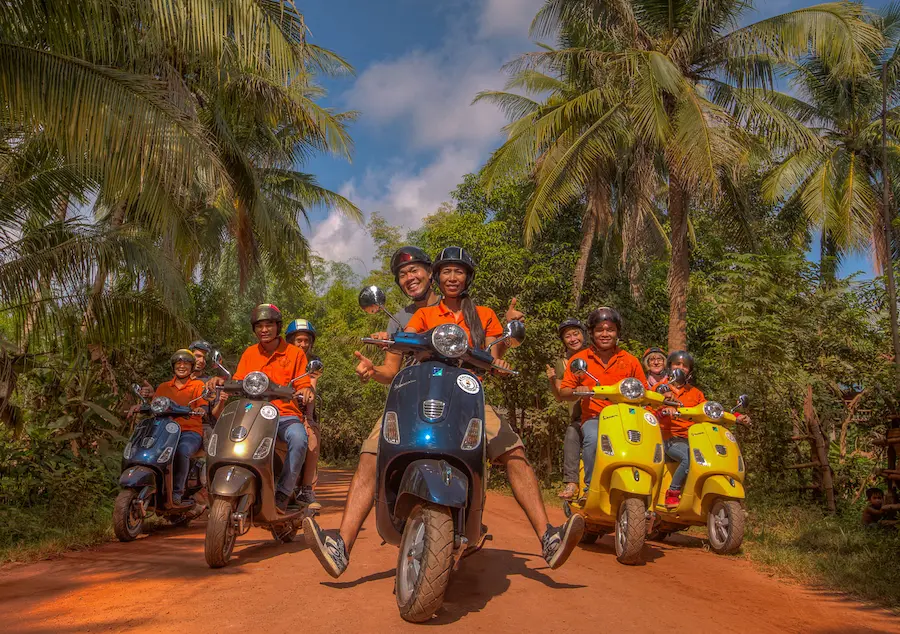
Nos Visites culinaires à Siem Reap courir de 18h00 à 22h00. Le partagé After Dark Food Tour Le prix est de $68 par personne avec un maximum de six invités, en Vespa, et la version privée coûte $89. Les enfants âgés de 5 à 11 ans bénéficient d'une réduction de 20%. L'après-midi se déroule comme suit :
- 18h00, prise en charge à l'hôtel. Nous venons à vous.
- 18h15, distillerie familiale d'alcool de riz. Verre de bienvenue et une dégustation.
- 19h00, cuisine de rue du marché de nuit. Les stands sur notre parcours.
- 20h00, dîner assis khmer. Un restaurant traditionnel avec de la musique live, pas un stand.
- 21 h 15, speakeasy. Un cocktail ou un dessert pour finir.
- 22h00, dépose à l'hôtel.
En ce qui concerne précisément la question de la sécurité, voici ce qu'un guide change et rien de plus : nous mangeons dans des stands fréquentés avec une forte rotation où la cuisine est préparée à la fraîcheur devant vous, et vous buvez de l'eau en bouteille tout au long. C'est tout. C'est le même principe que vous appliqueriez par vous-même, appliqué par la personne qui a choisi l'itinéraire.
Les stands sur cette route datent de plusieurs années. Je connais les familles qui les tiennent, et j'observe comment elles gèrent leur eau et leur glace.
Il y a un test bien meilleur que tout ce que je pourrais écrire ici. Mes collègues et moi mangeons à ces stands sur notre temps personnel, en dehors des heures de travail, et nous y amenons nos enfants.
LA PARTIE QUE NOUS NE PUBLISSONS PAS
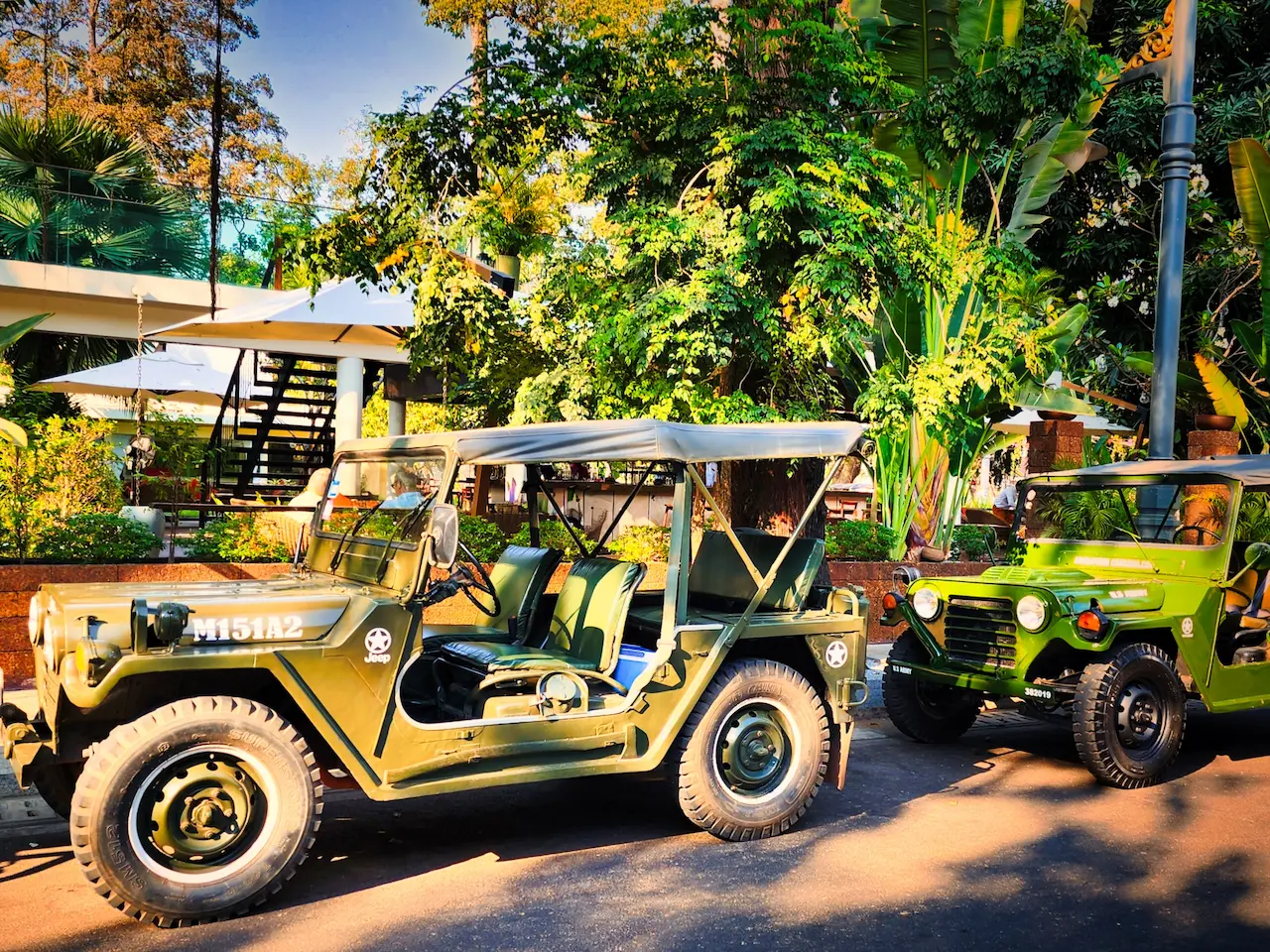
Nous roulons qu'il pleuve ou qu'il fasse beau. Des ponchos sont fournis avec la Vespa, et en cas de forte pluie, le groupe passe à une Jeep. Un marché de nuit sous une averse ne correspond toujours pas à la soirée que l'on imagine en réservant, donc si vous voyagez pendant la saison des pluies et que vous n'avez qu'une seule soirée de libre, sachez en venant que la météo a son mot à dire.
Questions fréquemment posées
Est-il sûr de manger de la nourriture de rue au Cambodge ?
Oui, lorsque c'est préparé à la commande devant vous et servi chaud, à partir d'un stand avec une file d'attente locale. Le risque réside dans les accompagnements crus, l'eau non potable et les aliments maintenus tièdes plutôt que chauds. L'OMS a enregistré plus de 7 000 cas de maladies d'origine alimentaire au Cambodge entre 2014 et 2023, dans toutes les cuisines et pas seulement dans les stands de rue.
Comment éviter l'intoxication alimentaire au Cambodge ?
Mangez là où la nourriture bouge, commandez des plats cuits sur le ailette sous vos yeux, prenez-les fumants, et buvez de l'eau en bouteille, y compris la glace et les frappés aux fruits. Évitez les garnitures crues et tout ce qui reste tiède sous une lampe. Ces habitudes répondent à la plupart des causes d'épidémie recensées par l'OMS au Cambodge en 2024 : la température de conservation, la contamination croisée et l'eau ou les ingrédients non potables.
Est-il sûr de manger de la salade au Cambodge ?
Pas d'un stand de rue. Les CDC conseillent aux voyageurs d'éviter les salades fraîches car la contamination survient après le lavage. Dans les restaurants disposant d'un approvisionnement en eau filtrée, c'est généralement bon. Sur un chariot, partez du principe que les feuilles ont été rincées à l'eau du robinet.
La glace est-elle sans danger au Cambodge ?
La glace d'usine est, et vous pouvez la reconnaître : elle se présente sous forme de cylindre avec un trou au milieu, fabriquée à partir d'eau traitée, et c'est celle que les restaurants, les bars et la plupart des stands de boissons utilisent. Refusez la glace pilée en vrac provenant d'un sac ou d'un seau non étiqueté.
Est-il hygiéniquement sûr de manger dans les marchés de Siem Reap ?
Oui, avec le même jugement stand par stand que vous utiliseriez n'importe où. Les comptoirs de cuisine à la commande au marché de nuit de Siem Reap sont ce qu'il y a de plus sûr dans l'allée. Les plateaux préparés à l'avance et tout ce qui est maintenu au chaud sont là où le risque se concentre.
Les œufs durs sont-ils sans danger à consommer au Cambodge ?
Oui. Ils sont cuits à l'intérieur d'une coquille scellée que vous cassez vous-même, ce qui en fait l'un des achats de rue les plus sûrs. Achetez auprès d'un vendeur dont le panier est renouvelé fréquemment et évitez les œufs pré-écalés qui trempent dans l'eau.
Les insectes sont-ils sans danger à manger au Cambodge ?
Oui. Les grillons et les tarentules sont frits à grande huile et à haute température, ce qui constitue la préparation la plus sûre dans la rue. Personne n'est obligé d'y goûter, et lors de nos visites, ils sont proposés plutôt qu'imposés.
Faut-il des vaccins pour manger de la nourriture de rue au Cambodge ?
Le CDC recommande le vaccin contre l'hépatite A pour les voyageurs non vaccinés âgés d'un an ou plus se rendant au Cambodge, et celui contre la fièvre typhoïde pour la plupart des voyageurs. Tous deux se propagent par l'eau et par les aliments. Consultez un médecin avant votre départ, car un centre de médecine des voyages pourra tenir compte de vos antécédents médicaux et de votre itinéraire.