20 september 2026
Bijgewerkt tot augustus 2026.
Ja, onder voorwaarden. Cambodjaans straateten is veilig als het vers voor je neus wordt bereid en heet wordt opgediend, bij een kraam die druk genoeg is om zijn pannen elk uur leeg te scheppen. Wat reizigers hier ziek maakt, is zelden de grill. Het is het water. Het is het rauwe bijgerecht dat naast de grill staat, en de pan die sinds de lunch warm is gehouden. Tussen 2014 en 2023 registreerde de Wereldgezondheidsorganisatie meer dan 7.000 gevallen van door voedsel overgedragen ziekten en bijna 200 sterfgevallen in Cambodja, en het noemde de vier dingen die daarvan de oorzaak zijn, waarvan geen enkele het bereiden van voedsel in de buitenlucht is (WHO Westelijke Stille Oceaan, 3 oktober 2024).
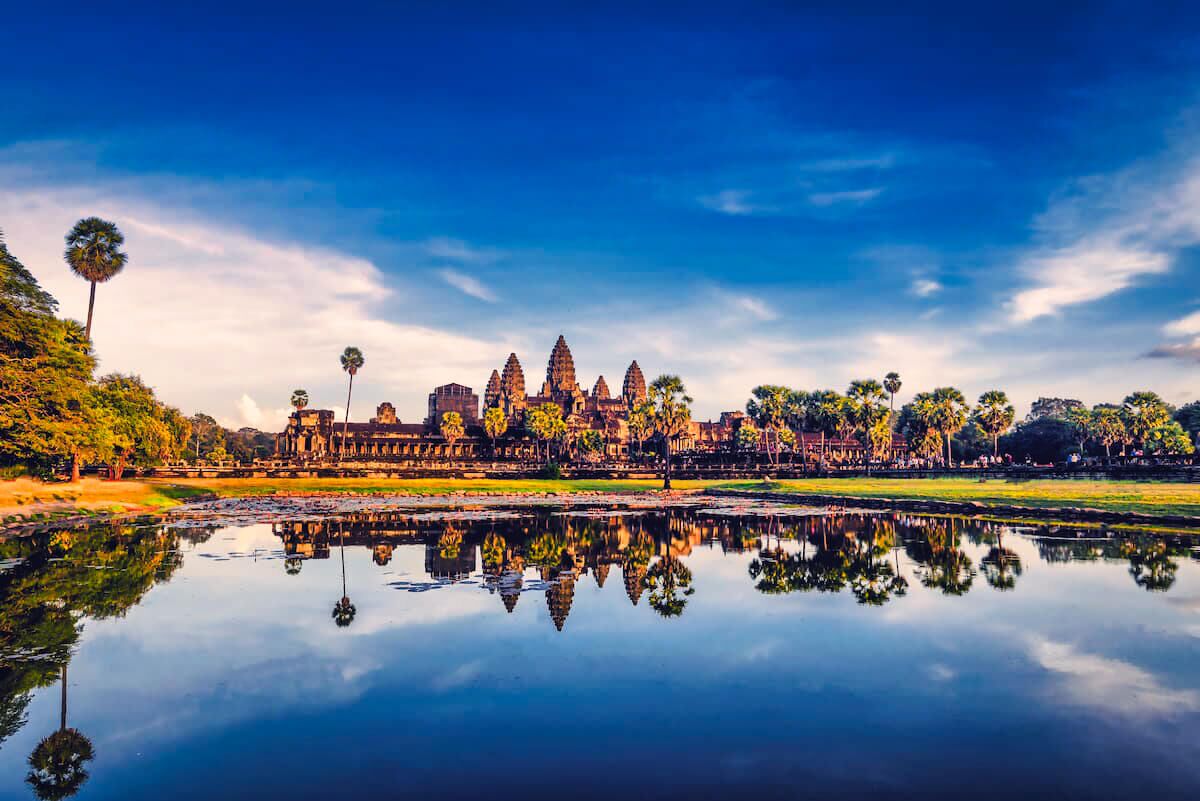
Ik ben opgegroeid in de pagode binnen de muren van Angkor Wat, waar mijn grootvader als grootabt diende. In 2013 heb ik Adventures Cambodia opgericht, en sindsdien beantwoord ik deze vraag aan de eettafel. Dit is dus het antwoord dat ik aan gasten geef, in plaats van het antwoord dat tour verkoopt.
De korte versie
- De regel: heet, vers voor je neus bereid, van een kraam met een lokale rij.
- Het nummer: ruim 7.000 gevallen van door voedsel overgedragen ziekten en bijna 200 sterfgevallen in Cambodja, van 2014 tot 2023WIE, 2024).
- De vier oorzaken van uitbraken: slechte hygiëne tijdens de bereiding, onjuiste bewaartemperatuur, kruisbesmetting en onveilig water of ingrediënten (WHO, 2024).
- Water: alleen gebotteld of gefilterd, nooit kraanwater.
- Vaccins: De CDC raadt hepatitis A aan voor niet-gevaccineerde reizigers van één jaar of ouder, en tyfus voor de meeste reizigers naar Cambodja.
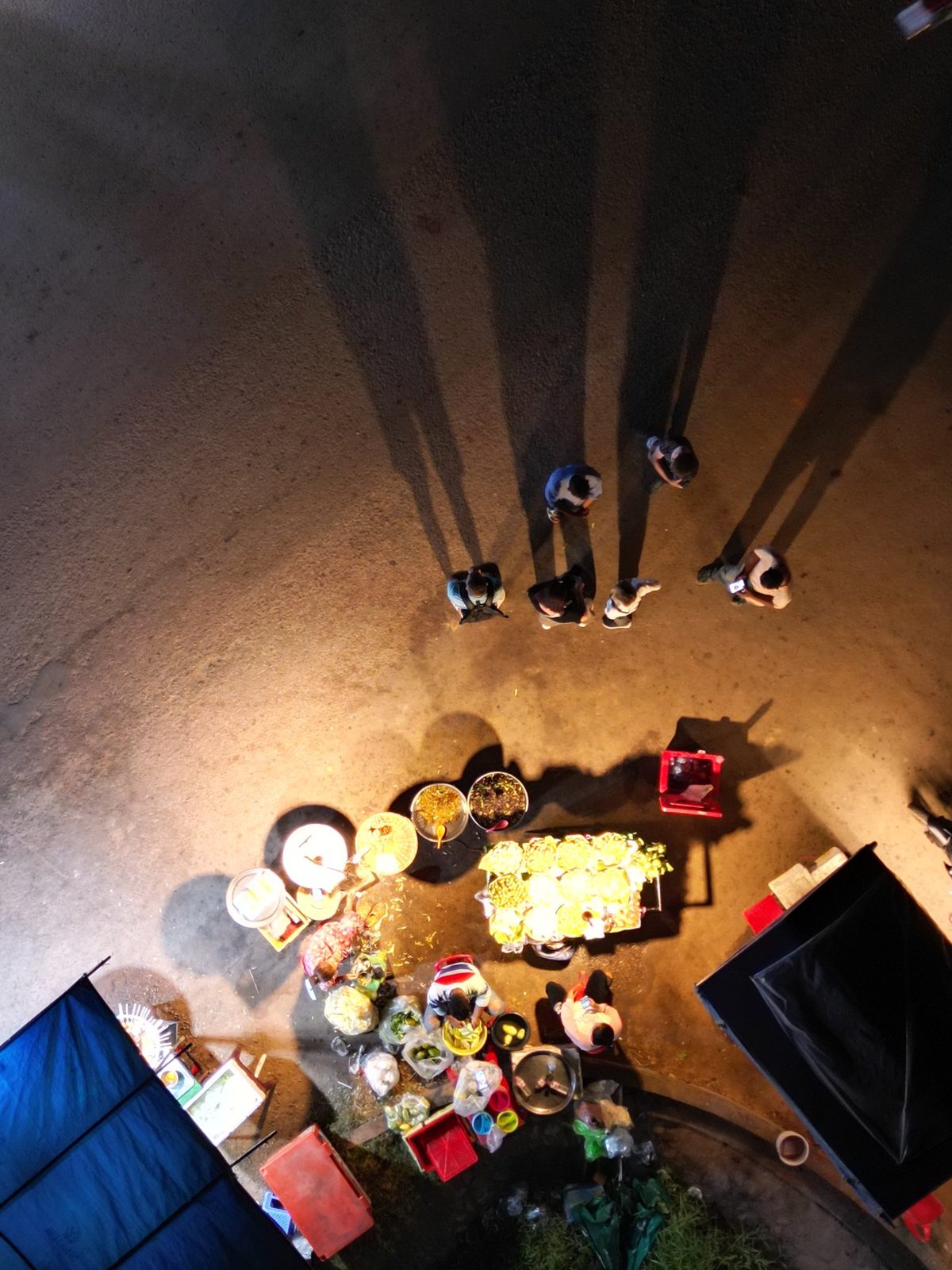
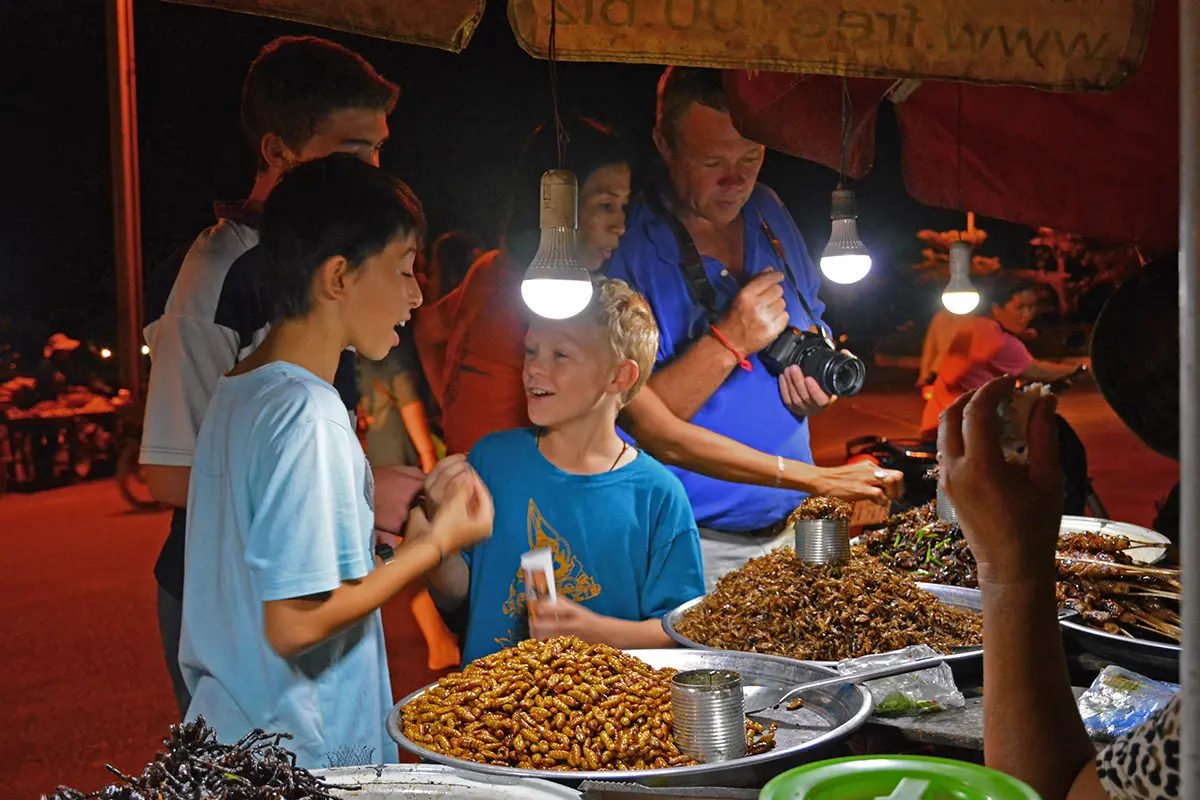
Bereid op bestelling, voor de ogen van de klant.
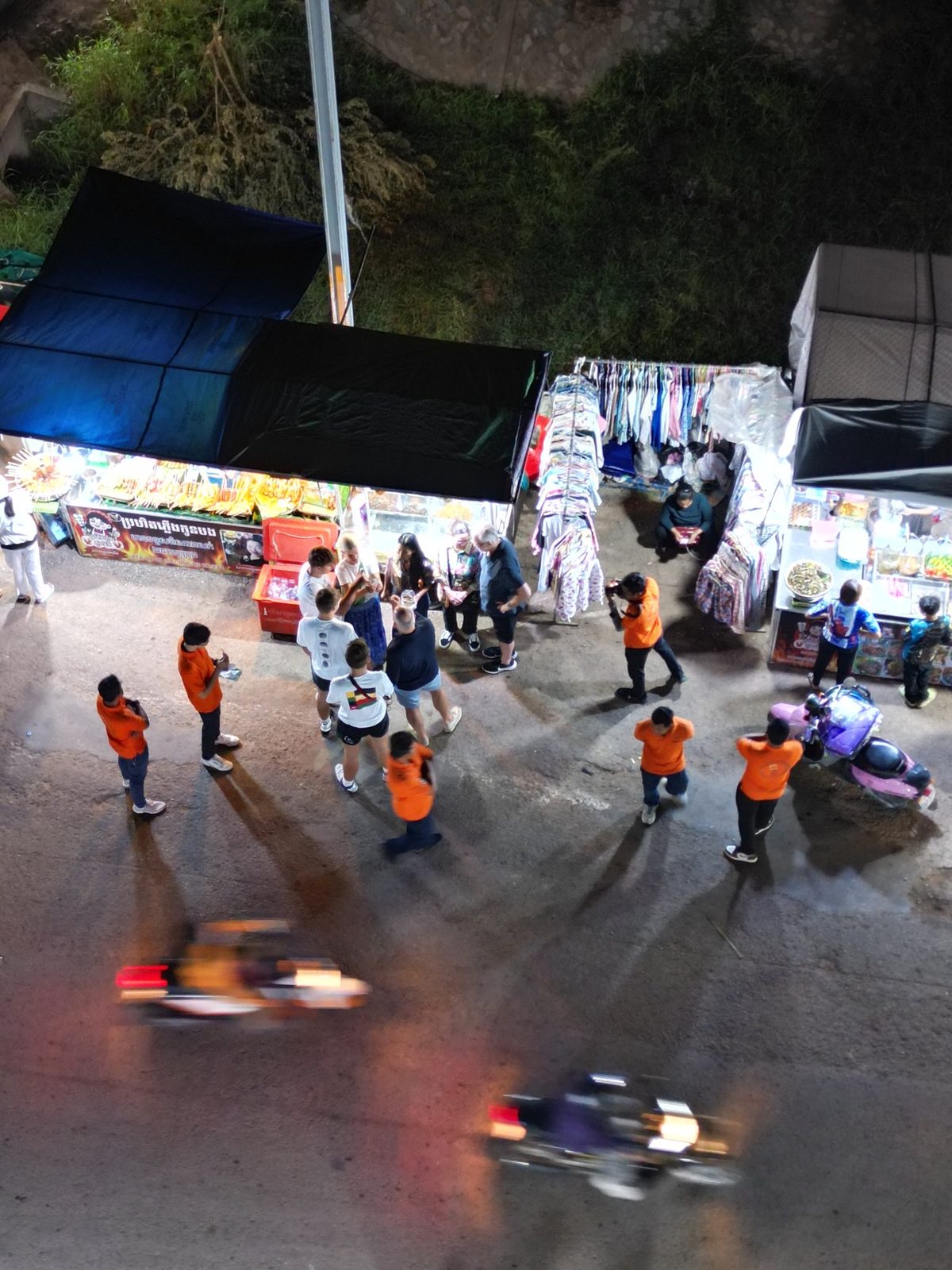
Siem Reap avondmarkt, van bovenaf gezien.
Is straatvoedsel veilig om te eten in Cambodja?
Het hangt af van het kraampje, niet van het land. Een kraampje dat je bord bereidt terwijl je daar staat, boven een vuur, met Cambodianen die achter je in de rij staan, is ongeveer net zo veilig als waar ook ter wereld eten. Stel je nu eens een schaal voor die al sinds de middag onder een lamp staat. Zelfde straat, zelfde avond, heel ander verhaal. Op een foto zien de twee er hetzelfde uit, en dat is precies het hele probleem.
Ik ga je niet vertellen dat het risicovrij is. Dat is het niet. Cambodja registreerde tussen 2014 en 2019 134 uitbraken van door voedsel overgedragen ziekten (WHO Westelijke Stille Oceaan, 3 oktober 2024). Wat ik je ga vertellen is dat het risico in een klein aantal specifieke dingen zit, en dat je bijna al deze dingen kunt vermijden zonder het eten op te geven. Als je wilt weten wat je daadwerkelijk kunt bestellen als je eenmaal zeker bent, bekijk dan onze gids over de Beste Cambodjaanse eten behandelt de gerechten waarvoor het de moeite waard is om de stad door te reizen.
Hoe vaak komt voedselvergiftiging voor in Cambodja?
Het komt vaker voor dan in een tour-brochure wordt toegegeven, en het is veel beter gedocumenteerd dan de meeste reisblogs beweren. Op andere sites lees je dat er geen serieuze statistieken bestaan over Cambodjaans straatvoedsel. Die zijn er wel degelijk. De Wereldgezondheidsorganisatie heeft ze in oktober 2024 gepubliceerd, en ik heb liever dat je de echte cijfers van mij te zien krijgt dan dat je er zelf op een forum naar gaat zoeken.
| Wat is er opgenomen | Figuur | Periode waarin |
|---|---|---|
| Gevallen van door voedsel overgedragen ziekten in Cambodja | ruim 7.000 | 2014 tot 2023 |
| Overledenen door door voedsel overgedragen ziekten | bijna 200 | 2014 tot 2023 |
| Geregistreerde uitbraken van door voedsel overgedragen ziekten | 134 | 2014 tot 2019 |
Bron: WHO Westelijke Stille Oceaan, “Voedselveiligheid verbeteren: lessen getrokken uit een voedselvergiftiging”, 3 oktober 2024. De cijfers hebben betrekking op heel Cambodja, niet alleen op straatvoedsel.
Lees die laatste regel twee keer, want die is belangrijk. De cijfers van de WHO zijn niet uitgesplitst naar waar het voedsel vandaan kwam, dus ze omvatten zowel restaurant- en thuiskeukens als stalletjes. Iedereen die ze u voorhoudt als een cijfer voor straatvoedsel, voegt iets toe dat de bron niet vermeldt.
Wat de uitbraken daadwerkelijk veroorzaakt
De WHO benoemde vier oorzaken achter de geregistreerde uitbraken in Cambodja:
- Slechte hygiëne tijdens de bereiding van voedsel. Handen, planken en doeken, voordat er iets in de pan komt.
- Onjuiste temperatuurregeling bij opslag. Bereid eten dat lauwwarm in plaats van heet wordt gehouden, wat overal in de tropen de allerfoutste straatvoedselfout is.
- Kruisbesmetting. Rauw vlees en kant-en-klaar eten die een oppervlak, een mes of een tang delen.
- Onveilig water en ingrediënten. Spoelwater, ijs en de daarin gewassen groenten en fruit.
Slechts één van die vier gaat over de vlam. De rest gebeurt voordat het eten de vlam bereikt, of nadat het eraf komt. Dat is waarom “is het gaar?” slechts de helft is van de vraag die je zou moeten stellen, en waarom de rauwe garnering aan de zijkant van een perfect gegrilde spies hetgeen is waar ik op let, en niet de spies.
Hoe voorkom je dat je ziek wordt in Cambodja?
Eet waar het eten beweegt. Die ene gewoonte neemt het grootste deel van het risico weg, omdat een kraam die zijn pannen elk uur leegmaakt nooit iets warm hoeft te houden. Het verklaart ook waarom de drukste toonbank op de avondmarkt van Siem Reap meestal de betere gok is, zelfs als de rustige er cleaner uitziet.
- Volg de lokale rij, niet het Engelse menu. Een rij Taiwanezen vertelt je meer dan welk bordje dan ook bij de kraam.
- Bestel wat gekookt moet worden. Als het rauw van het vuur op je bord komt terwijl je kijkt, heb je het meeste weggenomen van wat de WHO op de lijst heeft gezet.
- Neem het heet. De regel van de CDC voor reizigers is dat warm eten heet moet worden geserveerd, en lauw is het waarschuwingstekenCDC, Voedsel- en Waterveiligheid).
- Sla de rauwe garnering over. De slabladeren, de fijngehakte kruiden en de plakjes komkommer waren ergens in gewassen, en dat was geen mineraalwater uit een fles.
- Drink altijd gebotteld. Dat omvat waar je ijs van is gemaakt en waar je vruchtensshake mee is geblend.
- Let op de handen. Eén persoon bij het geld en één bij het eten is een goed teken. Dezelfde hand die beide doet is de kruisbesmetting waarvoor de WHO waarschuwde, die zich voor je neus afspeelt.
Dit betekent allemaal niet dat je voorzichtig hoeft te eten. Integendeel. Door je aan de bovenstaande regels te houden, kun je vol ja zeggen tegen de barbecue in plaats van je terug te trekken bij een hotelbuffet, waar zenuwachtige bezoekers vaak belanden en meer betalen voor het minst interessante eten van het land.
Welke voedingsmiddelen kun je maar beter vermijden in Cambodja?
Vermijd rauw voedsel en alles dat in aanraking is geweest met onveilig water nadat het is gekookt. Het CDC brengt het eenvoudig voor reizigers: “Vermijd het eten van rauw voedsel. Vruchten of groenten zijn mogelijk veiliger om te eten als je ze zelf kunt schillen of kunt wassen in water uit flessen of ontsmet water”CDC). Zo vertaalt zich dat naar een straat in Siem Reap.
| Wat u ziet | Uitspraak | Waarom |
|---|---|---|
| Vlees of vis naar wens gegrild | Eet het | Van rauw naar bord boven een vlam terwijl je toekijkt |
| Noedel- of rijstgerechten die voor je neus worden bereid | Eet het | Wokhitte, hoge omloopsnelheid, niets wordt warm gehouden |
| Fruit dat je zelf pelt | Eet het | De huid deed het werk (CDC) |
| Verse salade en gesneden rauwe kruiden | Sla over | Gewassen in kraanwater, en wassen lost het niet op (CDC) |
| Voorgesneden fruit van een schaal | Sla over | Gesneden waarmee, afgespoeld in wat, hoe lang zittend |
| Schelpdieren en vis uit een kraam | Sla over | Siem Reap ligt in het binnenland en een kar heeft geen koelketen |
| Alles wat warm onder een lamp staat | Sla over | Opslagtemperatuur staat op de WHO-oorzakenlijst |
| Kraanwater en ijs waarvan je de herkomst niet kent | Sla over | Zie het watergedeelte hieronder |
Bronnen: CDC, Voedsel- en Waterveiligheid en WHO Westelijke Stille Oceaan, 3 oktober 2024.
Is het veilig om salade te eten in Cambodja?
Niet van een straatkraampje, nee. Het CDC is er direct over: “Vermijd het eten van verse salades, zelfs als ze fijn gesneden of versnipperd zijn. Ze kunnen besmet zijn met menselijke of dierlijke uitwerpselen die zelfs schoon water niet kan afspoelen” (CDC). In een goed restaurant met een eigen gefilterde watertoevoer is salade een ander verhaal en over het algemeen prima. Op een kar moet je van het tegendeel uitgaan. De blaadjes belandden in dezelfde emmer als de borden.
Dezelfde logica geldt voor voorgesneden fruit. Mango die voor je neus wordt gesneden van een hele vrucht is prima. Een bakje met stukjes dat in de middaghitte heeft opengestaan, is er een waar ik aan voorbij zou lopen, en Cambodjaanse mango is goed genoeg dat je sowieso geen genoegen hoeft te nemen met het bakje. Als je de diepe kant van Cambodjaans fruit wilt, schreven we over doerian apart.
Is het ijs veilig in Cambodja?
Meestal, en er is een visuele test. Commercieel ijs in Cambodja wordt in een fabriek gemaakt en komt in de vorm van een cilinder met een gat in het midden. Dat is het ijs in restaurants, bars en de meeste drankkraampjes, en het wordt gemaakt van gezuiverd water. Los gemalen ijs uit een naamloze zak of emmer is het ijs dat je moet weigeren, en de algemene regel van het CDC voor reizigers is nog steeds van toepassing: gebruik geen ijs op plekken waar het drinkwater twijfelachtig is, omdat het daar waarschijnlijk van is gemaakt (CDC).
Zijn gekookte eieren veilig om te eten in Cambodja?
Gekookte eieren zijn een van de veiligere dingen op een Cambodjaanse straat, om dezelfde reden als overal elders: ze zijn gaar gekookt in hun eigen afgesloten schaal en je pelt ze zelf. Koop ze bij een verkoper wiens mand snel leeg en vol raakt, eet ze dezelfde dag nog op, en sla eieren over die al gepeld in water liggen. Bij het pellen ophoudt een veilig ei veilig te zijn.
Zijn de insecten veilig om te eten?
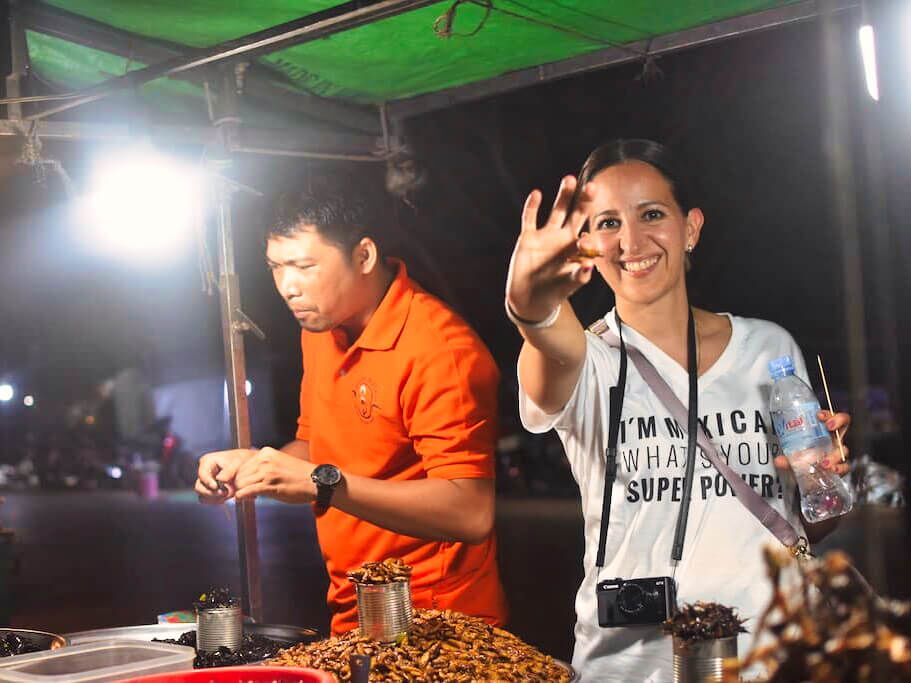
Ja. De krekels en de tarantula’s die je in piramides opgestapeld ziet liggen, worden op hoog vuur gefrituurd, wat de veiligste bereidingswijze is die je op straat kunt vinden. Niemand is verplicht ze te eten. Bij onze eetstand tour worden ze aangeboden, maar er wordt nooit druk uitgeoefend om ze te proeven, en veel gasten maken er foto’s van zonder er ook maar één te proeven.
Kun je kraanwater drinken in Cambodja?
Nee. Drink uitsluitend gebotteld of gefilterd water, en gebruik dit ook om je tanden te poetsen als je voorzichtig wilt zijn. Gebotteld water is overal te koop in Siem Reap en kost erg weinig. We behandelen kraanwater, gebotteld water en het poetsen van je tanden uitgebreid in ons Veiligheidsgids Cambodja, dus ik zal het hier niet allemaal herhalen.
Een praktische opmerking met betrekking tot eten: tijdens onze eigen tour-avonden, vanaf het ophalen om 18.00 uur tot de laatste halte om 22.00 uur, heb je de hele avond een flesje water bij de hand. Dat is geen luxe extraatje. Het is de goedkoopste manier om tijdens zo’n avondje uit gezond te blijven.
Heb je vaccinaties nodig voordat je in Cambodja eet?
De CDC raadt vaccinatie tegen hepatitis A aan voor niet-gevaccineerde reizigers van één jaar en ouder die naar Cambodja reizen, en tyfus voor de meeste reizigers, met name degenen die bij vrienden of familie verblijven of kleinere steden en plattelandsgebieden bezoeken (CDC Reizigersgezondheid, Cambodja). Beide worden overgedragen via voedsel en water, en dat is precies de reden waarom ze op de lijst staan.
Raadpleeg een arts voordat u vliegt. Dat is het vaste advies op onze eigen Veelgestelde vragen pagina en daar is niets aan veranderd. Ik ben een tour-medewerker, geen arts, en een reiskliniek is op de hoogte van je medische geschiedenis en je reisroute.
Is Street Food Tour de moeite waard, of kun je de avondmarkt beter op eigen houtje verkennen?
Je kunt het absoluut zelf bewandelen, en dat zouden een hele hoop mensen ook moeten doen. De avondmarkt is voor iedereen toegankelijk, het eten is goedkoop, en als je de regels verderop op deze pagina opvolgt, komt het waarschijnlijk wel goed. Waar je een gids voor betaalt is de selectie en de taal, geen veiligheidsgarantie.
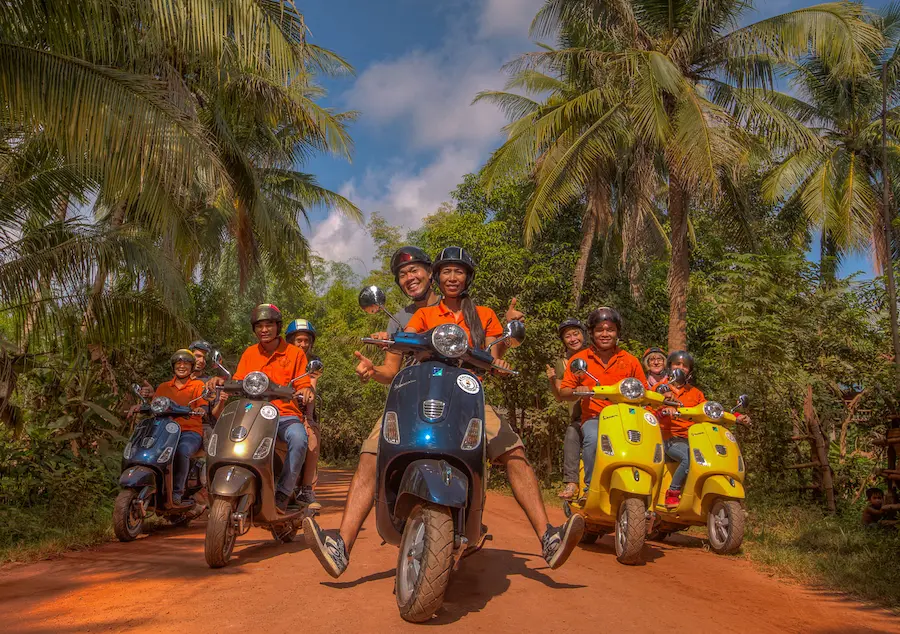
Onze Culinaire rondleidingen in Siem Reap loopt van 18:00 tot 22:00 uur. De gedeeld door After Dark Food Tour is $68 per persoon met een maximum van zes gasten, per Vespa, en de privversie is $89. Kinderen van 5 tot 11 jaar krijgen 20% korting. De avond verloopt als volgt:
- 18:00 uur, ophaalservice bij het hotel. Wij komen naar u toe.
- 18:15 uur, familierijstwijnstokerij. Welkomstglas en een proeverij.
- 19:00 uur, straatvoedsel op de avondmarkt. De marktkramen op onze route.
- 20:00 uur, Khmer-diner aan tafel. Een traditioneel restaurant met livemuziek, geen kraam.
- 21:15 uur, speakeasy. Een cocktail of een dessert om af te sluiten.
- 22:00 uur, afzet bij hotel.
Wat de veiligheidskwestie betreft, is dit precies wat een gids verandert en niets meer: we eten bij drukke stalletjes met een hoge omloopsnelheid waar het eten vers voor je neus wordt bereid, en je drinkt de hele tijd mineraalwater uit flessen. Dat is alles. Het is hetzelfde principe dat je zelf zou toepassen, toegepast door de persoon die de route heeft gekozen.
De kraampjes op die route gaan al jaren mee. Ik ken de families die ze runnen, en ik zie hoe ze met hun water en ijs omgaan.
Er is een betere test dan wat ik hier ook kan schrijven. Mijn collega's en ik eten in onze vrije tijd, buiten werktijd, bij deze kraampjes en we nemen onze kinderen mee.
HET GEDEELTE DAT WE NIET ADVERTEREN
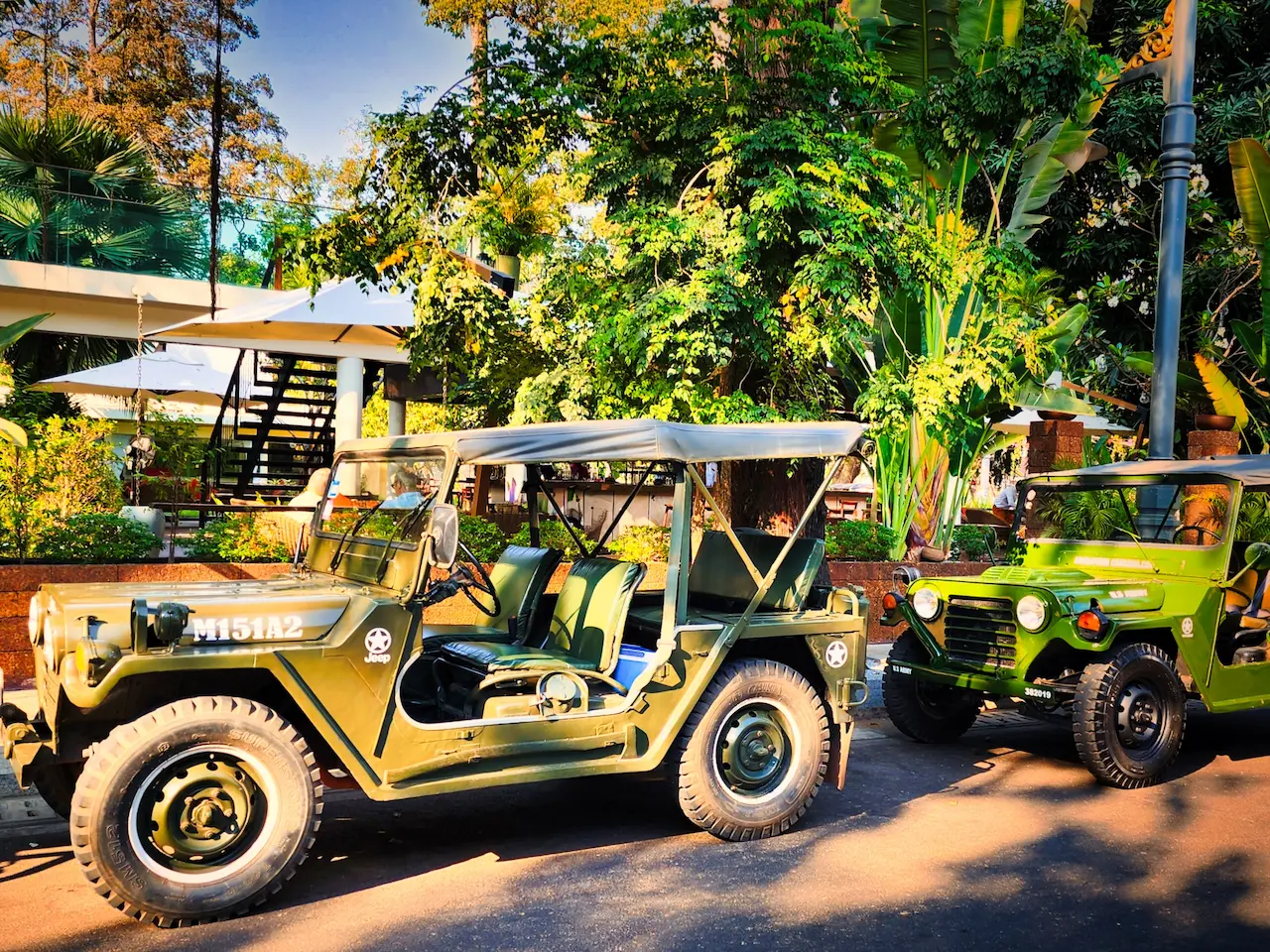
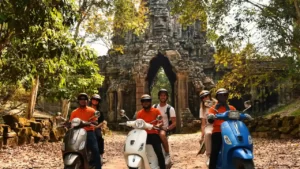
We rijden door weer en wind. Ponchos zijn inbegrepen bij de Vespa, en bij hevige regen stapt de groep over op een Jeep. Een avondmarkt in een hoosbui is nog steeds niet de avond die iedereen zich voorstelt bij het boeken, dus als je in het regenseizoen reist en je hebt maar één vrije avond, ga er dan vanuit dat het weer een stem heeft.
Veelgestelde vragen
Is street food veilig om te eten in Cambodja?
Ja, wanneer het voor je neus wordt bereid en heet wordt geserveerd, vanaf een kraampje met een lokale rij wachtenden. Het risico zit in rauwe bijgerechten, onveilig water en eten dat lauw wordt gehouden in plaats van heet. De WHO registreerde tussen 2014 en 2023 meer dan 7.000 gevallen van door voedsel overgedragen ziekten in Cambodja, verspreid over alle keukens en niet alleen bij straatstalletjes.
Hoe vermijd je voedselvergiftiging in Cambodja?
Eet waar het eten beweegt, bestel dingen die boven een vlam worden bereid terwijl je toekijkt, neem ze dampend aan, en drink mineraalwater uit fles inclusief het ijs en de vruchtenshakes. Sla rauwe garnering over en alles wat warm onder een lamp staat. Die gewoonten pakken het meeste aan van wat de WHO in 2024 in Cambodja als oorzaken van uitbraken benoemde: bewaartemperatuur, kruisbesmetting, en onveilig water of ingrediënten.
Is het veilig om salade te eten in Cambodja?
Niet van een straatkraam. Het CDC raadt reizigers af om verse salades te eten omdat besmetting het wassen overleeft. In restaurants met gezuiverd water is het over het algemeen prima. Bij een kraam moet je ervan uitgaan dat de bladeren zijn afgespoeld met kraanwater.
Is het ijs veilig in Cambodja?
Fabrieksijs is, en dat herken je eraan: het heeft de vorm van een cilinder met een gat in het midden, gemaakt van gezuiverd water, en het is wat restaurants, bars en de meeste drankkraampjes gebruiken. Weiger los gestampt ijs uit een ongemarkeerde zak of emmer.
Is het hygiënisch verantwoord om op de markten in Siem Reap te eten?
Ja, met dezelfde stalletje-voor-stalletje-beoordeling die je overal zou gebruiken. De vers bereide balies op de avondmarkt van Siem Reap zijn het veiligst in de rij. Voorbereide bakjes en alles dat warm wordt gehouden, vormen de risico's.
Zijn gekookte eieren veilig om te eten in Cambodja?
Ja. Ze worden gaar gekookt in een afgesloten schaal die je zelf kraakt, wat ze een van de veiligere straataankopen maakt. Koop bij een verkoper wiens mand snel wordt vernieuwd en vermijd voorgepelde eieren die in water liggen.
Zijn de insecten veilig om te eten in Cambodja?
Ja. Krekels en vogelspinnen worden op hoge temperatuur gefrituurd, wat de veiligste bereidingswijze is op straat. Niemand hoeft ze te proberen, en tijdens onze rondleidingen worden ze aangeboden in plaats van opgedrongen.
Heb je vaccinaties nodig om straatvoedsel te eten in Cambodja?
De CDC raadt hepatitis A aan voor niet-gevaccineerde reizigers van één jaar of ouder die naar Cambodja reizen, en tyfus voor de meeste reizigers. Beide worden verspreid via voedsel en water. Raadpleeg een arts voordat u vliegt, omdat een reiskliniek uw eigen medische geschiedenis en route kan beoordelen.