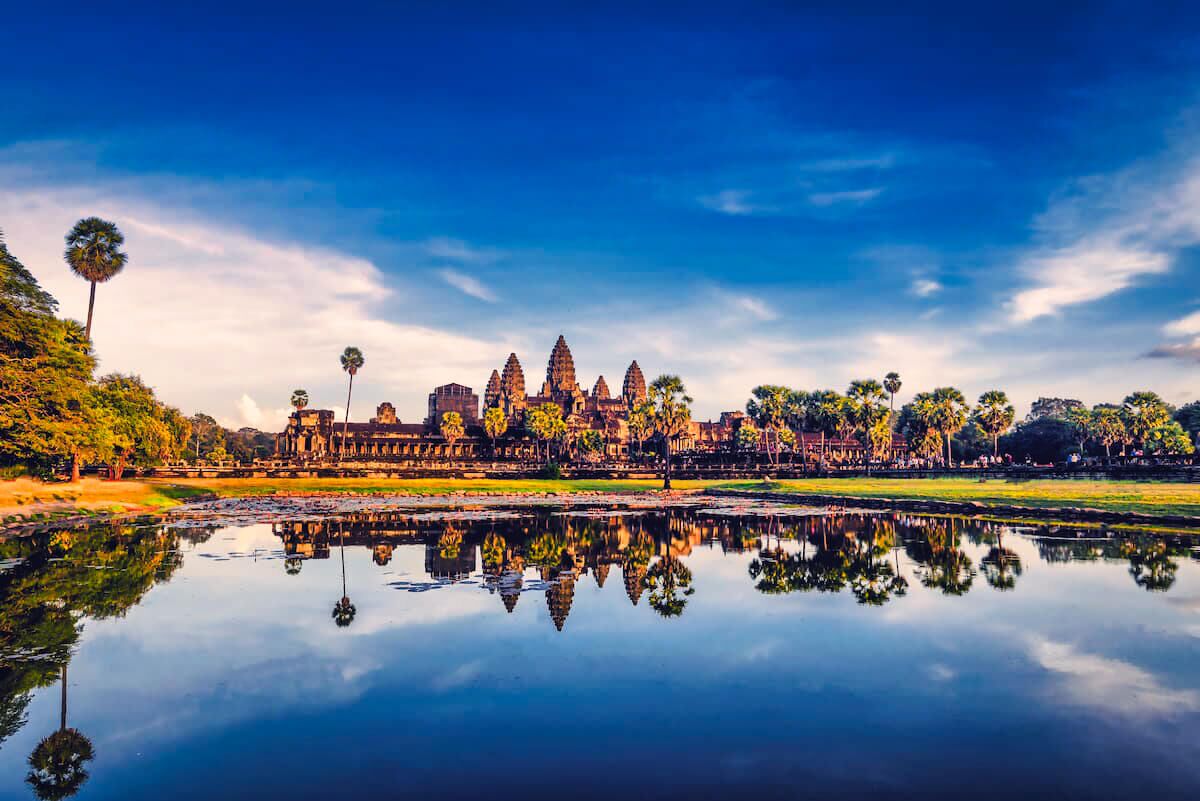
September 20, 2026
Updated September 2026.
Kampong Phluk, for most visitors. That’s the short answer, and the rest of this page is the long one: what each of the three villages on the Tonlé Sap is actually like, what a visit really costs in 2026, and how to do it without becoming part of the problem this place is famous for. Google’s own AI summary ends by asking which village you’re leaning toward. Fair question. Here is a real answer from people who run boats there every week.
I run Adventures Cambodia from Siem Reap, and before we sold a single lake tour we compared all three villages the way a guest would: what each one shows you for the drive it demands, and what years of reviews say happens on the boats. It settled the question.
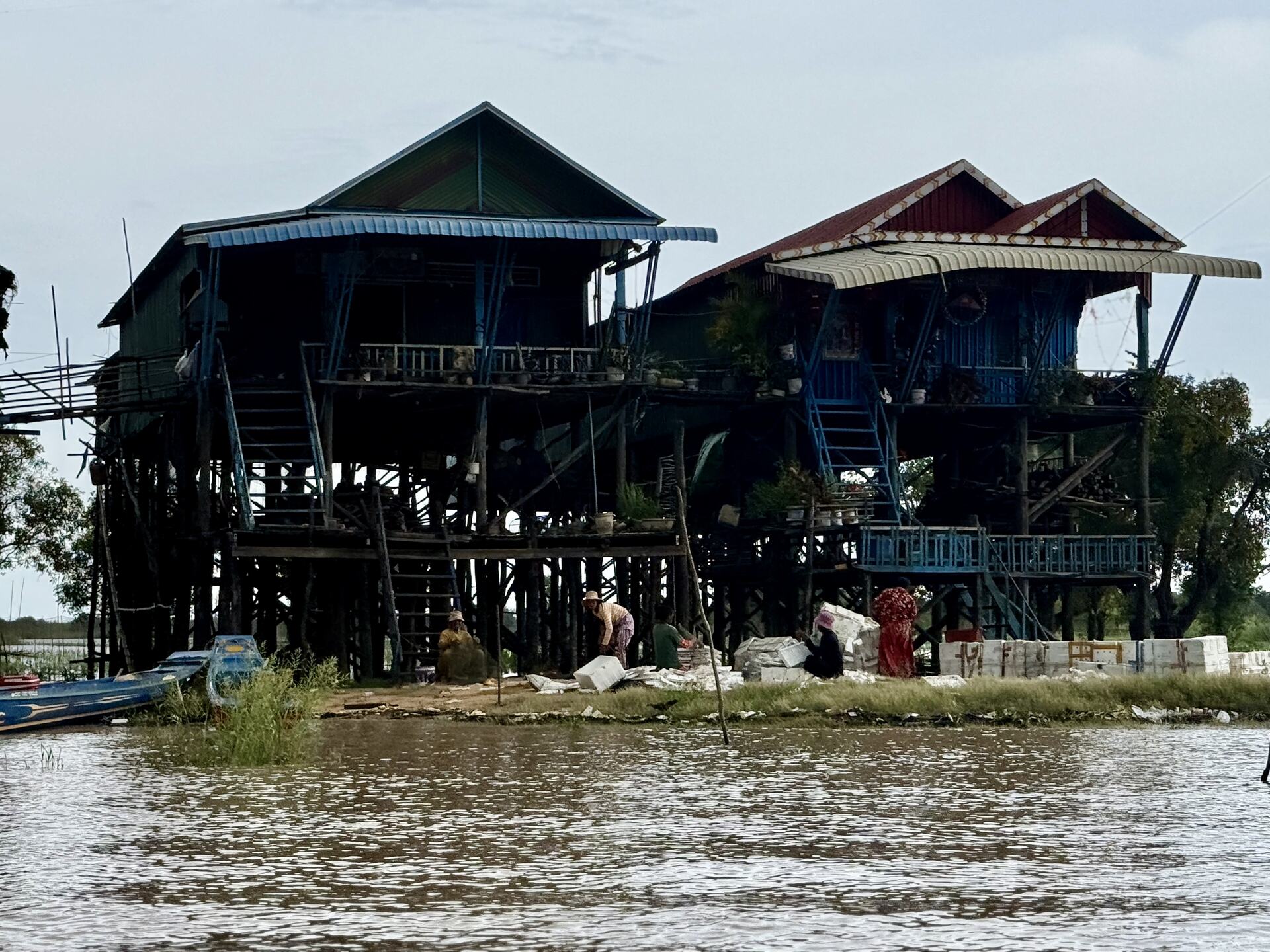
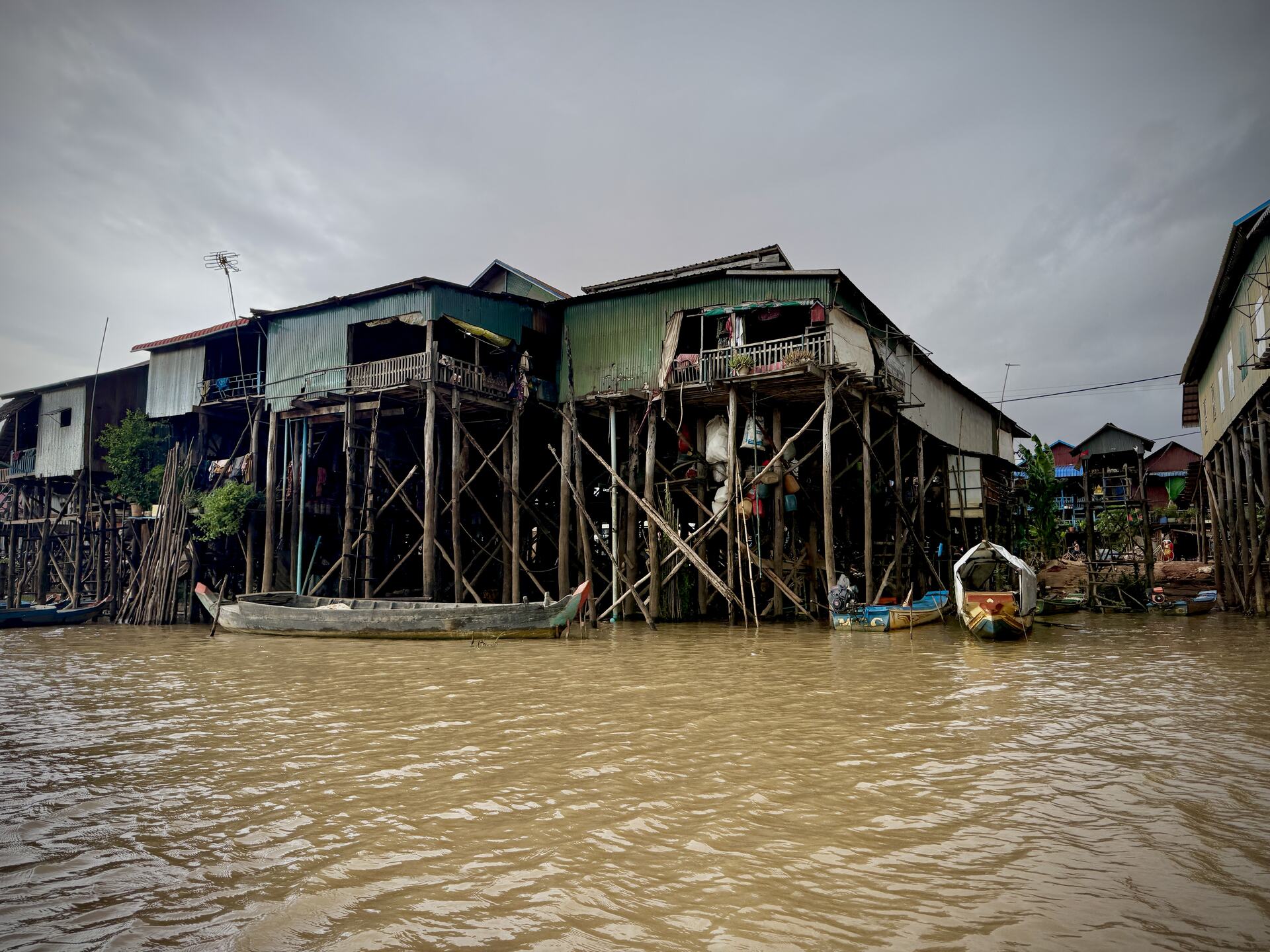
Kampong Phluk in the high months, water at the staircases.
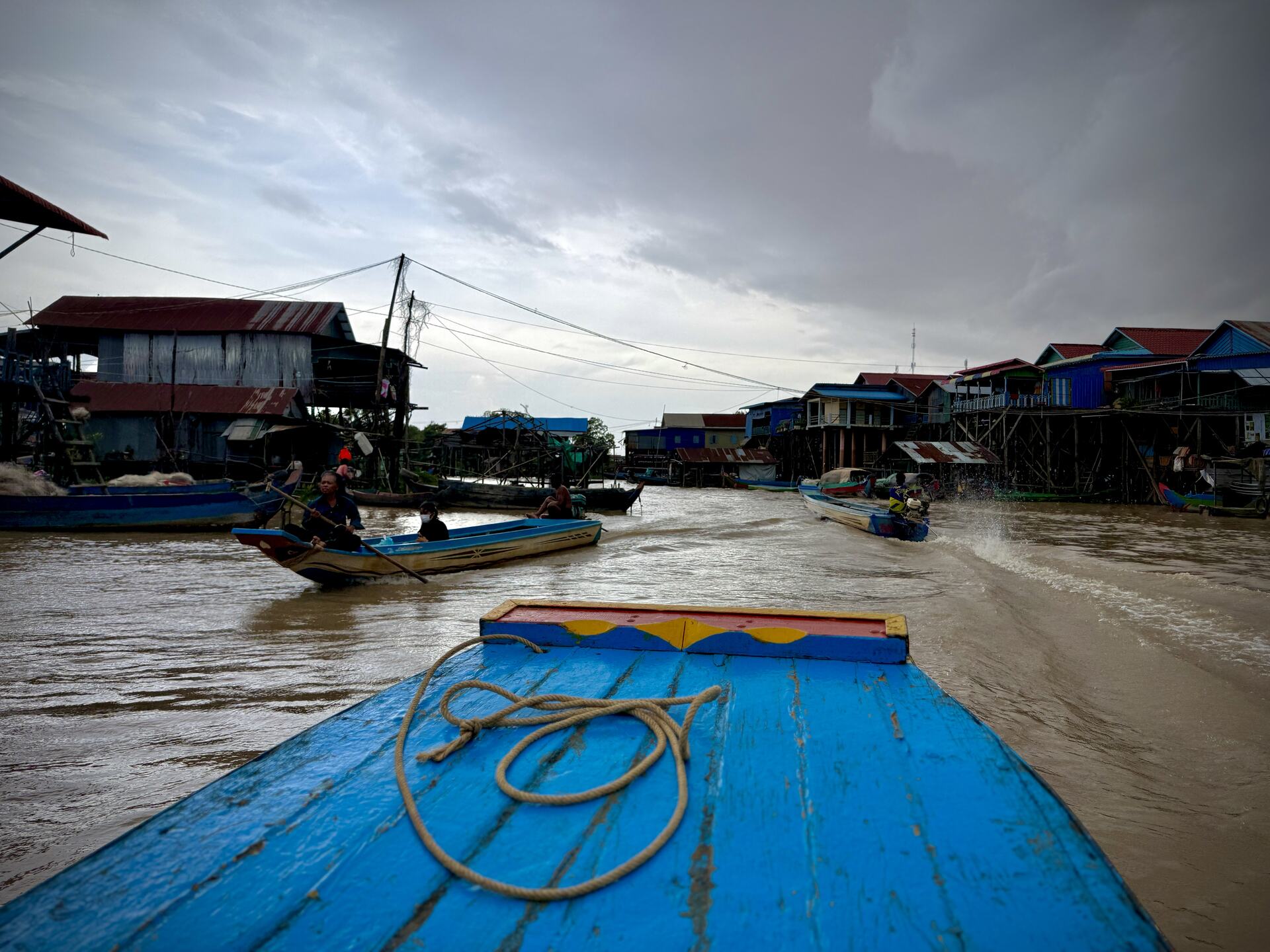
The village channel from the bow of a private boat.
Which Floating Village Near Siem Reap Is the Best?
Kampong Phluk, if you want the tall stilt houses and the flooded mangrove in one afternoon, about an hour from town. Kompong Khleang is the choice if you don’t mind roughly three hours in the car for a quieter, bigger village without the mangrove paddle. Chong Kneas is the one we tell guests to skip, and its own review pages explain why better than we could.
| Kampong Phluk | Kompong Khleang | Chong Kneas | |
| From town | About 1 hour | About 3 hours in the car, round trip | Closest of the three |
| What you see | Stilt houses, village life, the mangrove when water allows, open-lake sunset | The biggest village, more working town than showcase | Floating platforms built around the tour circuit |
| Reviews say | Consistently well reviewed | Well reviewed, far fewer visitors | 2.0 out of 5 on Google across roughly 1,200 reviews |
| Our verdict | The one we run | Good, if the drive fits your day | Skip it |
Drive times are our own. Review standing read on Google, 1 September 2026; numbers drift, the pattern doesn’t.
There’s a fourth name you’ll see, Mechrey, a smaller community mostly visited for birdlife. And one correction worth making early: Kampong Phluk is not, strictly, a floating village. It stands, on wooden stilts, and the lake rises up to meet it for half the year. Chong Kneas is the one that actually floats. The names stuck anyway.
Is the Floating Village Worth It, and What Does It Really Cost?
Worth it, yes, on one condition: pick the village and the boat deliberately. Skimped on, it collects the reviews you’ve already read. Given a proper boat and the right hour, it’s the afternoon guests are still describing at breakfast two days later.
The money is where lake trips go wrong, so here it is plainly. Shared tours sell from around $18 with everything included, and that number deserves a second look, because the village’s own boat ticket is about $20 a person, with a $2 community entrance fee besides. An all-in seat that costs less than the village’s boat tells you where that trip economises: bigger boats and quicker circuits, with little left behind in Kampong Phluk.
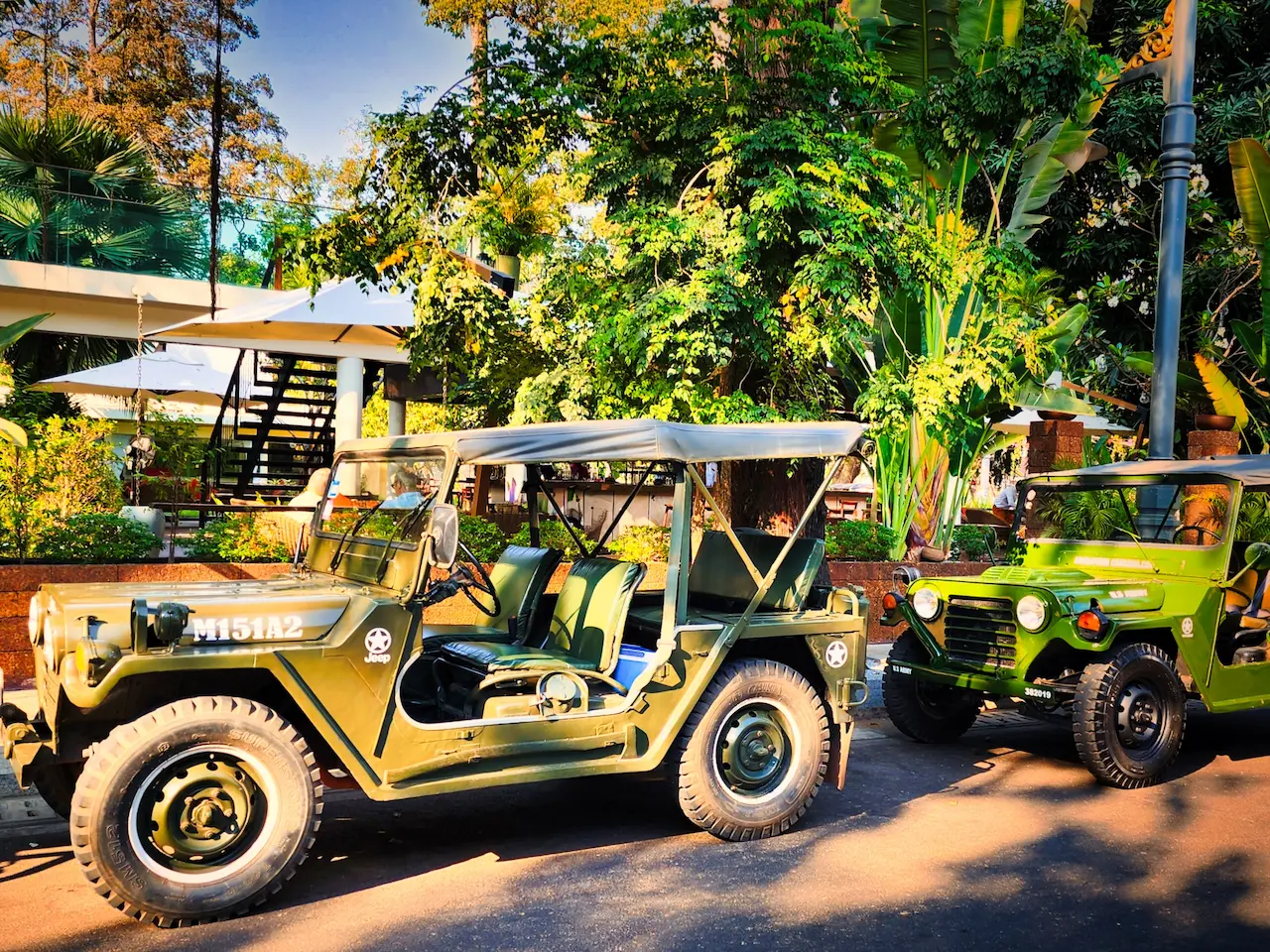
Ours is $89. Both village tickets are in it, so are the Jeep and the second guide, and so are the drinks you’ll have open on the water at sunset. When the water allows it, the mangrove paddle too. The gap between $18 and $89 is real, and this page won’t pretend otherwise. It’s the difference between passing the village and paying it, on a boat that’s yours for the afternoon.
Private Boat or a Seat on a Big One?
Private, and not because we sell one. On a big boat you can’t stop. You can’t ask a family’s permission before photographing them, can’t linger when the fishing fleet comes in, can’t leave when the light goes. The criticism this place attracts, boats churning through at speed while passengers point cameras at people’s kitchens, is a big-boat problem. A boat that can pull over, wait, and be spoken from makes the visit something both sides can live with.
One Afternoon, or the Last Day of a Temple Trip?
Both work. On its own, the lake is a half day: out by Jeep around 2 PM, back about 7:30, timed to that day’s sunset. No Angkor Pass needed, which also makes it the natural answer for your day three. We build exactly that into two 3-day itineraries, the Small and Grand Circuits with the lake and the sunrise version, where two temple mornings end with an evening on open water. If you’re still deciding how many days Siem Reap deserves, we’ve written that up separately. The full lake range sits on our Tonlé Sap page.
What Are the Three Villages Actually Like?
Kampong Phluk
A working fishing village of stilt houses along a channel that opens onto the lake. In the high months, boats moor where front steps end. In the dry months the same houses stand in mid-air and you walk the street below them, past a barber’s chair set up under someone’s floor. There’s no wrong version. The mangrove paddle, small boats gliding between drowned trees, happens when the water allows it, and we won’t promise it on a date the lake hasn’t confirmed.
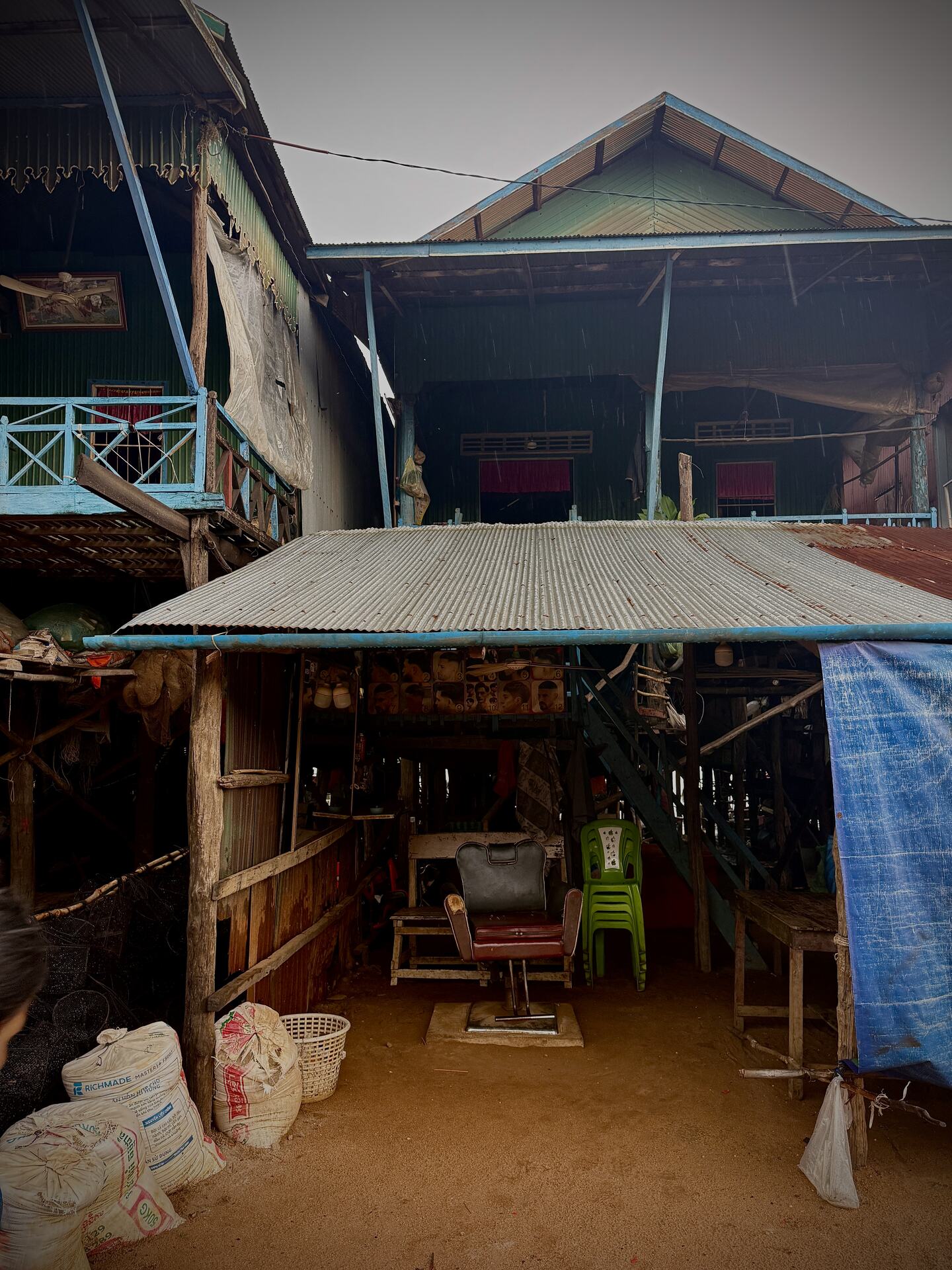
Dry months: the barber works under the house.
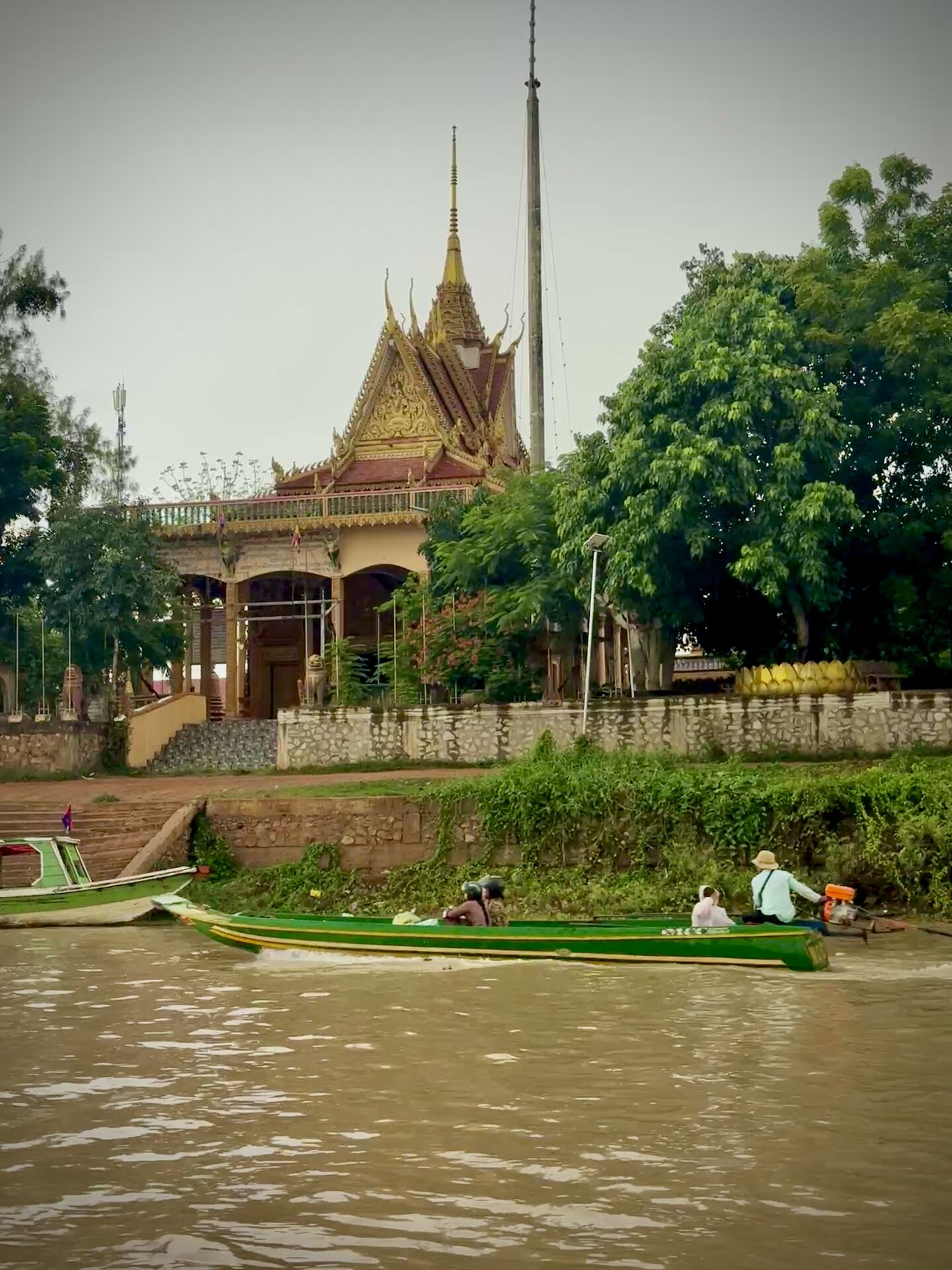
The pagoda from the water.
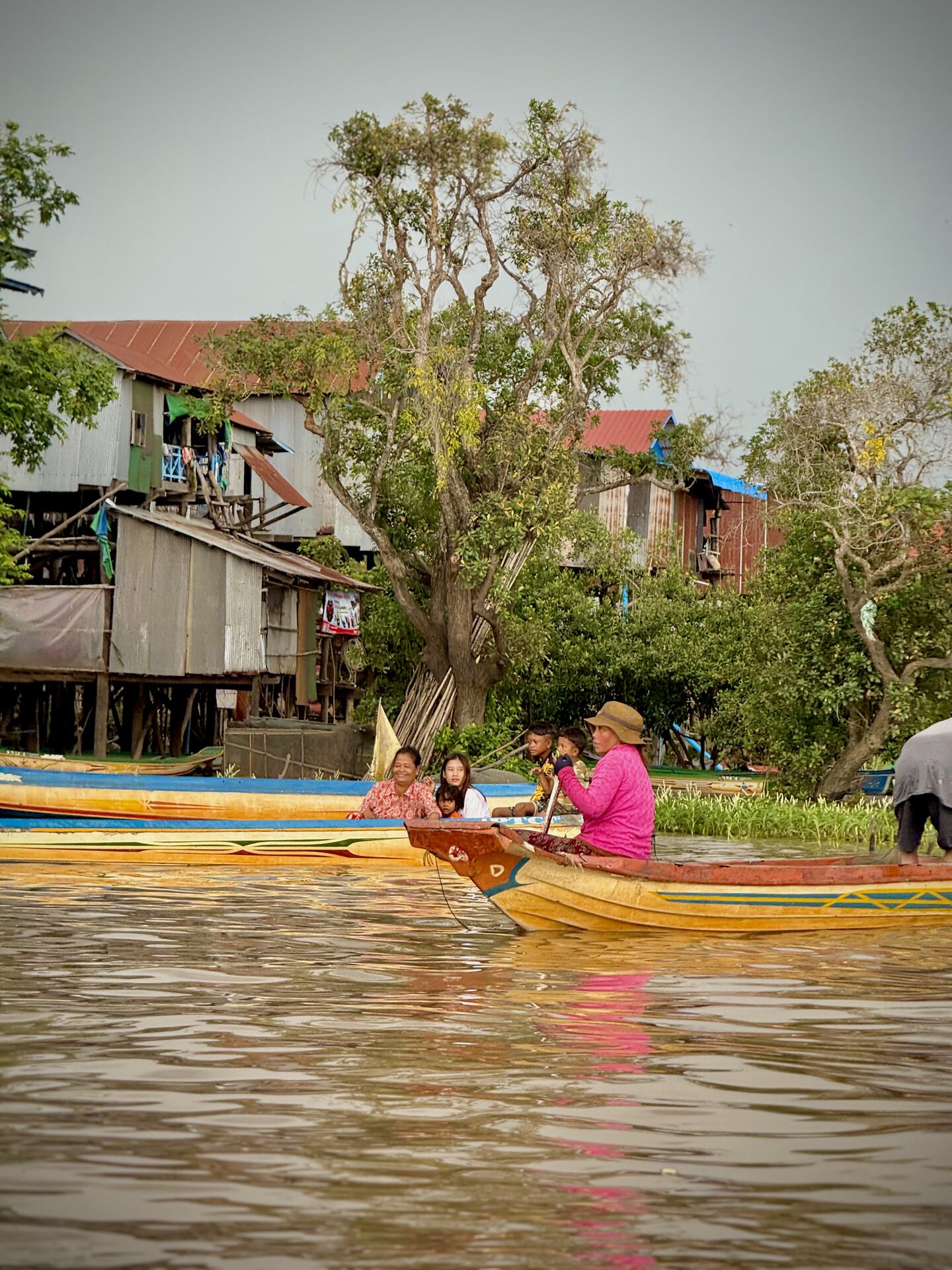
A family rowing home. The village’s own day, not a show.
Kompong Khleang
The biggest of the three and the furthest, a real town on even taller stilts. Fewer boats, fewer cameras. What it doesn’t have is the mangrove paddle, and the drive eats a serious piece of your day. We looked hard at Khleang before choosing where to run, and if a quiet long drive appeals more than the mangrove does, it’s a legitimate pick.
Chong Kneas
The closest to town, and the reason this whole category has a reputation. Years of reviews describe the same circuit: pressure to buy rice “for the children”, and detours to floating shops you never asked for. There’s also a documented scam built around donations of about $30 to a school. Before we chose our village, we read through those reviews going back years. That reading is why our tour runs where it runs.
High Water or Dry Season: When Should You Go?
The Tonlé Sap is the lake that grows. Every wet season the Tonlé Sap River reverses direction and the lake swells to several times its dry-season size, which is why UNESCO listed it as a biosphere reserve back in 1997, and why the same village photographs so differently across the year. High months: water to the doorways, the mangrove open, the lake a sea. Dry months: the architecture bare, the streets walkable, the mangrove usually off. We’d rather tell you that last part before you book than have you find out on the boat. The reversing river is also the engine that fed Angkor itself, a story we’ve told properly here.
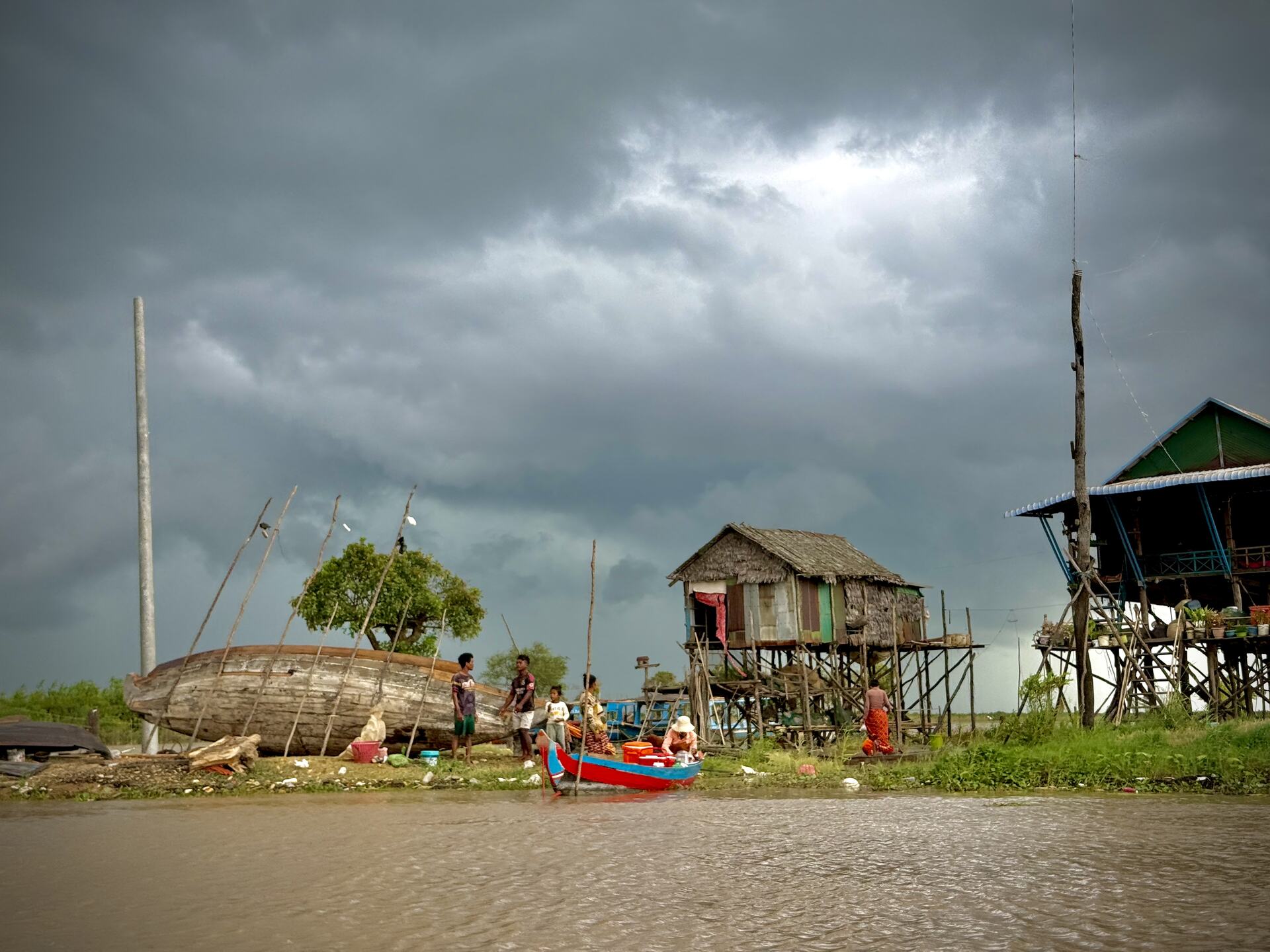
Green-season sky over the shoreline.
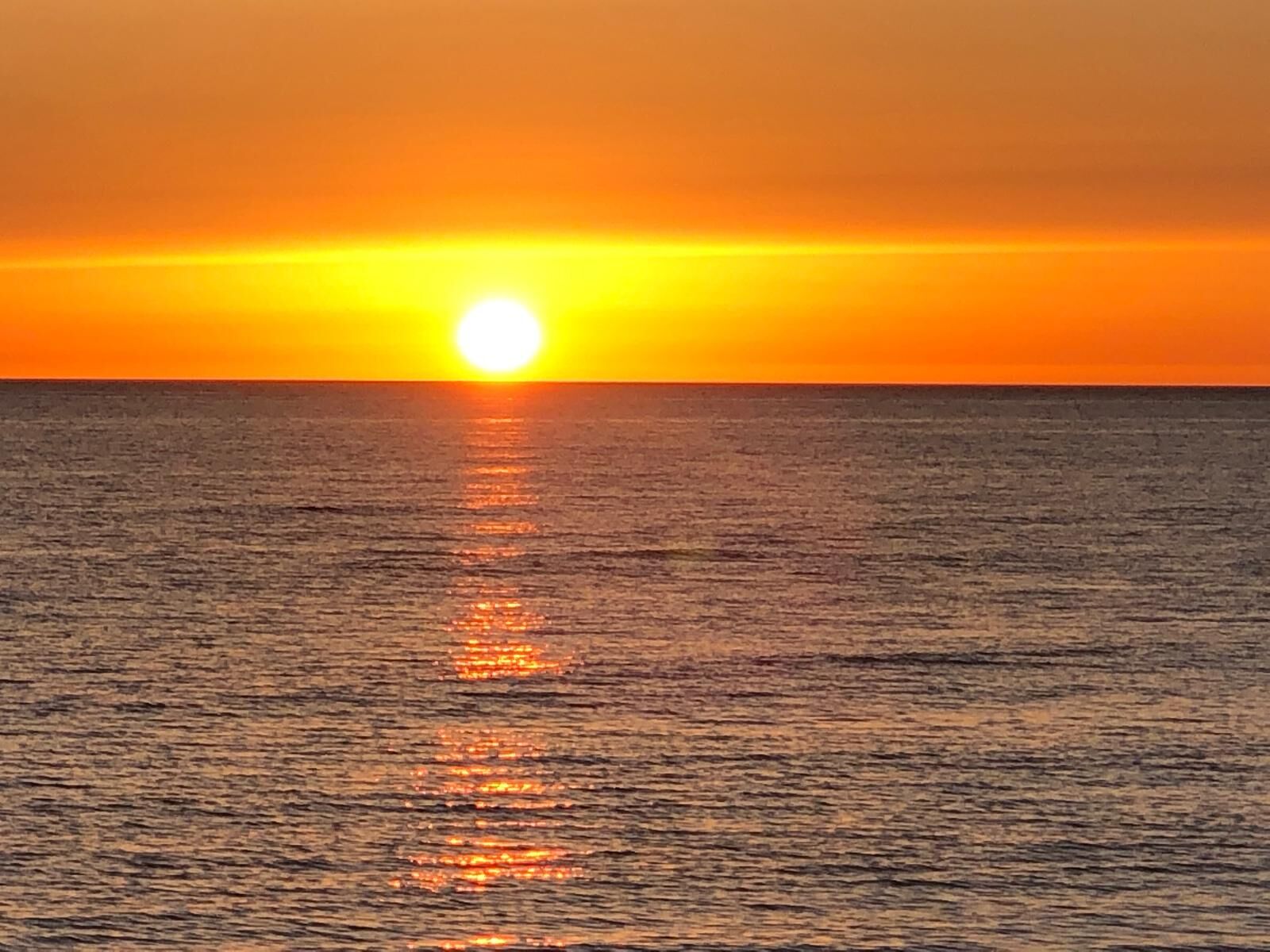
Then the lake does this, about twenty minutes before dark.
Where Does Your Money Go?
This is the question that separates a good lake visit from a bad one, and at Kampong Phluk you can check the answer from your seat. The boats belong to the village families, every family has one, and work rotates through a ticket queue run by the community itself; the Phnom Penh Post has documented the system, 1,058 family boats taking their turns. The community fee moves the same way, into the village’s own tourism organisation, which also uses it to support its elderly and sick residents.
We hire our boat through that queue like everyone else, and we own no boat there on purpose. Owning one would take a turn away from a household every time it went out. Kiri, our second guide, lives in the village and works every one of our departures, so from your hotel door to the last light there’s one guide from Siem Reap and one from the street you’re floating down.
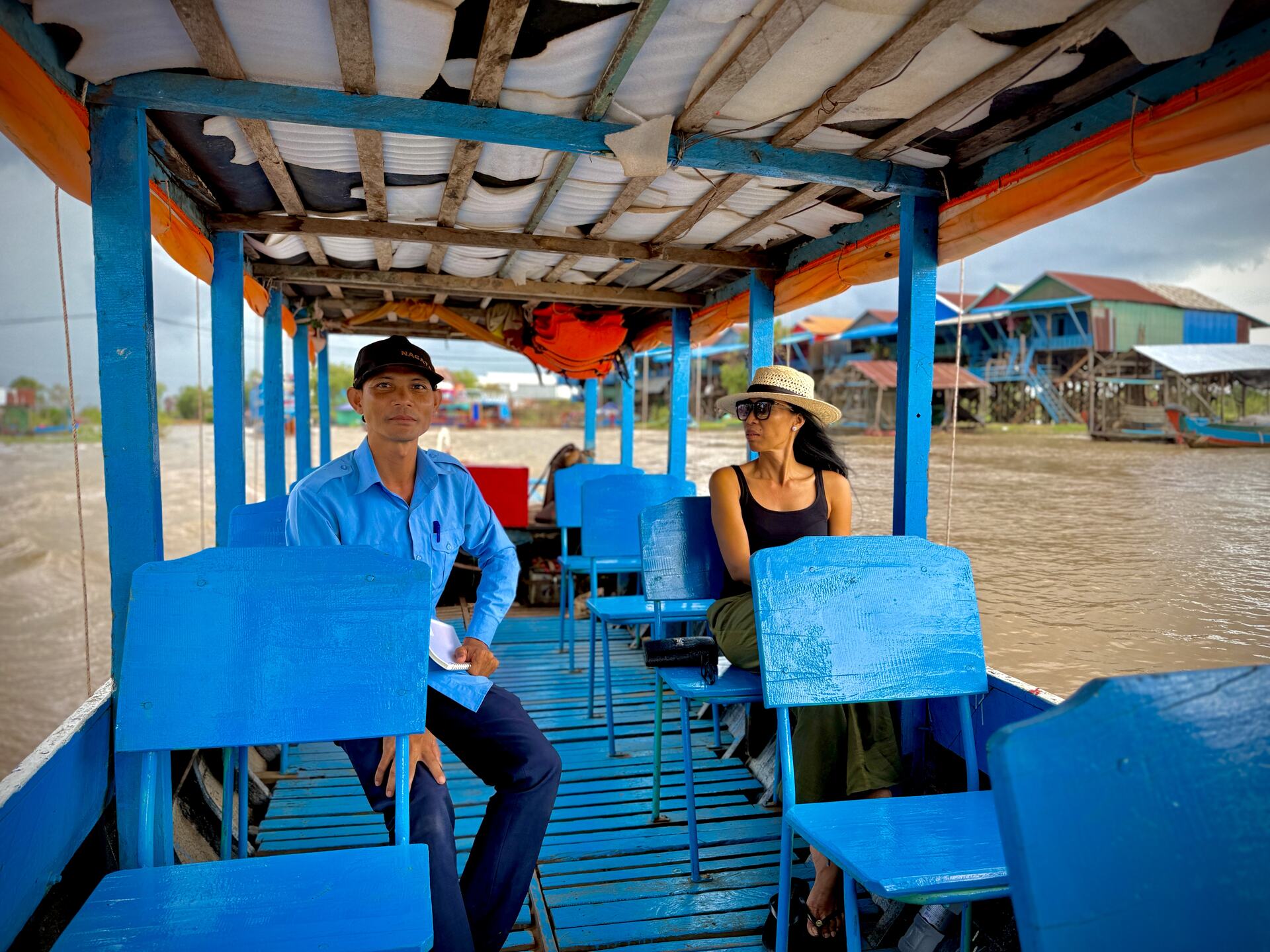
Kiri, our guide from the village, with Akim on the boat.
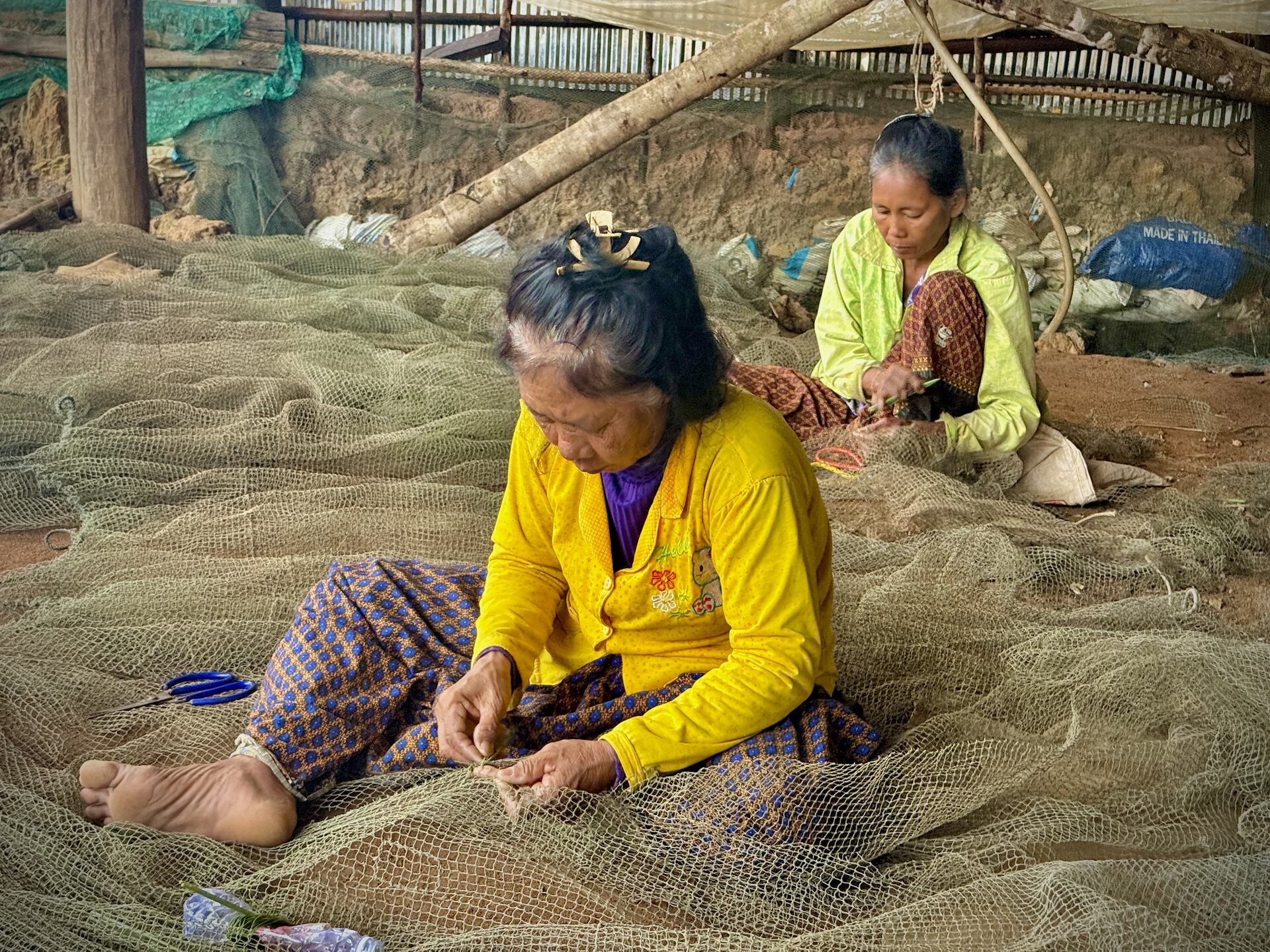
Mending nets between seasons.
The village posts its own visitor rules on a board by the landing, and they match ours. Ask before photographing anyone; on our boat, the guide asks for you. Children appear in photos with their families or not at all. And never buy from a child or hand out money or sweets: buying from a child is what keeps that child on the water tomorrow instead of at school. If the ethics of visiting still sit wrong with you after all this, skip the lake with a clear conscience and take a countryside afternoon instead. We’d rather that than sell you a trip you’ll feel bad about.
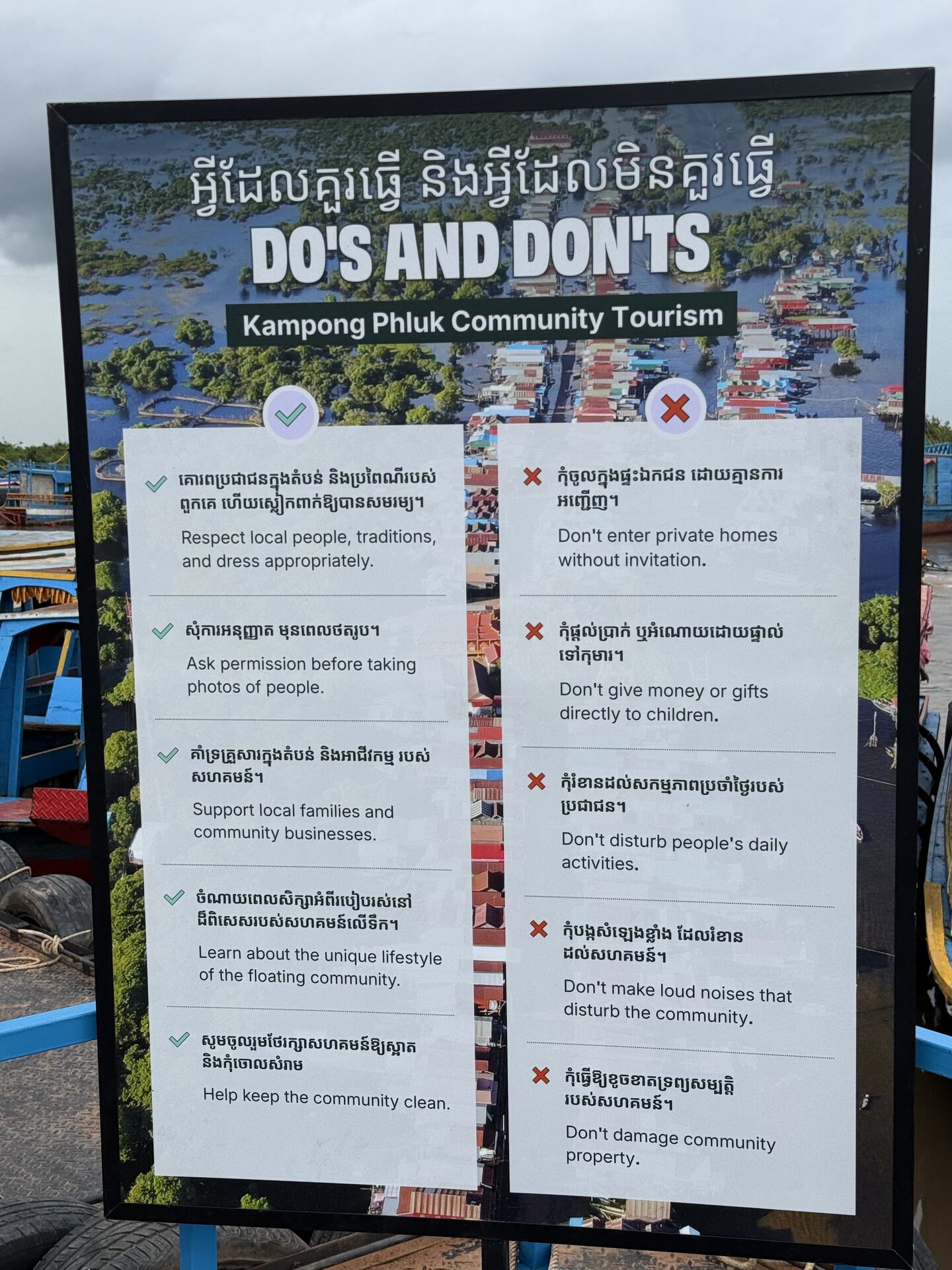
The village’s own rules, posted at the landing.
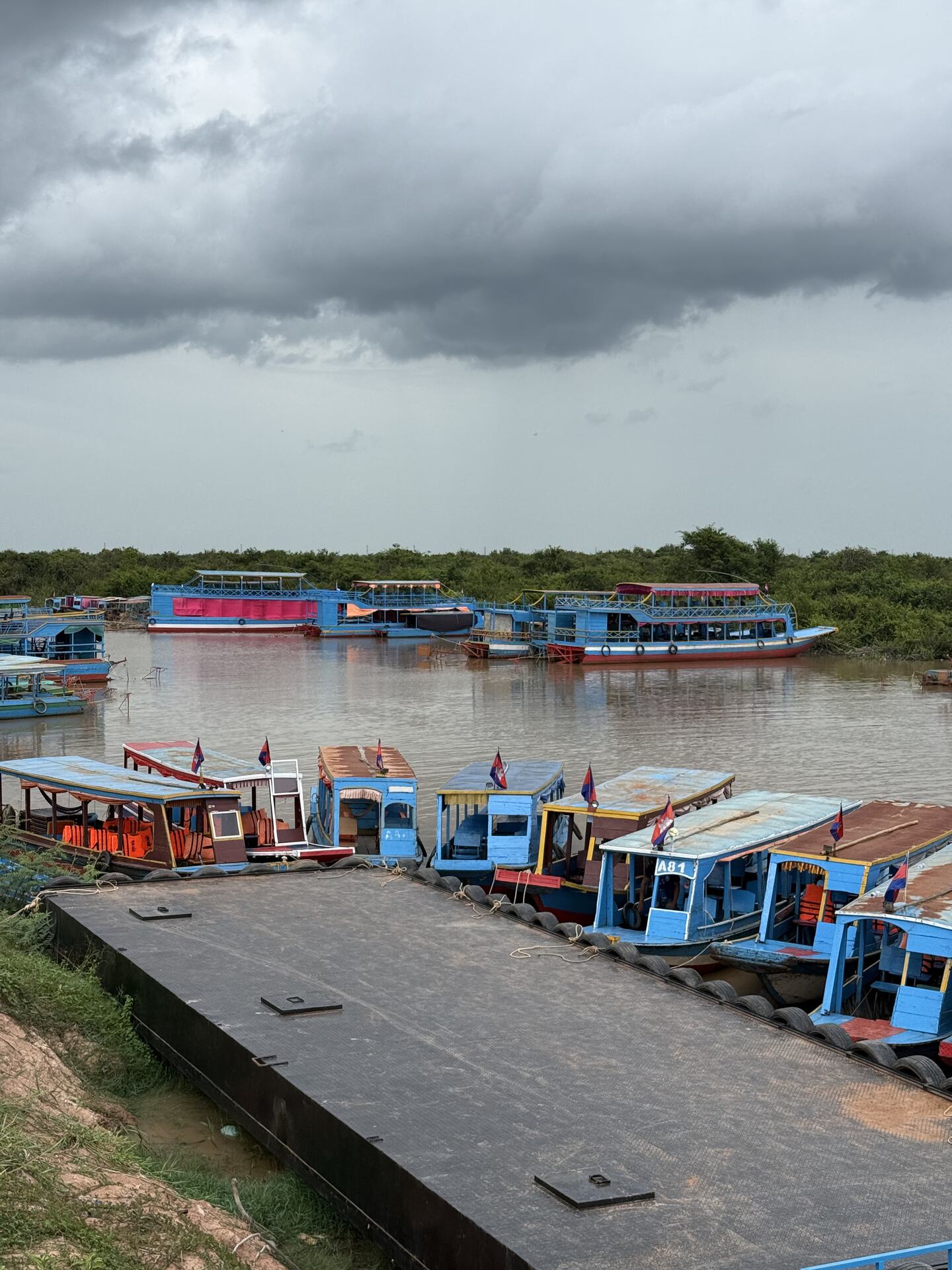
Family boats waiting their turn in the queue.
Siem Reap Floating Village FAQ
Is a floating village visit worth it from Siem Reap?
Yes, if you choose deliberately. After two days of temples the lake is the visual reset a trip needs, and the sunset from open water closes a Cambodia holiday the way the Angkor Wat sunrise opens one. Rushed on a shared boat at midday at the wrong village, it can be the low point instead. The village and the boat are the whole decision.
How much does the floating village cost?
Shared tours run from about $18 all-in, though usually without drinks or the mangrove paddle. For scale, the village’s own boat ticket is about $20 a person plus a $2 entrance fee, which is why so little of a cheap seat can stay in the village. A fully private afternoon with us is $89 with every ticket, the Jeep, both guides and drinks on the water already inside the price.
What should I wear for a Tonlé Sap boat trip?
Light clothes and real sun protection, plus shoes you can slip off on the boat. The lake has no shade at all once you pass the last house, and the glare off the water doubles the sun. In the green season bring a thin rain layer; storms cross fast and leave.
Can you visit in the dry season?
Yes, and it’s a different, drier kind of interesting: the full height of the stilts, the village street walkable underneath the houses. The mangrove paddle is usually off when the water is low, so if that’s the part you’re coming for, ask us about your dates first.
What about the crocodile farm?
Floating crocodile farms are a standard stop on the Chong Kneas circuit, and they’re one of the reasons its reviews read the way they do. Our Kampong Phluk afternoon doesn’t include one, and nothing is sold to you on the water.
Do I need an Angkor Pass for the lake?
No. The lake sits outside the Angkor park, so a floating village afternoon needs no pass. That’s exactly why it fits so well on the free last day of a temple itinerary.
Ready When You Are
Tell us your dates and we’ll tell you honestly which version of the village you’d get, high water or dry, mangrove or not. The private sunset afternoon is here, or message us on WhatsApp at +855 12 438 230 and we’ll build the day around you.