
September 20, 2026
Updated August 2026.
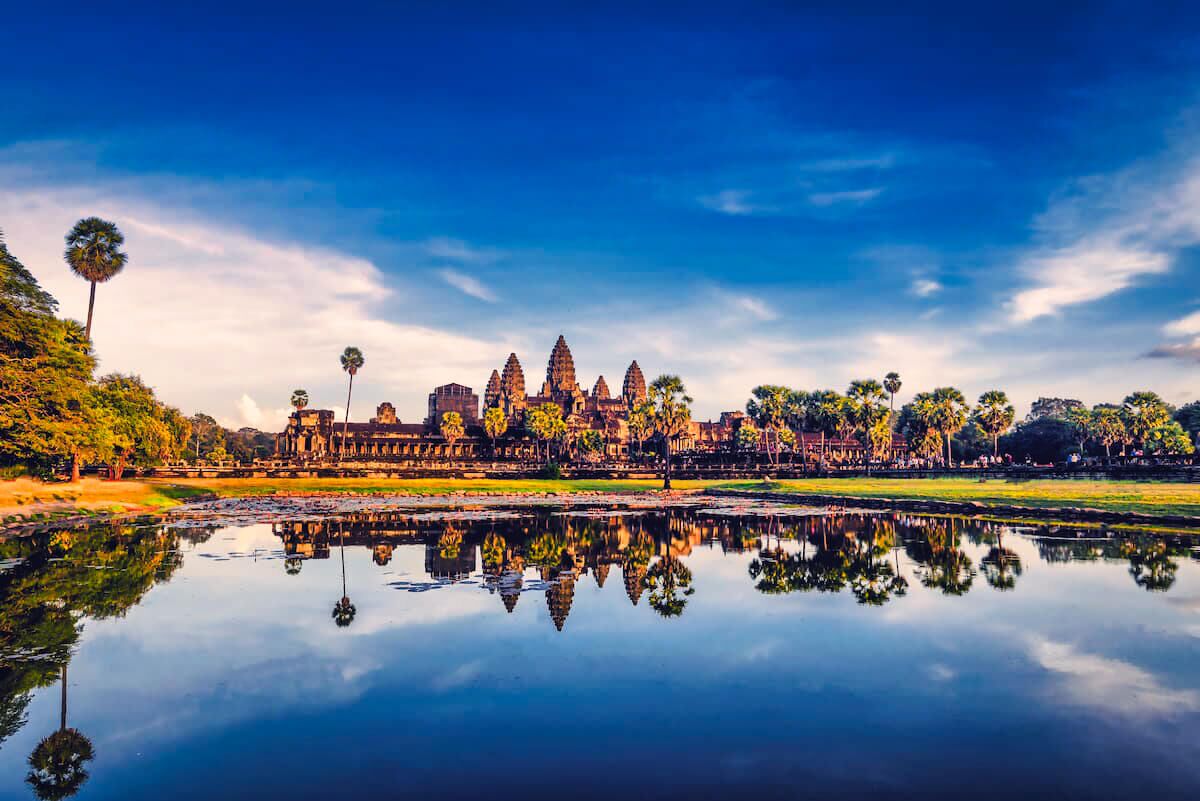
I have lived in Siem Reap almost all my life. Angkor is the reason most people come, and I understand that completely. But the temples are one part of this place. This guide is about the rest of it, the countryside and the food and the long evenings, the Siem Reap I would show a friend.
If your temple day is still to be planned, our one-day Angkor Wat private tour covers Angkor Wat, Bayon and Ta Prohm with your own guide and leaves the afternoon free for what follows below.
The town sits in the northwest of Cambodia, about five hours by road from Phnom Penh. It has grown fast, and it now carries a real food scene, good spas, a proper museum, and rice-field countryside on its doorstep that I think earns your time as much as anything inside the temple walls.
Here is how much time to give the town, and the places I send guests when they ask what else there is to do.
The short version
- Give Siem Reap at least four days: two for the Angkor temples, two for everything else.
- Beyond the temples, the town holds the rice-field countryside, the APOPO HeroRATs centre, Artisans Angkor, Road 60 street food, Phnom Kulen, the Phare circus, and a Khmer dinner show.
- Book ahead for the best restaurants and the dinner show. Siem Reap’s good tables fill up nightly.
- The countryside is the part I most want you to see. Ten minutes out of town, the rice fields begin.
The Best Things to Do in Siem Reap Beyond the Temples
Here are the places I actually send people. Some are a half-day on their own. Some slot neatly around a morning at the temples. I have put them roughly in the order I would do them.
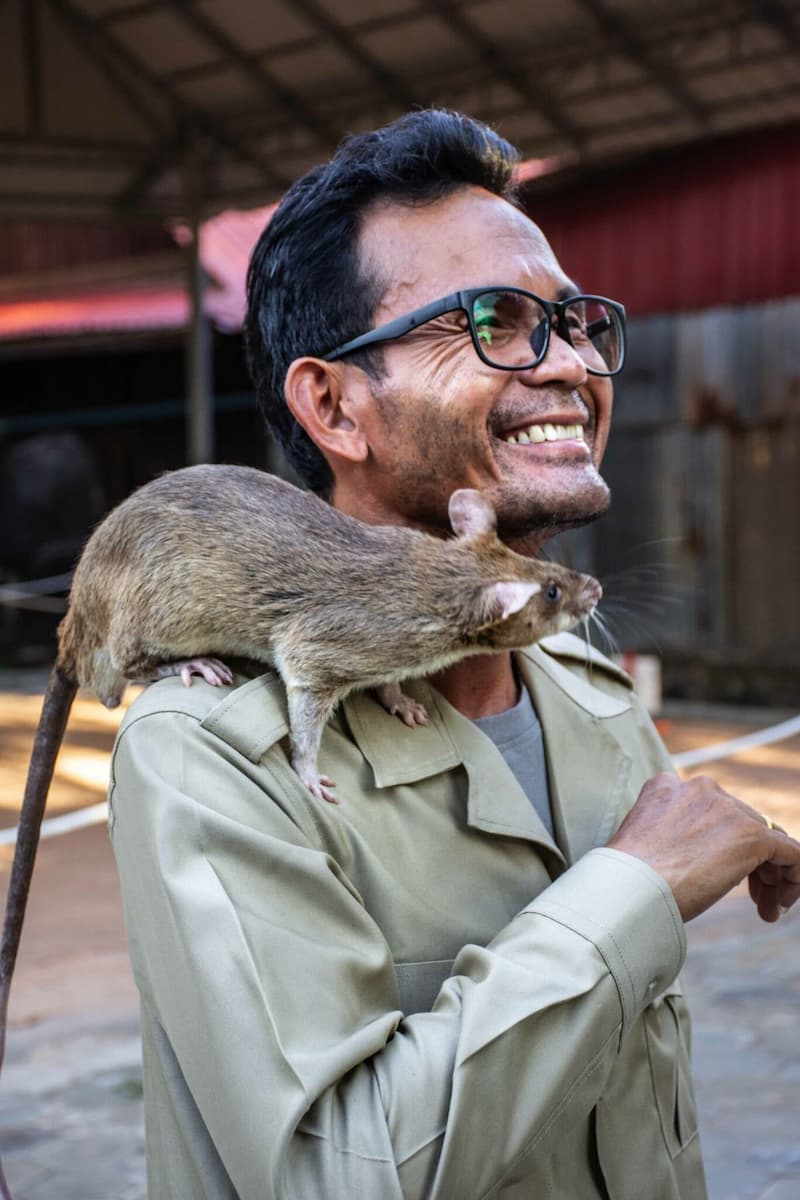
A HeroRAT and its handler at the APOPO centre.
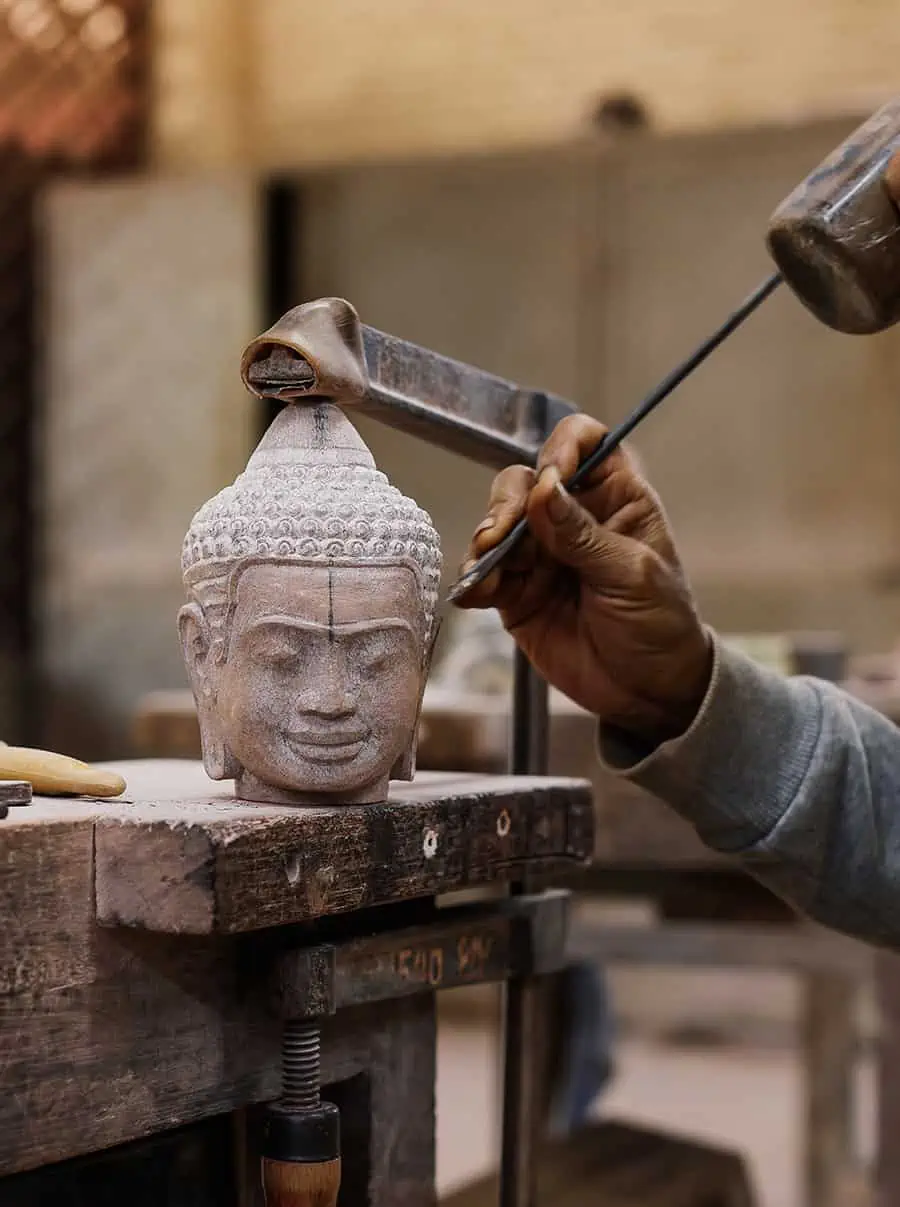
Stone carving in the Artisans Angkor workshops.
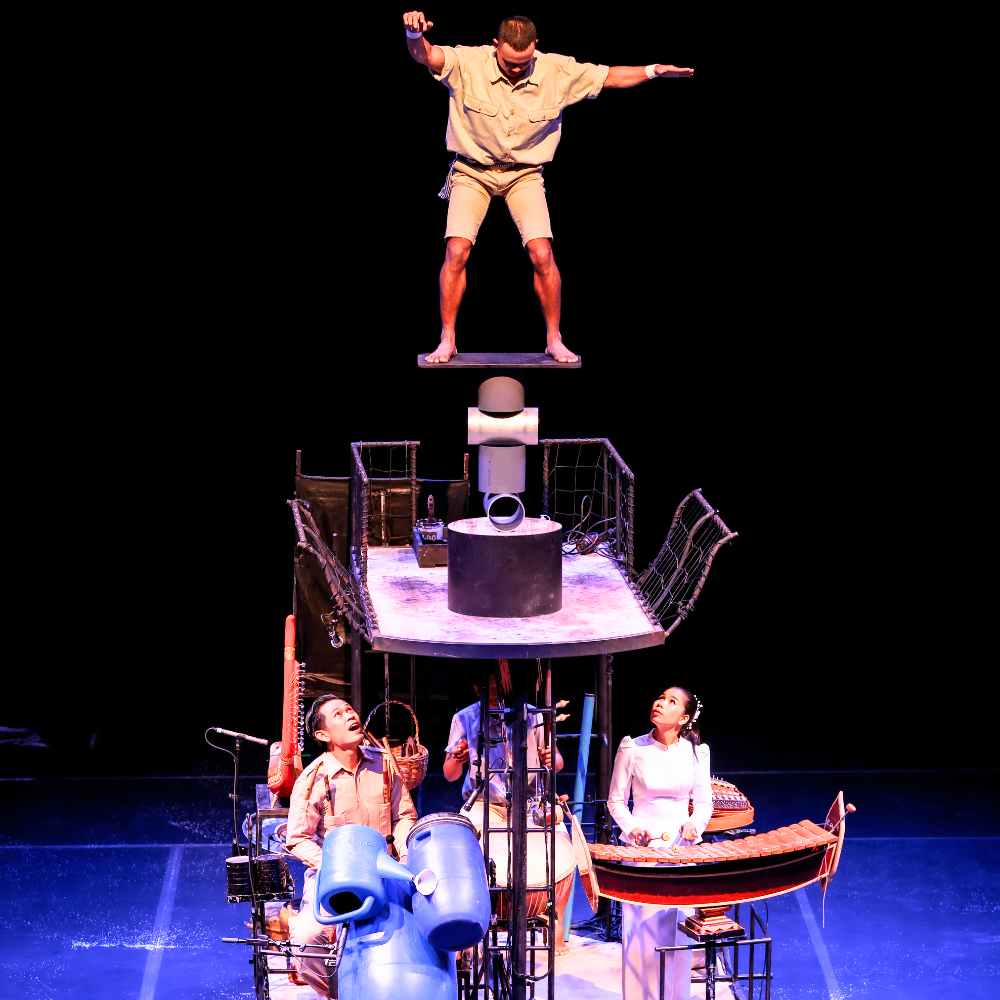
Acrobatics at Phare, The Cambodian Circus.
A Morning in the Countryside
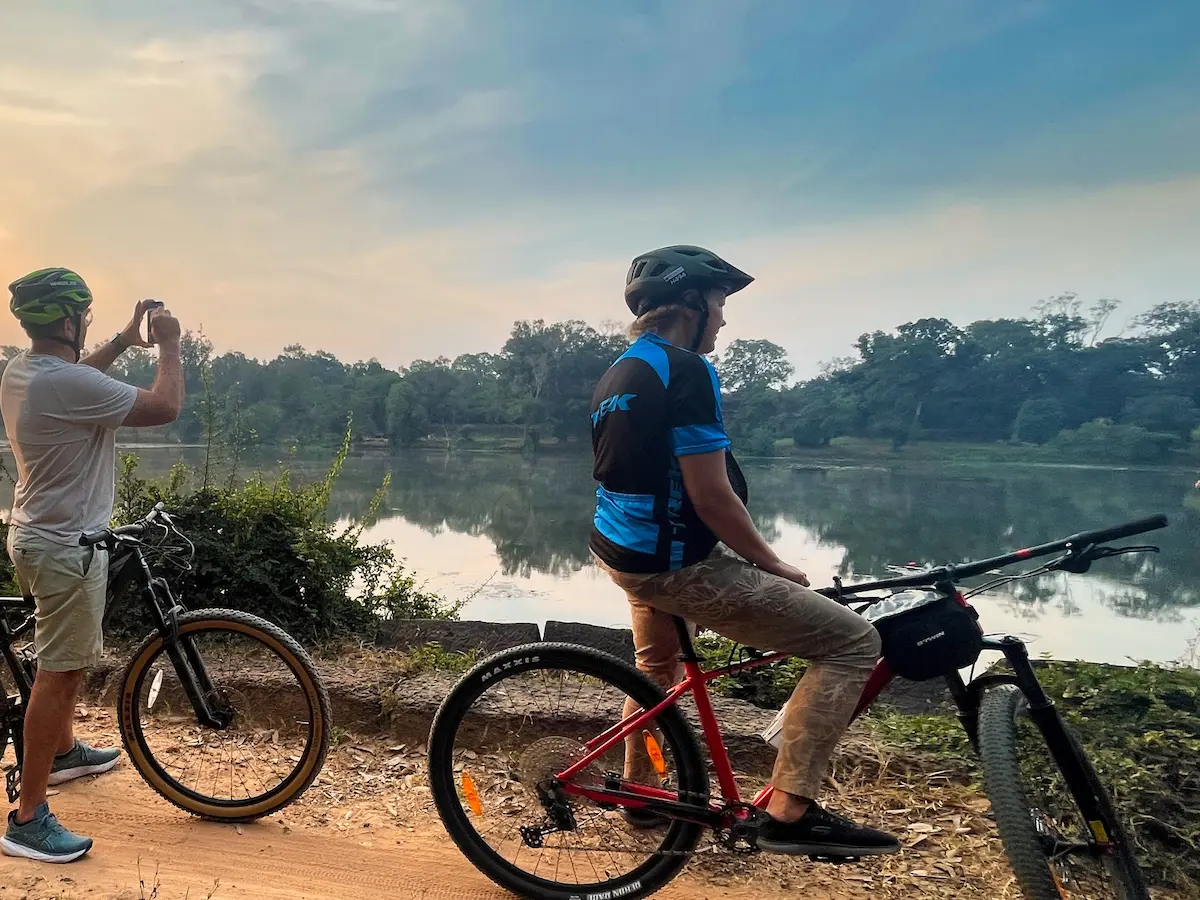
The countryside around Siem Reap is, to me, the equal of anything inside the temple walls, and almost no independent traveller finds their way into it. You need someone who knows the tracks. On our countryside tour you ride out through rice paddies, stop at a working pagoda where local families come to pray for health and good marriages, and pass through villages that have not changed much in my lifetime.
If the timing is right, a fortune teller will read your future. I have watched this land on people. It is not a show put on for visitors. It is a piece of ordinary Khmer life, and guests carry it home more often than they expect to.
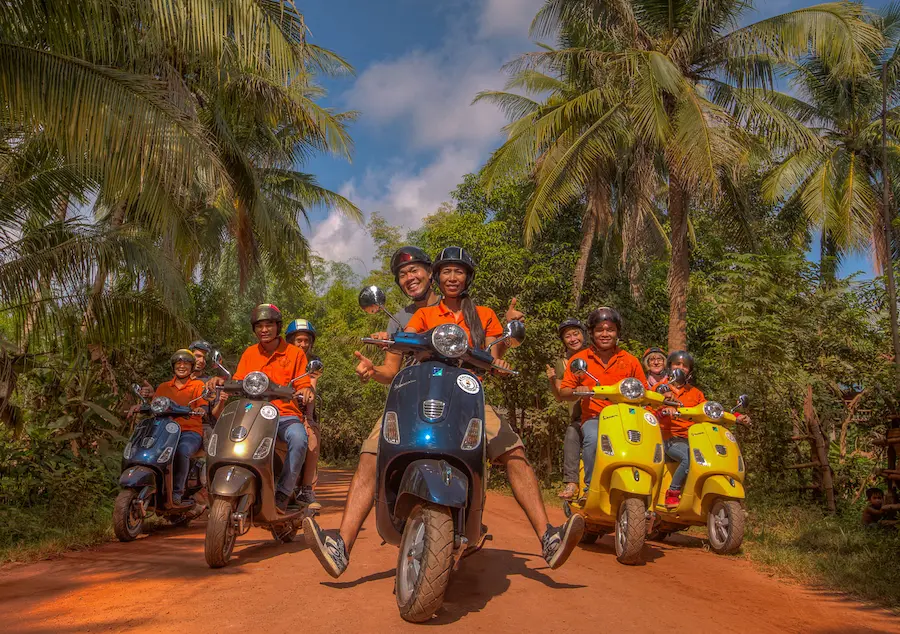
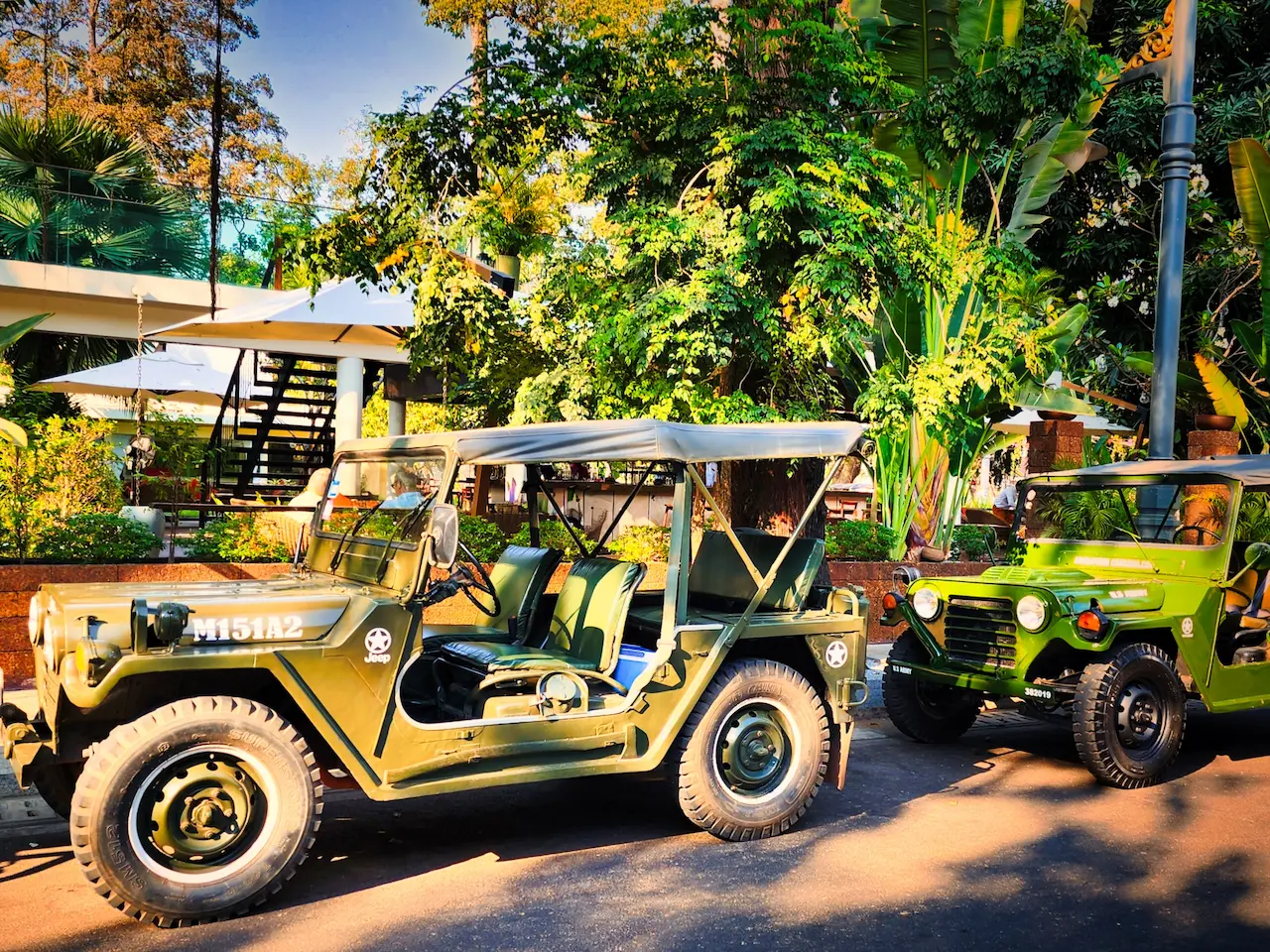
We run the countryside by Vespa, by vintage jeep, and by electric mountain bike, and the vehicle changes the day. The e-bike version takes back roads and trails no car can reach. That is the one I book most.
Good to know. A half-day, three to four hours, best in the morning or late afternoon. All of it within 15 km of town.
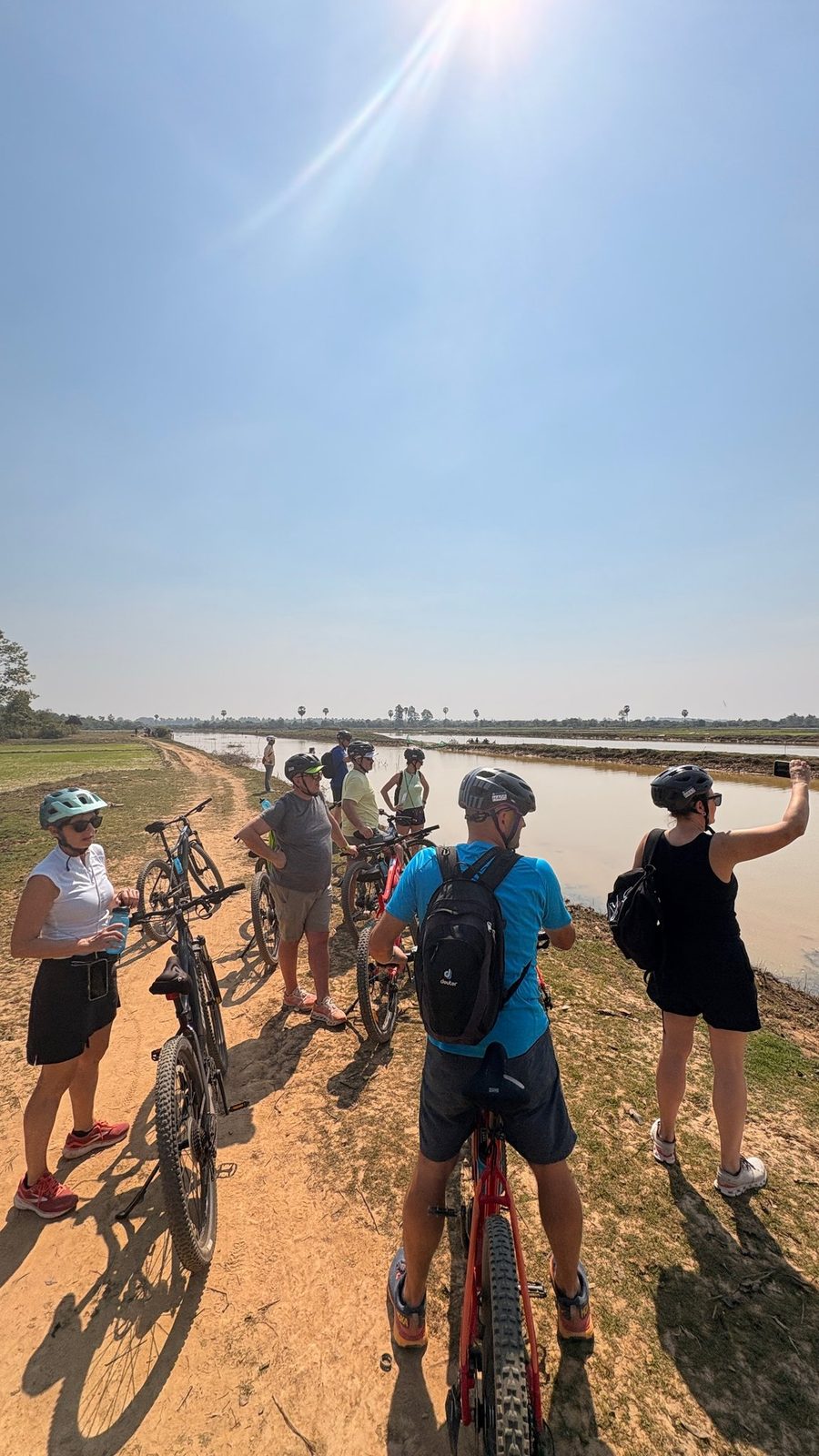
The countryside by e-bike, out past the rice fields.
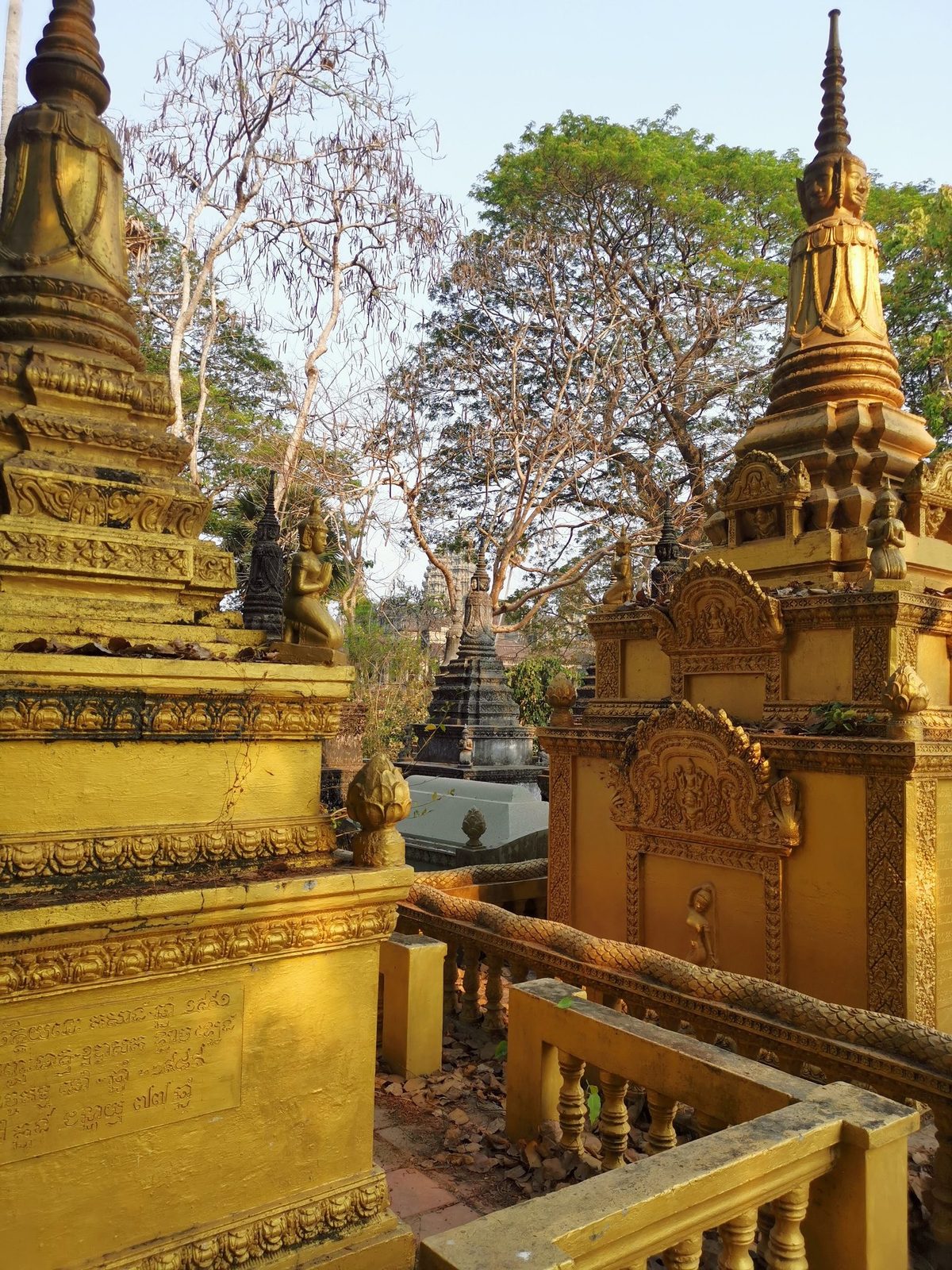
A working pagoda, where families come to pray.
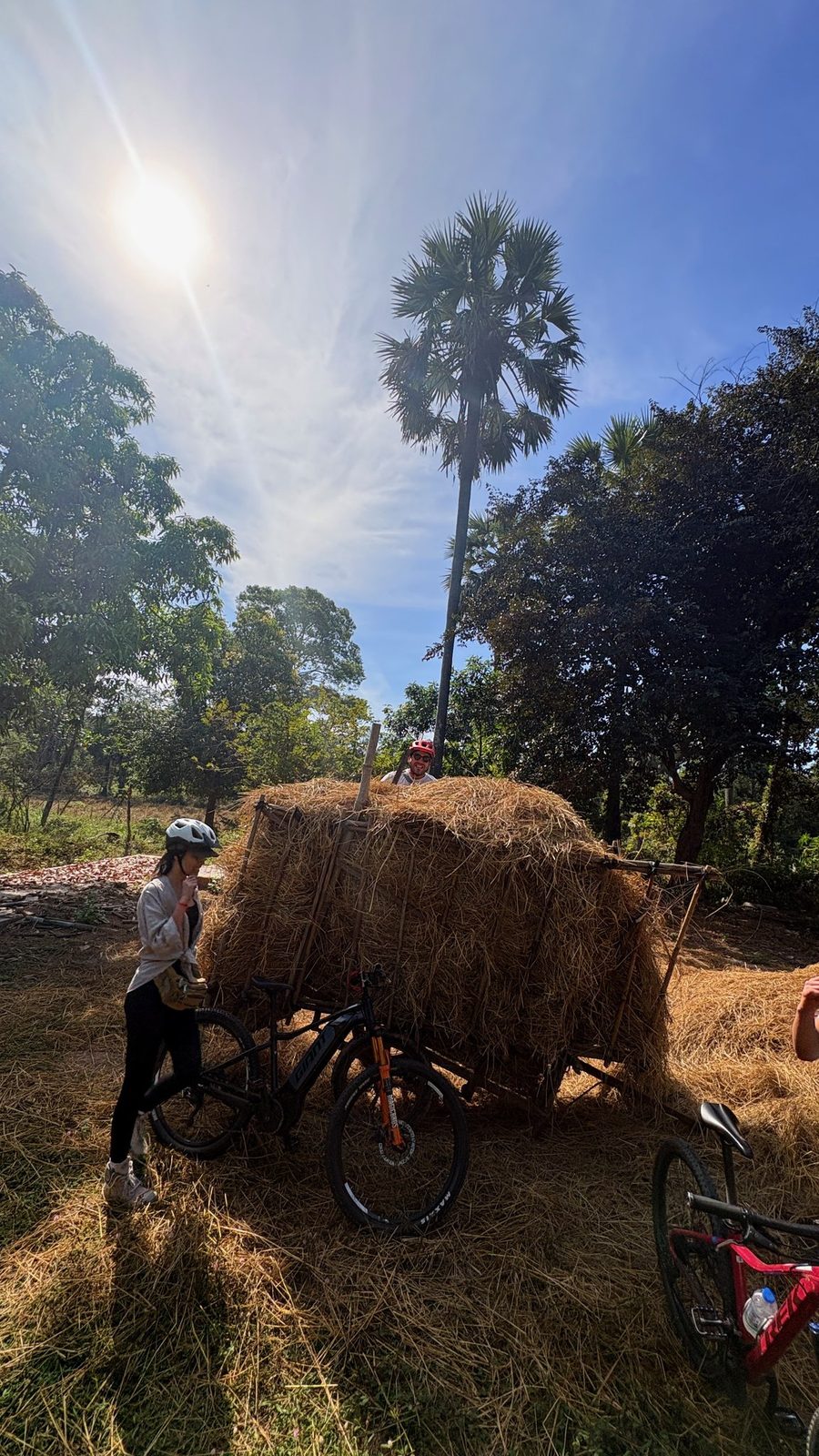
Village life, ten minutes past the edge of town.
The APOPO HeroRATs Centre
Cambodia is one of the most landmine-affected countries on earth. That is the legacy of decades of war, and the ground is still being cleared. APOPO is a Belgian organisation that has spent 25 years training African giant pouched rats, the HeroRATs, to find buried explosives by smell. A rat is too light to set off a mine, and its nose covers in half an hour what would take a person with a metal detector days.
The visitor centre walks you through the history and the training, then ends with a live demonstration: a rat works a test field and finds every buried target. You can hold one at the end. I send families here, and it is the stop the children talk about over dinner.
Good to know. $10 per person, under 10s free. Open 8:30 AM to 5 PM, last tour 4:30 PM. Allow about an hour. It sits on the road between town and the Angkor gate, so it pairs naturally with a temple morning.
Artisans Angkor
Artisans Angkor is a social enterprise, and one I am genuinely glad exists. It trains young people from the rural provinces in the crafts that nearly died out under the Khmer Rouge, among them silk weaving, lacquer work, stone carving and silver. You walk through open workshops and watch a block of sandstone or a length of silk actually become something, with the artisans working an arm’s length away.
The shop attached to it is one of the better places in Cambodia to buy something to take home. Everything is made on site, the prices are fixed and fair, and the money goes back into the training. My one piece of advice: come before about 4:30 PM, or the workshops are winding down and you will only see the shop.
Good to know. Free to visit the workshop, open daily 7:30 AM to 6:30 PM, about five minutes from the Old Market.
Road 60 After Dark
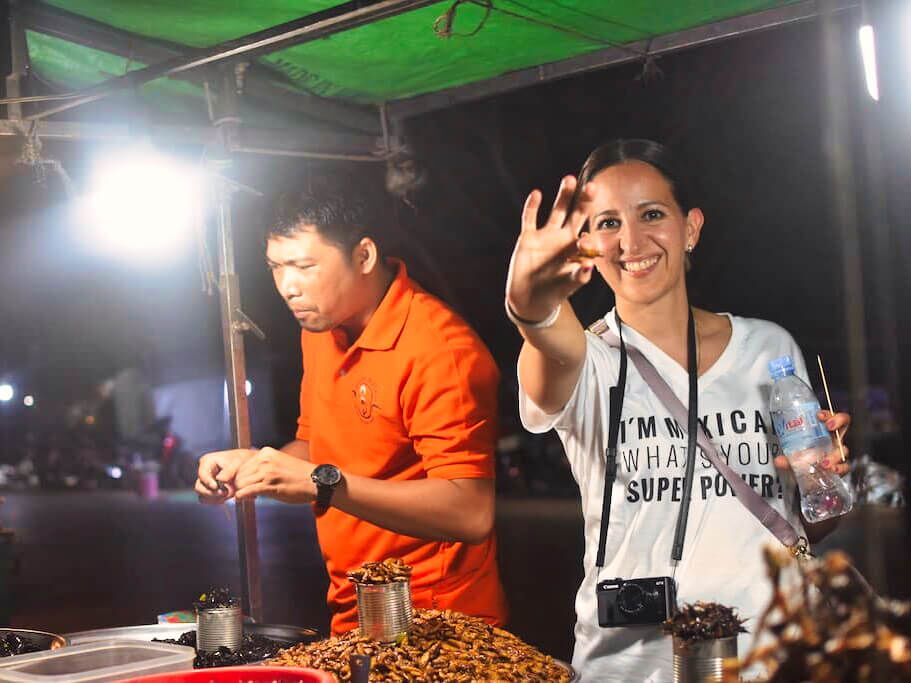
Road 60 is where Siem Reap eats once the work is done. In the evening this stretch fills with families and workers around charcoal grills and noodle stalls. No English menus, no air conditioning. It is not arranged for visitors at all, which is exactly the point of going. I take my own visiting relatives here before I take them anywhere smarter.
The food that draws the most attention is the insects: fried tarantula, crickets, silkworm larvae, and ant eggs. Cambodian insect cuisine is not a gimmick for tourists. It comes from the Khmer Rouge years, when protein from any source meant survival, and it stayed. Try it, or just watch someone braver try it. Either way, Road 60 is a different country from Pub Street, and the two sit barely two kilometres apart.
Road 60 is a stop on our After Dark Food Tour, where we walk you to the stalls worth your while and tell you what is in front of you before you commit to it.
Good to know. Best from 6 PM onwards. Dishes run a dollar or two each. About 4 km from Pub Street.
Phnom Kulen, the Sacred Mountain
Phnom Kulen holds one of the most important places in the whole story of Cambodia. It was here, in the year 802, that the king Jayavarman II declared the independence of the Khmer Empire. The mountain still matters to Cambodians, and on weekends you will see families making the pilgrimage up it for the old rock carvings and the temples among the trees.
For most visitors the draw is the waterfall: a wide cascade falling into a deep pool, ringed by jungle. In the dry season the water runs clear and the swimming is as good as it sounds. There is also a stretch of riverbed carved with hundreds of lingas, Hindu stone symbols, lying under the shallow water where you can see them when the river is low.
Kulen is an hour out of Siem Reap and takes a full day to do properly. Two things to plan around. It charges its own $20 entry, paid at the base, separate from your Angkor Pass. And it closes now and then for religious ceremonies, so it is worth having someone check before you commit the day to it. I would also avoid weekends if you can. They belong to the pilgrims, and rightly so.
Good to know. About 50 km from Siem Reap, an hour’s drive. Plan a full day. $20 entry, a separate ticket. Quieter on weekdays.
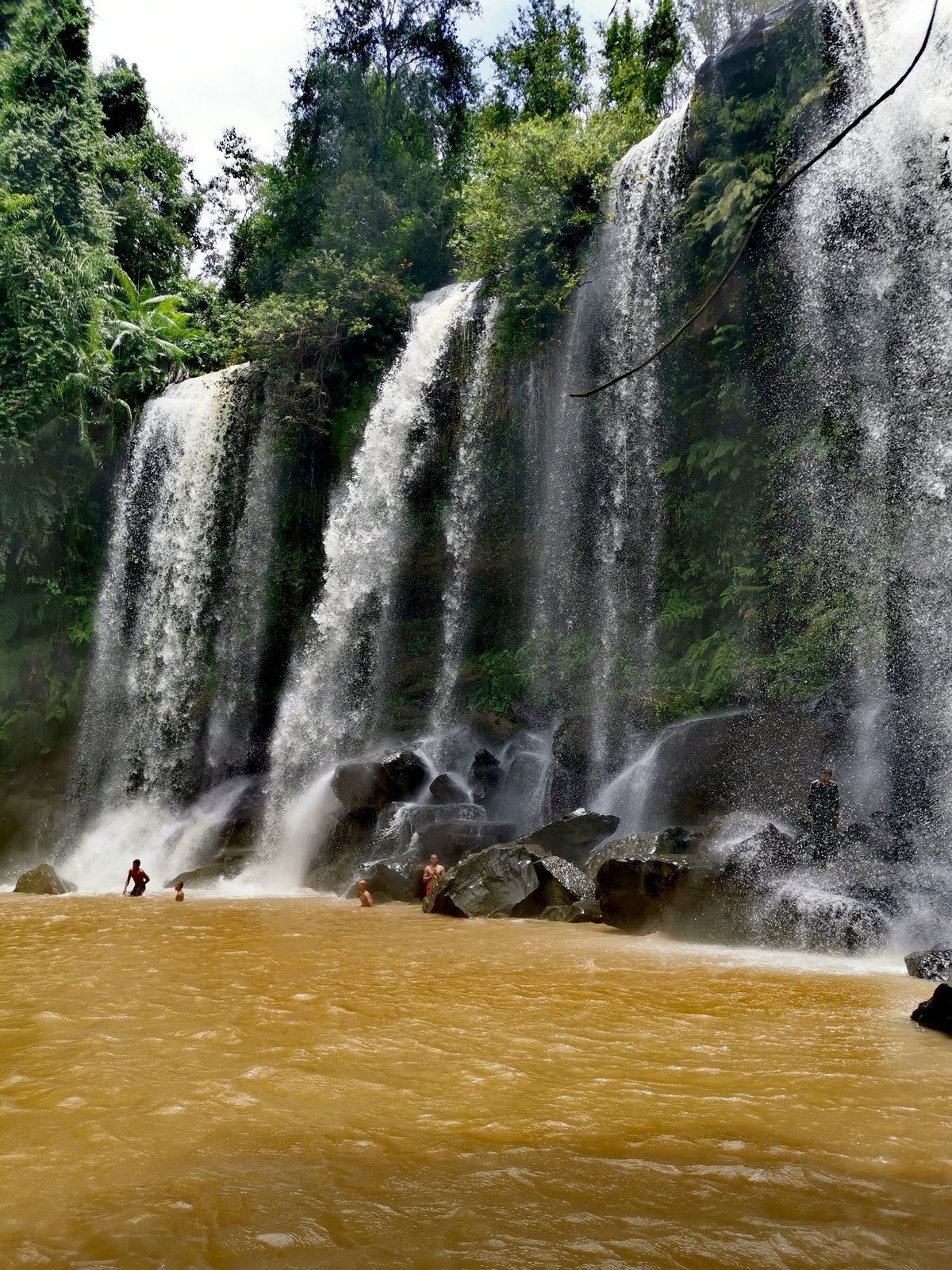
The Phnom Kulen waterfall and its pool.
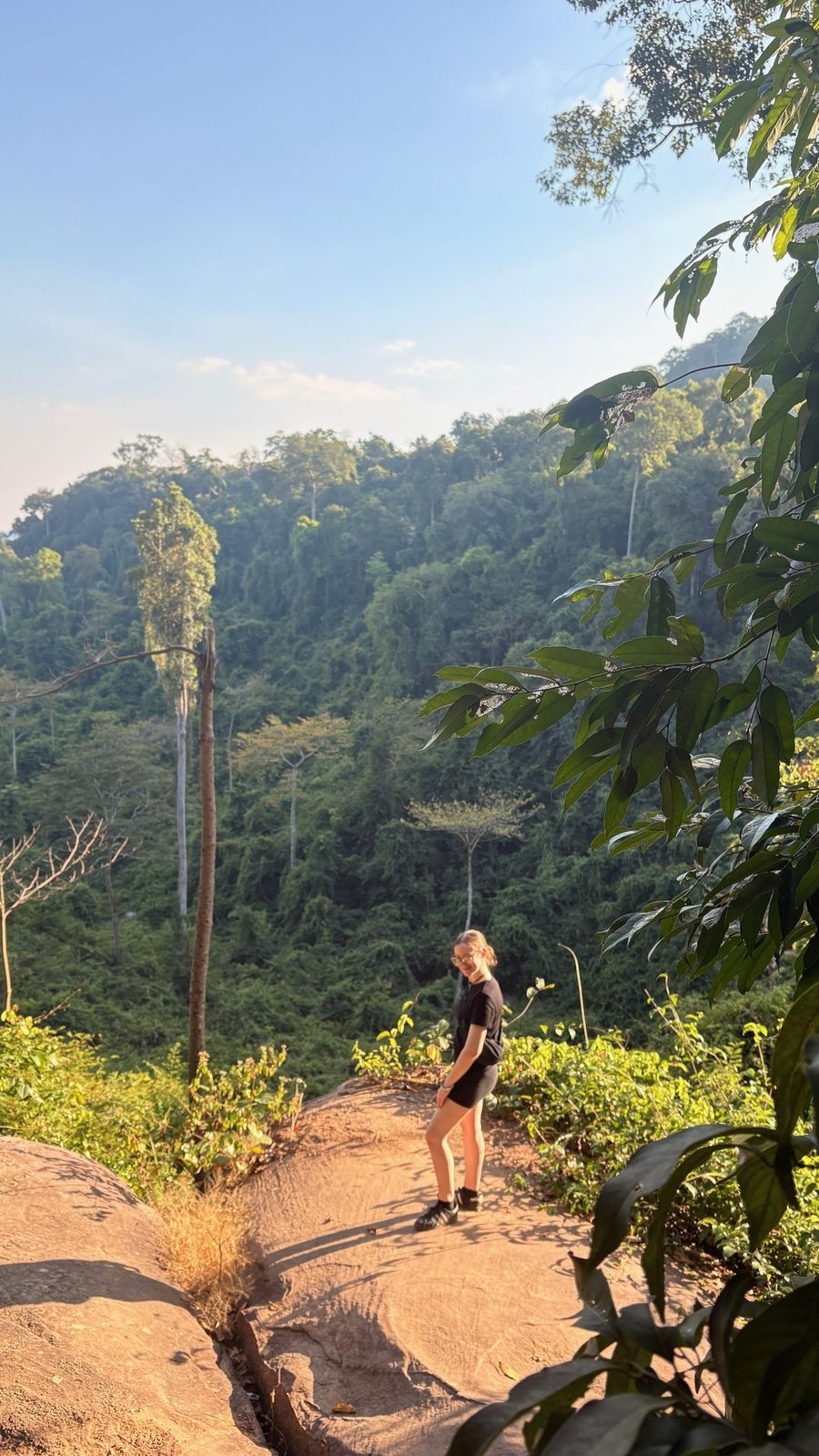
Jungle viewpoints along the mountain.
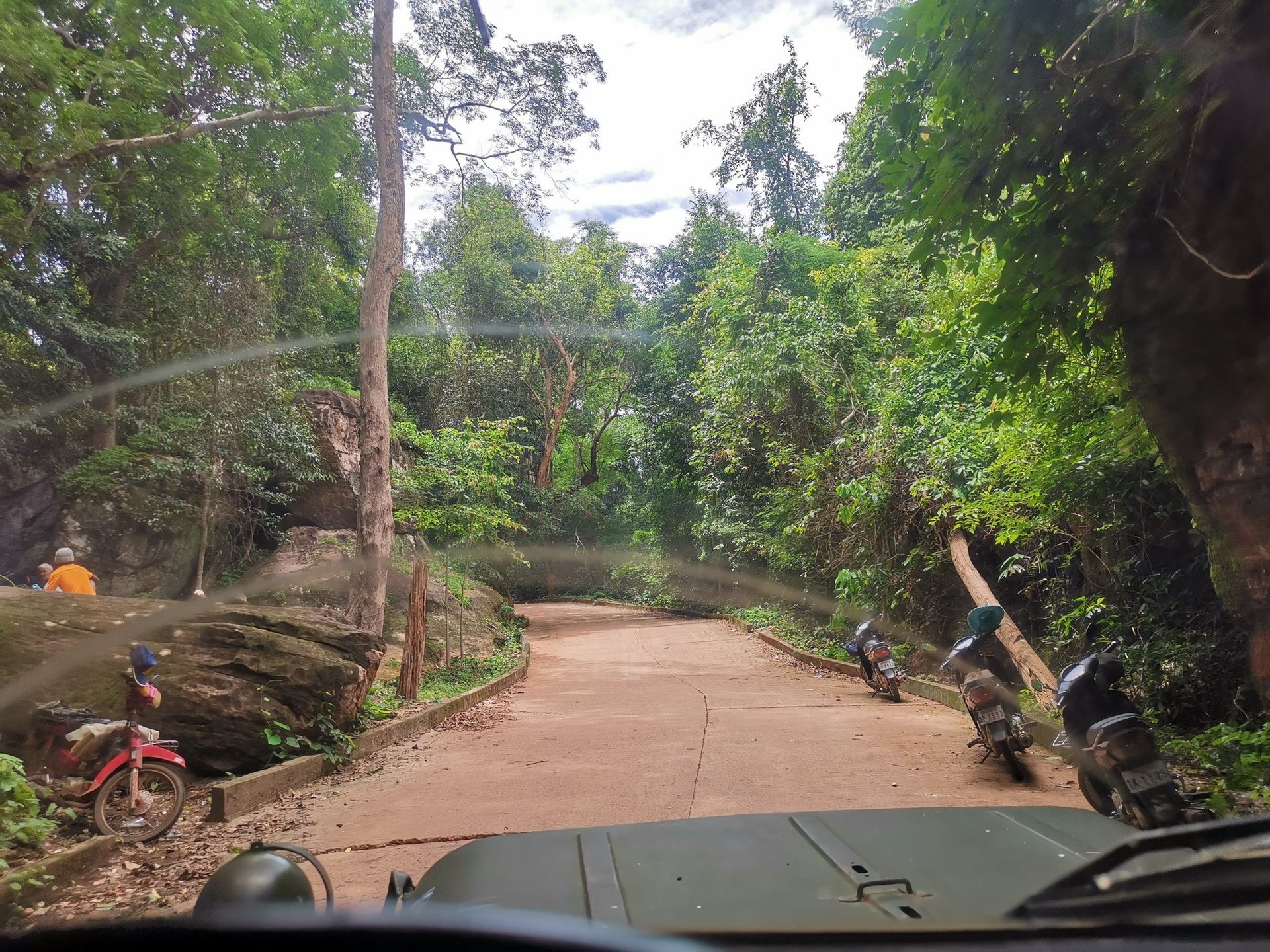
The forest road up the mountain.
Where to Eat, Drink and Go Out
Siem Reap has quietly built one of the better food scenes in Southeast Asia, and I am not only saying that because it is home. For a proper dinner, two names stand out. Embassy, the work of Chef Kimsan, is doing the most ambitious Khmer cooking in the country. Abacus has been a fine-dining fixture since 2004, French cooking with a Khmer accent, served in a tropical garden away from the noise of the centre. Both fill up, so book ahead, and if you cannot get a table, ask your hotel to put you on the cancellation list the day you arrive.
For something more relaxed but still a proper sit-down, Cafe Indochine is the one I would choose. It fills an old wooden Khmer house wrapped in garden, one of the longest-running restaurants in town, and the kitchen does traditional Khmer cooking well, the roast duck with Kulen honey especially. For the Khmer classics done plainly and cheaply, Amok on Pub Street is named for the dish it does best, fish amok steamed in a banana leaf.
Below all that sits the everyday Siem Reap. The lanes around the Old Market, Phsar Chas, are full of good cheap eating, and the market itself still works as a real market, not a tidied-up version of one. For a drink, Pub Street is loud and bright, and it stays open very late. If that is your night, enjoy it. If it is not, the quieter streets around it, Street 26 and the Old Market lanes, hold far more character, and Calao, which opened late in 2025, is where I take people who care about a properly made cocktail. And when the afternoon heat wins, Khmer Gelato is the cool-down.
Take the After Dark Food Tour on your first evening. It gives you the food scene in one go, from a charcoal grill on Road 60 to a sit-down Khmer meal, and it sets you up to eat well on your own for the rest of the trip. See the After Dark Food Tour.
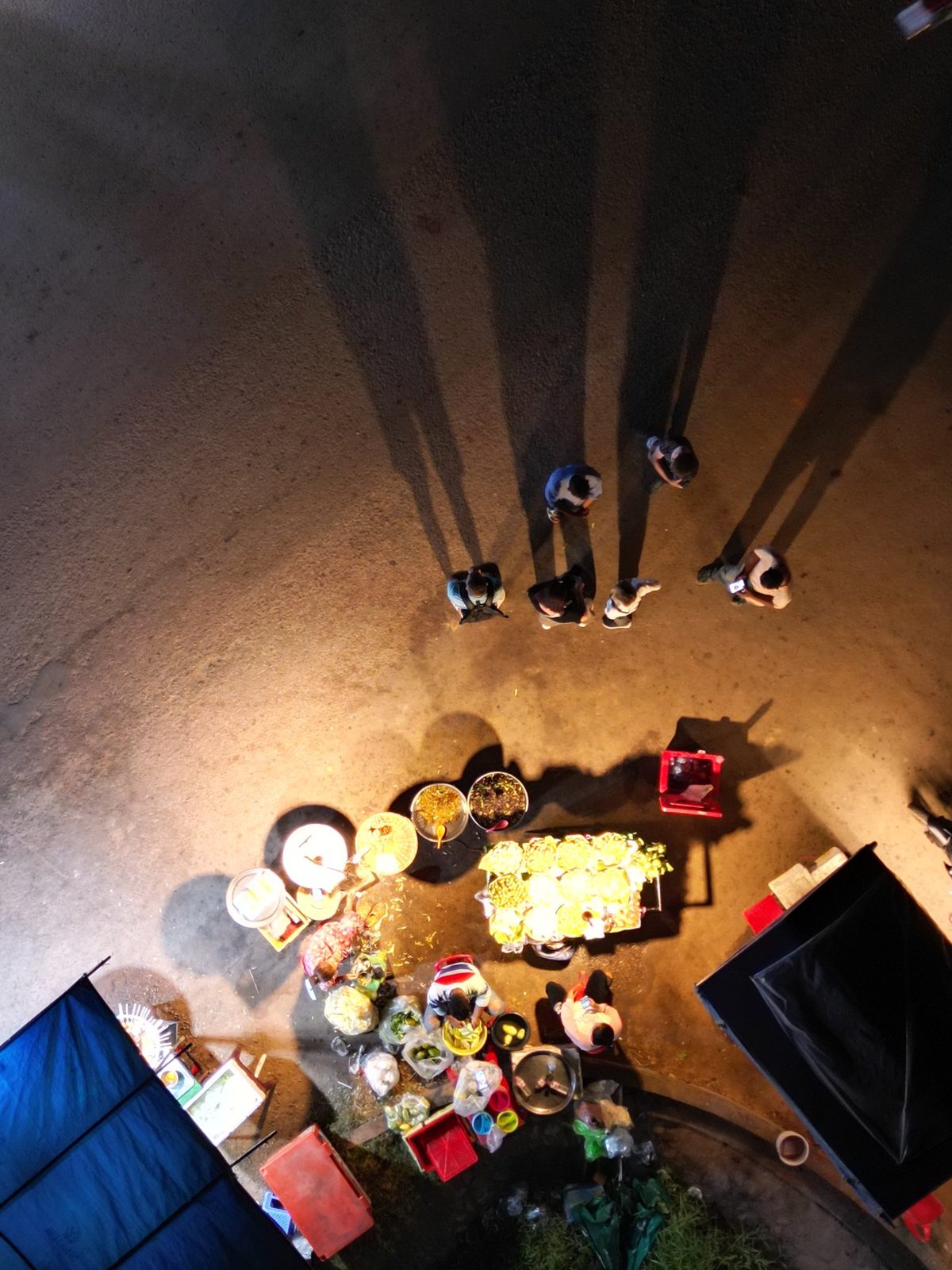
Street food, the Siem Reap most visitors walk past.
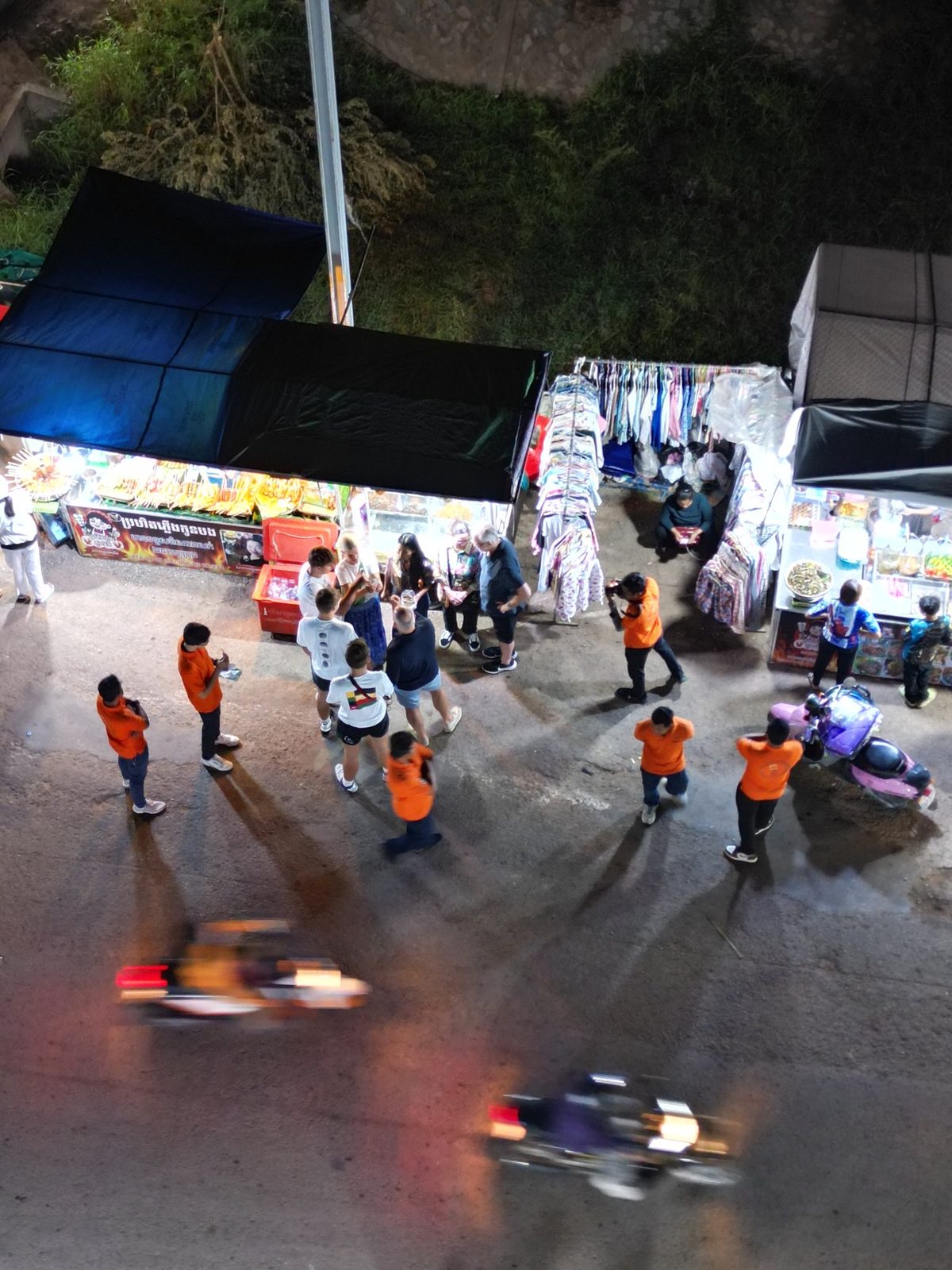
A Siem Reap night market after dark.
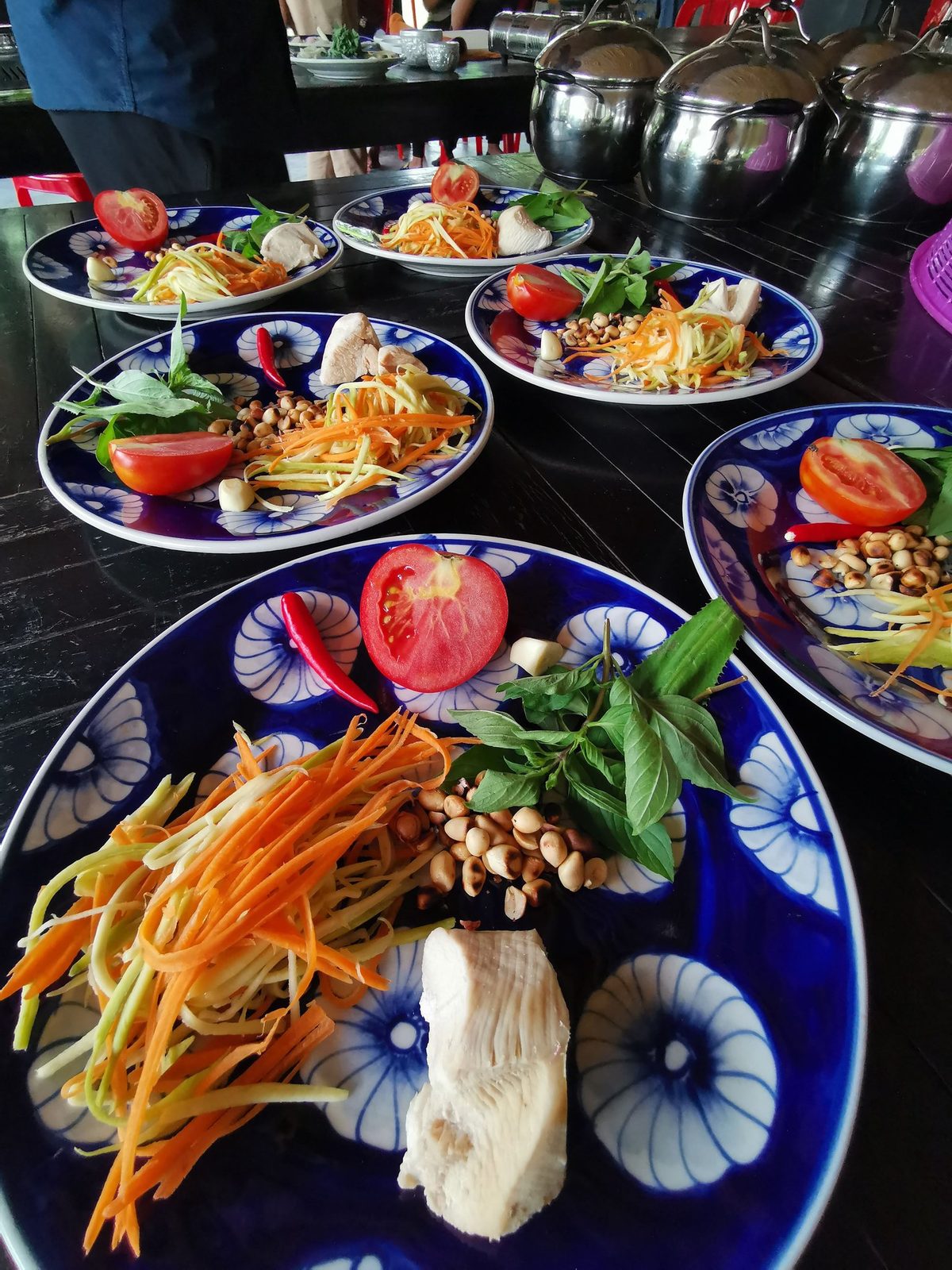
Khmer food, from street stall to set menu.
The Kanell Dinner Show
If you have one evening to spend on Cambodian culture and you want it done properly, the Kanell Dinner Show is how I would spend it. It runs nightly in a garden in the centre of town, around an old Khmer wooden house brought in from the countryside. You get a Khmer set menu and seven traditional dances, the Apsara among them, along with a Bokator martial-arts piece you will not see staged in many other places.
What I like about it is who is on the stage. The performers are young Cambodian artists from difficult backgrounds, and the evening funds the training that brought them there. The food is overseen by Chef Kimsan Pol, one of the most respected cooks in Siem Reap. Every seat faces the stage. It fills up most nights, so book before you come.
Good to know. Nightly, roughly 7 PM to 9:30 PM, dinner and seven performances. A garden setting in the heart of town. Book ahead.
Phare, The Cambodian Circus
Phare is where I send people who want a night out that is not a temple and not a bar. It is a circus, but not the kind with animals. The performers are young Cambodians, and they tell Cambodian stories, the hard ones and the funny ones, through acrobatics, juggling, theatre and live music. Some of what they do on that stage I still cannot quite believe.
It grew out of an arts school set up to give children from difficult backgrounds a future, and the show funds that work. You sit close, under the tent, with a live band playing the whole way through. I have taken guests of every age to it, from small children to grandparents, and they all come out lit up.
Good to know. An evening show in Siem Reap, in its own tent. Book ahead. It is one of the most popular things to do in town.
A Khmer Massage
Temple days are long, and harder on the body than people expect. The stone is uneven, the mornings start early, the afternoon heat does the rest. Siem Reap’s spas have grown up around exactly this, and at the better end they are very good.
A Khmer massage is not the same as a Thai one. It is gentler, and it works pressure points and energy lines rather than stretching you out. A lot of visitors end up preferring it. Lemongrass Garden and Bodia Spa are two long-standing names that have stayed good, and most of the better hotels have their own spa as well. I would book an afternoon slot for the day after your hardest temple morning, and thank yourself for it later.
Good to know. Roughly $12 to $30 an hour, depending on the spa. Best in the afternoon. Booking ahead is wise, though walk-ins are usually fine.
The Angkor National Museum
If you want the temples to make sense, start at the Angkor National Museum. It is on Preah Sihanouk Avenue, a few minutes from Pub Street, and it walks you through the rise of the Khmer Empire across eight galleries. The centrepiece is the Gallery of 1,000 Buddha Images, a single room of stone figures that gives you the scale of what Angkor’s religion once produced.
The labelling is good and genuinely in plain English, and the $5 audio guide, available in nine languages, is worth taking. Give it one to two hours. I would do it on the afternoon of your first temple morning. You will read the carvings completely differently once you know whose stories they are.
Good to know. Open daily 8:30 AM to 6 PM, until 6:30 PM from October to March. $5 audio guide. Allow one to two hours.
Several of these stops fit naturally on two wheels. Our Siem Reap Vespa tours cover the countryside side of this list, riding pillion behind your own driver.
Putting a Siem Reap Trip Together
Put four or five of these together with two good days at the temples and you have a week that is genuinely hard to leave. That is the thing about Siem Reap I notice in guests over and over. The longer they stay, the more they realise they have barely started.
If you are weighing up whether it is the right time to come, our Is Cambodia Safe in 2026 guide has the current picture. The short version is the one I will give you here: Siem Reap and Angkor are open, running normally, and ready for you.
Frequently Asked Questions
How many days do you need in Siem Reap?
Four days is a sensible minimum: two for the Angkor temples and two for the countryside, the food and the rest of the town. Many visitors who plan three days end up staying longer. The day-by-day plans for two, three, four and seven days are in the Siem Reap trip length guide.
Is Siem Reap worth visiting?
Yes, and for more than Angkor. The temples are the reason most people come, but the countryside, the food scene, Phnom Kulen and the cultural shows make Siem Reap a destination in its own right. It is hot at midday and the famous temples draw crowds, but neither spoils it if you pace the days. Most visitors who plan a short stop end up wishing they had given it longer.
What is there to do in Siem Reap besides Angkor Wat?
Plenty. A countryside tour through the rice fields and villages, the APOPO HeroRATs centre, the Artisans Angkor workshops, Road 60 street food, Phnom Kulen with its waterfall, the Phare circus, a Khmer dinner show, and the Angkor National Museum. Most can be done in a half-day or paired with a temple morning.
What is the best thing to do in Siem Reap in the evening?
For food, Road 60 after dark is where locals eat, all charcoal grills and street stalls. For culture, the Kanell Dinner Show pairs a Khmer menu with traditional dance. For a quieter night, the bars around the Old Market and Street 26 hold far more character than Pub Street.