août 22, 2026
Mis à jour en août 2026.
Yes, with conditions. Cambodian street food is safe when it’s cooked to order in front of you and served hot, from a stall busy enough to empty its pots every hour. What makes travelers ill here is rarely the grill. It’s the water. It’s the raw side dish sitting next to the grill, and the pot that’s been kept warm since lunch. Between 2014 and 2023, the World Health Organization recorded over 7,000 foodborne illness cases and almost 200 deaths in Cambodia, and it named the four things behind them, none of which is the act of cooking food outdoors (WHO Western Pacific, 3 October 2024).
I was raised in the pagoda inside the walls of Angkor Wat, where my grandfather served as Grand Abbot. I founded Adventures Cambodia in 2013, and I’ve been answering this question at the dinner table ever since. So here’s the answer I give guests, rather than the one that sells a tour.
POINTS CLÉS À RETENIR
- The rule: hot, cooked to order in front of you, from a stall with a local queue.
- The number: over 7,000 foodborne illness cases and almost 200 deaths in Cambodia, 2014 to 2023 (OMS, 2024).
- The four causes of outbreaks: poor hygiene during preparation, incorrect storage temperature, cross-contamination, and unsafe water or ingredients (WHO, 2024).
- Eau : bottled or filtered only, never the tap.
- Vaccines: the CDC recommends hepatitis A for unvaccinated travelers one year old or older, and typhoid for most travelers to Cambodia.
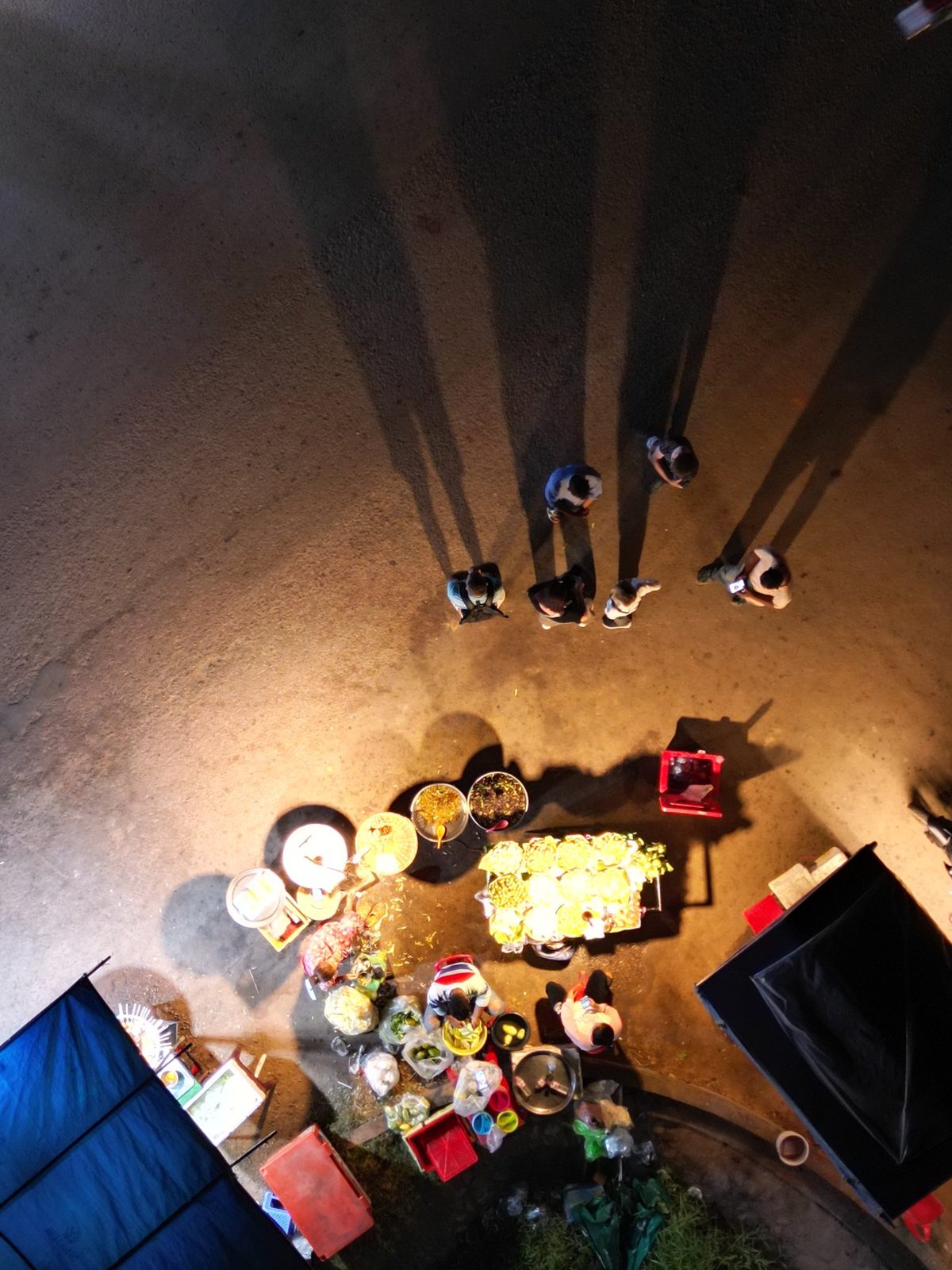
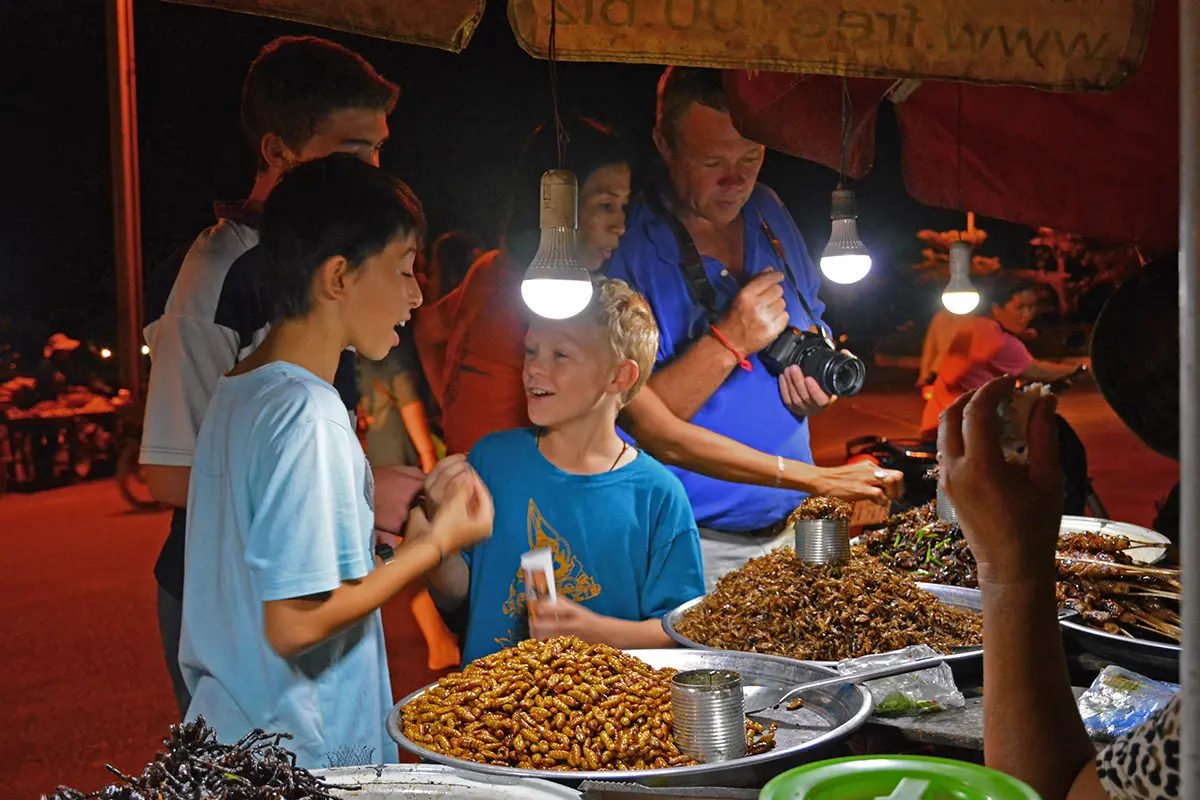
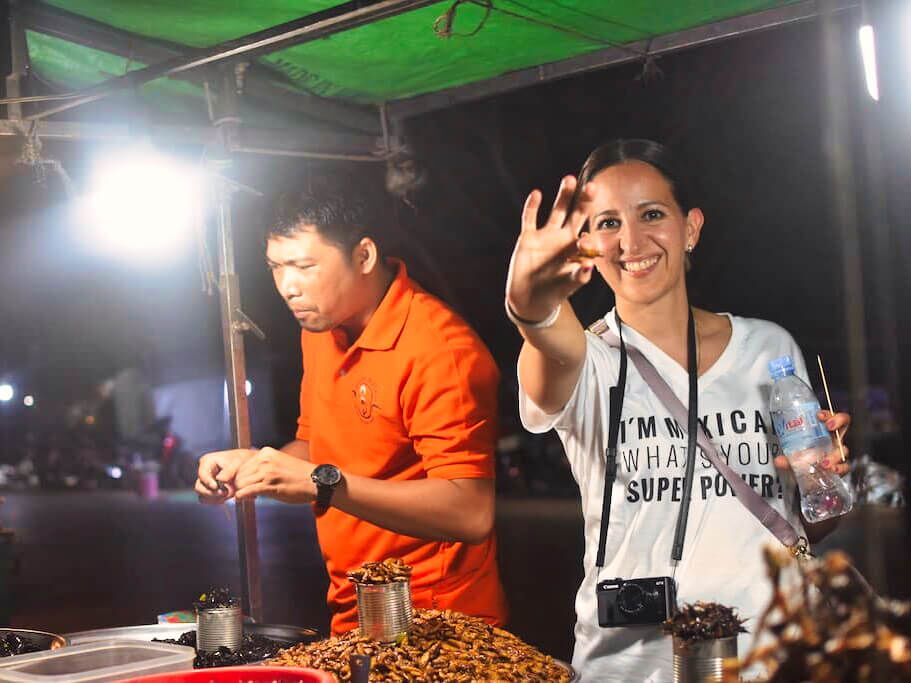
Cooked to order, in front of the customer.
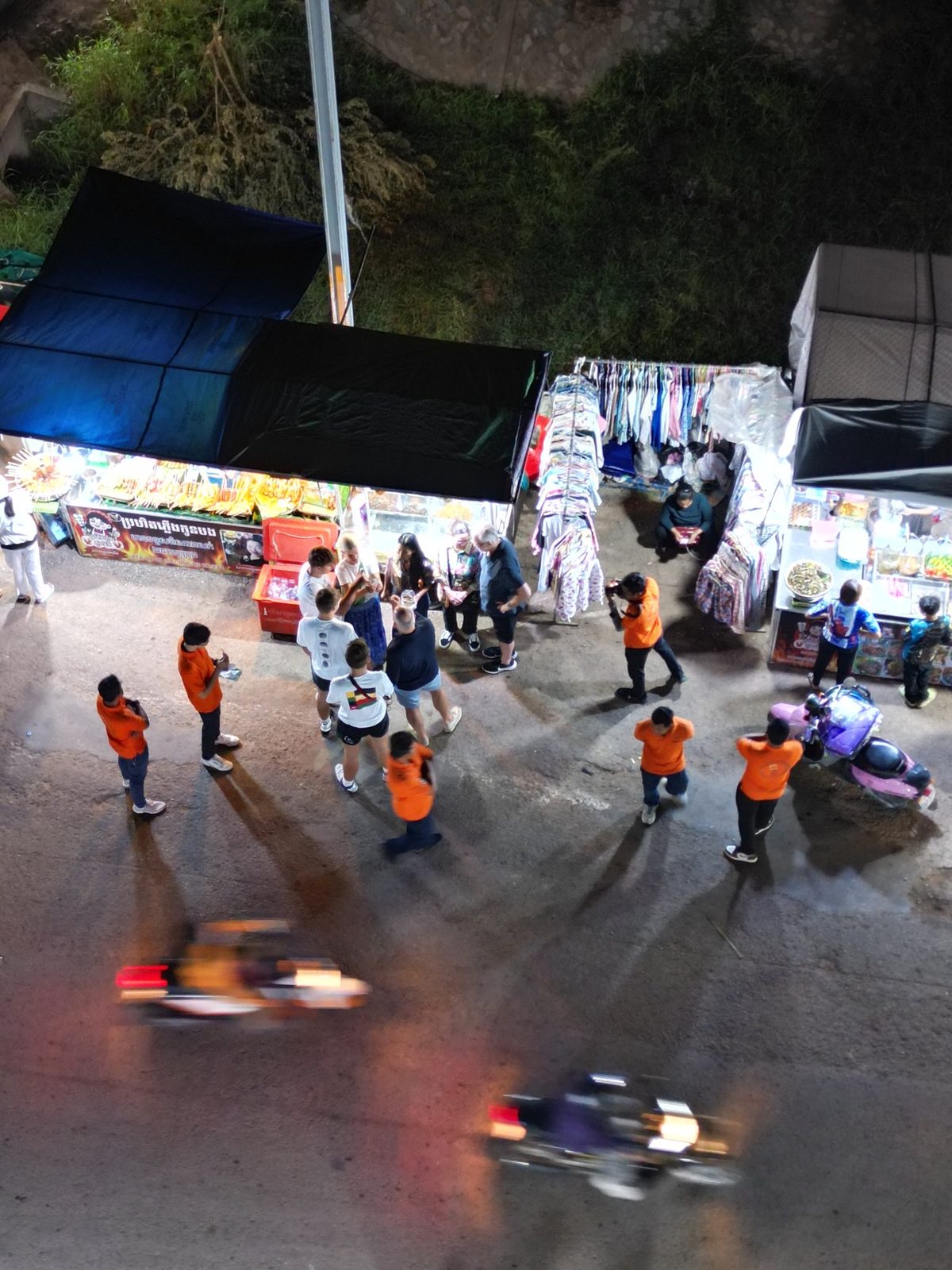
Siem Reap night market, seen from above.
Is Street Food Safe to Eat in Cambodia?
It depends on the stall, not on the country. A stall that cooks your plate while you stand there, over a flame, with Cambodians queuing behind you, is about as safe as eating anywhere on earth. Now picture a tray that’s been under a lamp since the afternoon. Same street, same night, completely different proposition. In a photograph the two look identical, which is the whole problem.
I’m not going to tell you it’s risk-free. It isn’t. Cambodia recorded 134 outbreaks of foodborne disease between 2014 and 2019 (WHO Western Pacific, 3 October 2024). What I’ll tell you is that the risk sits in a small number of specific things, and you can avoid nearly all of them without giving up the food. If you want to know what to actually order once you’re confident, our guide to the meilleure nourriture cambodgienne covers the dishes worth crossing town for.
How Common Is Food Poisoning in Cambodia?
More common than a tour brochure will admit, and far better documented than most travel blogs claim. You’ll read on other sites that no serious statistics exist for Cambodian street food. They do exist. The World Health Organization published them in October 2024, and I’d rather you saw the real number from me than went looking for it on a forum.
| What was recorded | Figure | Period covered |
|---|---|---|
| Foodborne illness cases in Cambodia | over 7,000 | 2014 to 2023 |
| Deaths from foodborne illness | almost 200 | 2014 to 2023 |
| Recorded outbreaks of foodborne disease | 134 | 2014 to 2019 |
Source : WHO Western Pacific, “Improving food safety: lessons learned from a food poisoning outbreak”, 3 October 2024. Figures are for Cambodia as a whole, not for street food alone.
Read that last line twice, because it matters. The WHO figures aren’t broken down by where the food came from, so they cover restaurant and home kitchens as well as stalls. Anyone quoting them at you as a street food number is adding something the source doesn’t say.
What Actually Causes the Outbreaks
The WHO named four causes behind Cambodia’s recorded outbreaks:
- Poor hygiene during food preparation. Hands, boards and cloths, before anything reaches the heat.
- Incorrect storage temperature control. Cooked food held warm instead of hot, which is the single most common street food failure anywhere in the tropics.
- Cross-contamination. Raw meat and ready-to-eat food sharing a surface, a knife or a pair of tongs.
- Unsafe water and ingredients. Rinsing water, ice and the produce that was washed in it.
Only one of those four is about the flame. The rest happen before the food reaches it, or after it comes off. That’s why “is it cooked?” is only half of the question you should be asking, and why the raw garnish on the side of a perfectly grilled skewer is the thing I watch, not the skewer.
How Do You Avoid Getting Sick in Cambodia?
Eat where the food is moving. That single habit removes most of the risk, because a stall that empties its pots every hour never has to hold anything warm. It also explains why the busiest counter in the Siem Reap night market is usually the better bet, even when the quiet one looks cleaner.
- Follow the local queue, not the English menu. A line of Cambodians tells you more than any sign on the stall.
- Order what needs cooking. If it goes from raw to your plate over a flame while you watch, you’ve removed most of what the WHO listed.
- Take it steaming. The CDC’s rule for travelers is that hot food should be served hot, and lukewarm is the warning sign (CDC, Food and Water Safety).
- Skip the raw garnish. The salad leaves, the shredded herbs and the sliced cucumber were washed in something, and it wasn’t bottled water.
- Drink bottled, always. That includes what your ice was made from, and what your fruit shake was blended with.
- Watch the hands. One person on the money and one on the food is a good sign. The same hand doing both is the cross-contamination the WHO listed, happening in front of you.
None of this requires you to eat timidly. Quite the opposite. The rules above are what let you say yes to the grill instead of retreating to a hotel buffet, which is where nervous visitors tend to end up, paying more for the least interesting food in the country.
Which Foods Should You Avoid in Cambodia?
Avoid raw food and anything that met unsafe water after it was cooked. The CDC puts it plainly for travelers: “Avoid eating raw foods. Fruits or vegetables may be safer to eat if you can peel them yourself or wash them in bottled or disinfected water” (CDC). Here’s how that translates to a Siem Reap street.
| What you’re looking at | Verdict | Why |
|---|---|---|
| Meat or fish grilled to order | Eat it | Raw to plate over a flame while you watch |
| Noodle or rice dishes cooked in front of you | Eat it | Wok heat, high turnover, nothing held warm |
| Fruit you peel yourself | Eat it | The skin did the work (CDC) |
| Fresh salad and shredded raw herbs | Skip it | Washed in tap water, and washing doesn’t fix it (CDC) |
| Pre-cut fruit from a tray | Skip it | Cut with what, rinsed in what, sitting how long |
| Shellfish and seafood from a cart | Skip it | Siem Reap is inland and a cart has no cold chain |
| Anything sitting warm under a lamp | Skip it | Storage temperature is on the WHO cause list |
| Tap water, and ice you can’t identify | Skip it | See the water section below |
Sources : CDC, Food and Water Safety et WHO Western Pacific, 3 October 2024.
Is It Safe to Eat Salad in Cambodia?
Not from a street stall, no. The CDC is blunt about it: “Avoid eating fresh salads, even if finely cut or shredded. They may be contaminated with human or animal waste that even clean water can’t wash off” (CDC). In a good restaurant with its own filtered supply, salad is a different question and generally fine. On a cart, assume otherwise. The leaves went into the same bucket the plates did.
The same logic covers pre-cut fruit. Mango sliced in front of you from a whole fruit is fine. A tray of chunks that’s been open in the afternoon heat is the one I’d walk past, and Cambodian mango is good enough that you shouldn’t settle for the tray anyway. If you want the deep end of Cambodian fruit, we wrote about durian separately.
Is the Ice Safe in Cambodia?
Usually, and there’s a visual test. Commercial ice in Cambodia is factory-made and comes as a cylinder with a hole through the middle. That’s the ice in restaurants, bars and most drink stalls, and it’s made with treated water. Loose crushed ice from an unmarked bag or a bucket is the one to refuse, and the CDC’s general rule for travelers still applies: don’t use ice where the drinking water is a concern, because it was probably made from it (CDC).
Are Boiled Eggs Safe to Eat in Cambodia?
Boiled eggs are one of the safer things on a Cambodian street, for the same reason everywhere else: they were cooked through in their own sealed shell and you crack it yourself. Buy them from a vendor whose basket is turning over, eat them the same day, and skip any that are already peeled and sitting in water. The peeling is where a safe egg stops being safe.
Are the Insects Safe to Eat?
Yes. Crickets and the tarantulas you’ll see stacked in pyramids are deep-fried at high heat, which is the safest preparation on the street. Nobody has to eat them. On our food tour they’re offered and never pushed, and plenty of guests photograph them without trying one.
Can You Drink the Tap Water in Cambodia?
No. Drink bottled or filtered water only, and use it for brushing your teeth if you want to be careful. Bottled water is sold everywhere in Siem Reap and costs very little. We cover tap water, bottled water and brushing your teeth in full in our Guide de sécurité au Cambodge, so I won’t repeat it all here.
One practical note that applies to eating: on our own tours, from the 6 PM pickup to the last stop at 10 PM, bottled water is in your hand the whole evening. That’s not a luxury touch. It’s the cheapest single thing you can do to stay well on a food night.
Do You Need Vaccinations Before Eating in Cambodia?
The CDC recommends hepatitis A vaccination for unvaccinated travelers one year old or older going to Cambodia, and typhoid for most travelers, particularly those staying with friends or relatives or visiting smaller cities and rural areas (CDC Travelers’ Health, Cambodia). Both are food and water borne, which is exactly why they’re on the list.
See a doctor before you fly. That’s the standing advice on our own Page FAQ and it hasn’t changed. I’m a tour operator, not a doctor, and a travel clinic will know your history and your itinerary.
Is a Street Food Tour Worth It, or Can You Walk the Night Market Yourself?
You can absolutely walk it yourself, and plenty of people should. The night market is open to anyone, the food is cheap, and if you follow the rules further up this page you’ll probably be fine. What you’re paying a guide for is the shortlist and the language, not a safety guarantee.
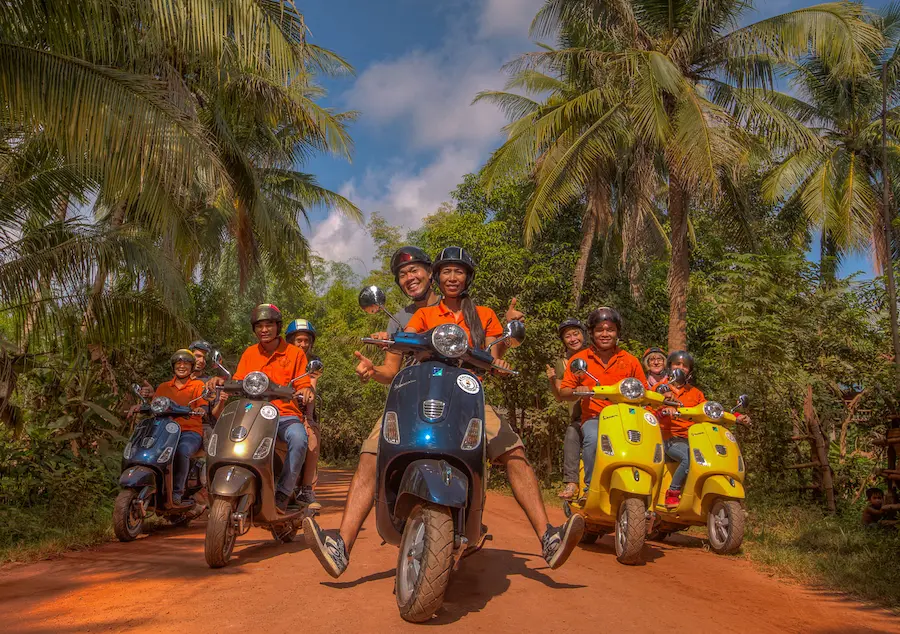
Nos Visites culinaires à Siem Reap run 6 PM to 10 PM. The shared After Dark Food Tour is $68 per person with a maximum of six guests, by Vespa, and the private version is $89. Children aged 4 to 12 get 30% off. The evening runs like this:
- 6:00 PM, hotel pickup. We come to you.
- 6:15 PM, family rice-wine distillery. Welcome drink and a tasting.
- 7:00 PM, night market street eats. The stalls on our route.
- 8:00 PM, sit-down Khmer dinner. A traditional restaurant with live music, not a stall.
- 9:15 PM, speakeasy. A cocktail or a dessert to finish.
- 10:00 PM, hotel drop-off.
On the safety question specifically, here’s what a guide changes and nothing more: we eat at busy stalls with high turnover where food is cooked fresh in front of you, and you drink bottled water throughout. That’s it. It’s the same principle you’d apply on your own, applied by the person who chose the route.
The stalls on that route go back years. I know the families who run them, and I watch how they handle their water and their ice.
There is a better test than anything I can write here. My colleagues and I eat at these stalls on our own time, off the clock, and we bring our children.
THE PART WE DON’T ADVERTISE
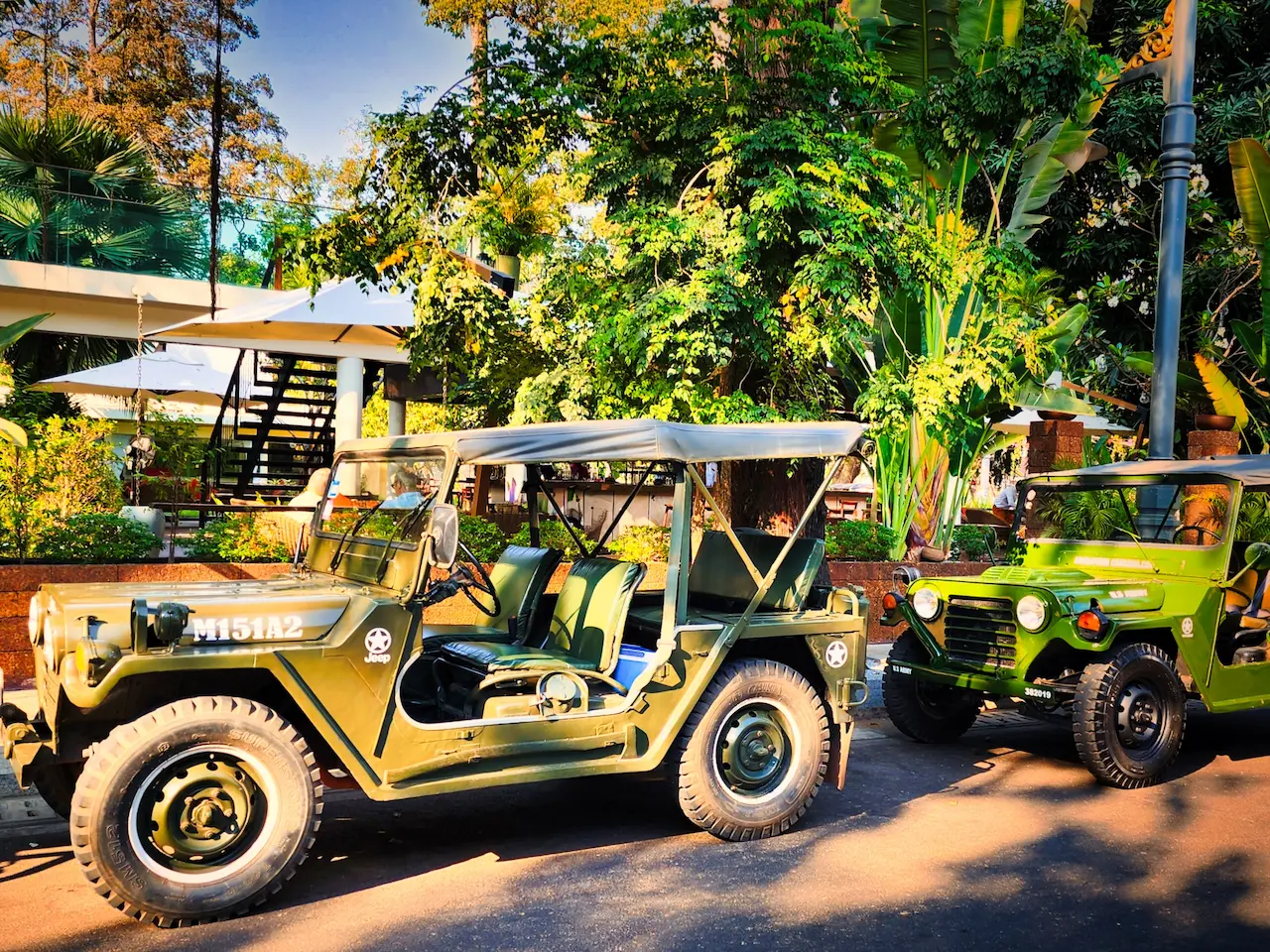
We run rain or shine. Ponchos come with the Vespa, and in heavy rain the group switches to a Jeep. A night market in a downpour still isn’t the evening anyone pictures when they book, so if you’re traveling in the wet season and you only have one free night, go in knowing the weather gets a vote.
Questions fréquemment posées
Is street food safe to eat in Cambodia?
Yes, when it’s cooked to order in front of you and served hot, from a stall with a local queue. The risk sits in raw side dishes, unsafe water and food held warm rather than hot. The WHO recorded over 7,000 foodborne illness cases in Cambodia between 2014 and 2023, across all kitchens rather than street stalls alone.
How do you avoid food poisoning in Cambodia?
Eat where the food is moving, order things that are cooked over a flame while you watch, take them steaming, and drink bottled water including the ice and the fruit shakes. Skip raw garnishes and anything sitting warm under a lamp. Those habits address most of what the WHO named as outbreak causes in Cambodia in 2024: storage temperature, cross-contamination, and unsafe water or ingredients.
Is it safe to eat salad in Cambodia?
Not from a street stall. The CDC advises travelers to avoid fresh salads because contamination survives washing. In restaurants with filtered water supplies it’s generally fine. On a cart, assume the leaves were rinsed in tap water.
Is the ice safe in Cambodia?
Factory ice is, and you can recognise it: it comes as a cylinder with a hole through the middle, made from treated water, and it’s what restaurants, bars and most drink stalls use. Refuse loose crushed ice from an unmarked bag or bucket.
Is it hygienically safe to eat at the markets in Siem Reap?
Yes, with the same stall-by-stall judgment you’d use anywhere. The cooked-to-order counters at the Siem Reap night market are the safest thing on the row. Pre-prepared trays and anything held warm are where the risk collects.
Are boiled eggs safe to eat in Cambodia?
Yes. They’re cooked through inside a sealed shell that you crack yourself, which makes them one of the safer street purchases. Buy from a vendor whose basket is turning over and avoid pre-peeled eggs sitting in water.
Are the insects safe to eat in Cambodia?
Yes. Crickets and tarantulas are deep-fried at high heat, which is the safest preparation on the street. Nobody has to try them, and on our tours they’re offered rather than pushed.
Do you need vaccinations to eat street food in Cambodia?
The CDC recommends hepatitis A for unvaccinated travelers one year old or older going to Cambodia, and typhoid for most travelers. Both spread through food and water. See a doctor before you fly, because a travel clinic can weigh your own history and route.