





September 20, 2026
Updated July 2026.
Durian is called ទុរេន, romanized as turen, in Khmer. From May to July it rules every fruit stall in Cambodia. The spiky shells come up by truck from Kampot and Kampong Cham, and you will smell them before you see them.
Cambodians do not treat durian as a curiosity. It is the king of fruits here, the one people pay serious money for and argue about at the market. In June, guests ask me about the smell more often than they ask about temple tickets. This guide covers what durian is, how to say it, and how to try it without ruining your afternoon.
What Is Durian?
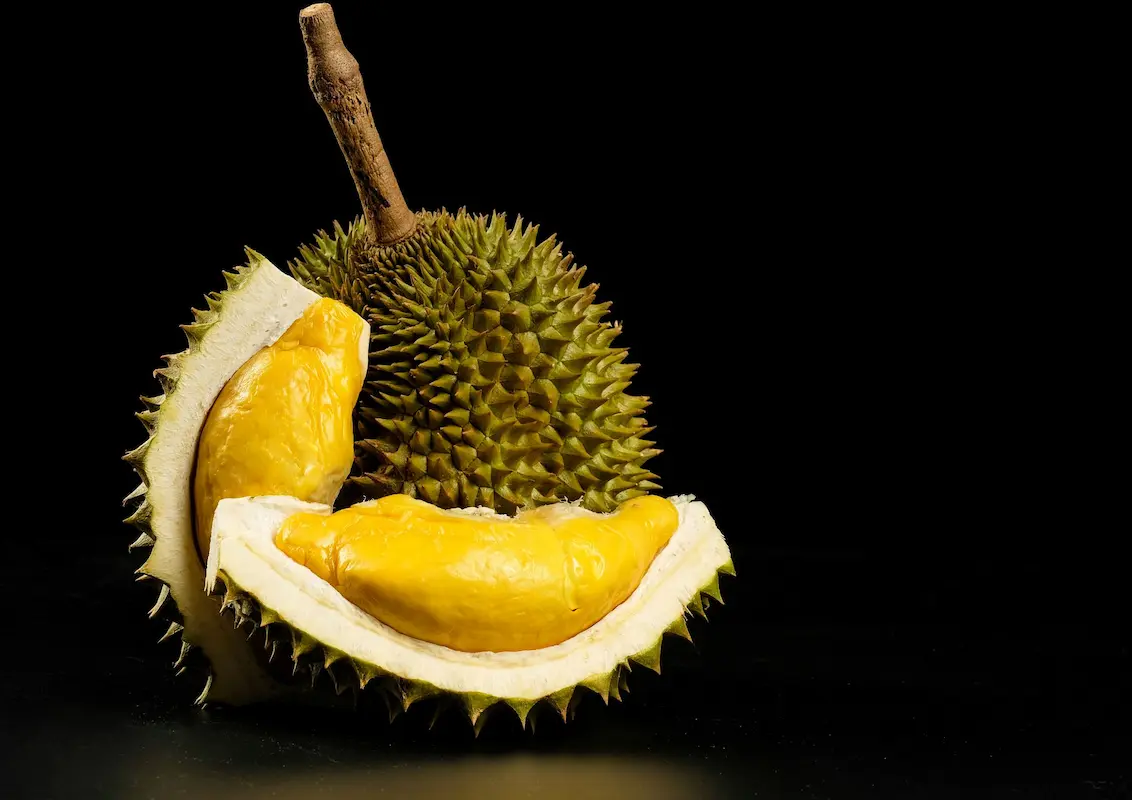
Durian is a tropical fruit the size of a rugby ball, sometimes 30 centimeters across, wrapped in a husk of hard thorns. The name comes from the Malay word duri, which means thorn. Crack the husk open and you find segments of soft flesh around large seeds, pale yellow in most varieties, closer to red in a few.
The texture is the surprise. People expect something like mango. What they get is closer to a rich custard, sweet first, then something savory underneath that no other fruit has.
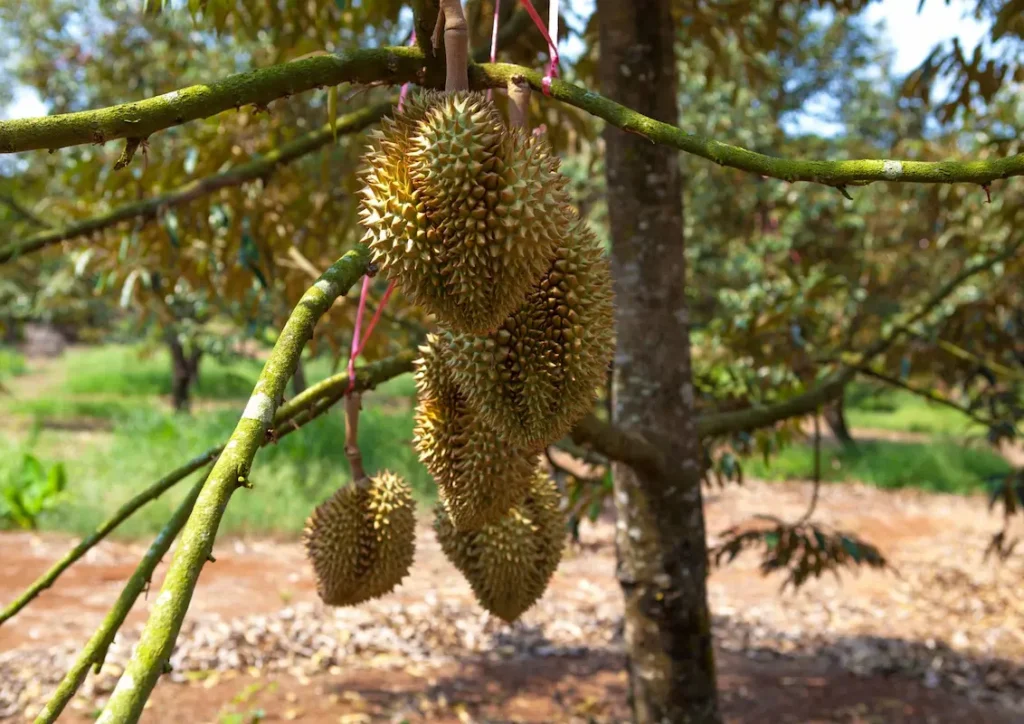
The nets are not decoration. A ripe durian falls without warning.
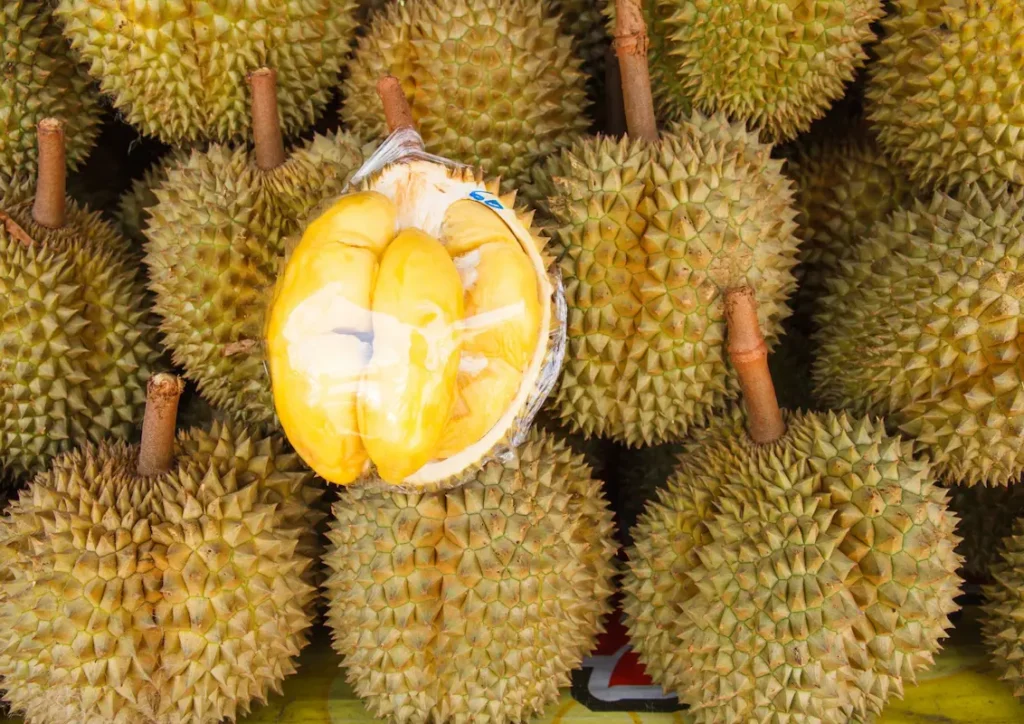
Inside the shell: custard-colored segments around large seeds.
How Do You Say Durian in Khmer?
The Khmer word for durian is ទុរេន, pronounced roughly tu-ren. Say it at any fruit stall and you will be understood; the sellers hear it all day in season. If the spelling looks intimidating, pointing works too. The pile of spiky green shells is never hard to find.
Why Is Durian Called the King of Fruits?
Partly status, partly price. Durian costs more than any other fruit in a Cambodian market, and the reasons are in the orchard. The trees demand very specific conditions, they are vulnerable to pests and disease, and the harvest is dangerous enough that farmers string strong nets between the trees. The nets catch the falling fruit and keep scavengers off. They also stop a two-kilogram spiked shell from landing on somebody.
Limited growing land does the rest. Cambodian durian comes mainly from Kampot, Kampong Cham, and the country around Battambang. It does not grow around Siem Reap; everything in our markets travels up from those provinces.
What Does It Taste and Smell Like?
Honest answer first: the smell is a real obstacle. The sulfur compounds in ripe durian read as rotten onion to some noses, and several countries ban the fruit on public transport and in hotels because of it. If your first encounter is a whole ripe durian on a hot afternoon, it may also be your last.
The taste is a different story. Sweet like caramel custard, with a faint bitterness in the best fruit, and hints of almond and vanilla. The gap between how durian smells and how it tastes is the whole mystery of the fruit. Nobody closes that gap by sniffing at it. You close it by eating some.
Cambodian Durian: Varieties and Season
Two names dominate Cambodian stalls: Man Tong, prized for its creamy, robust flesh, and Jouhot, which balances sweetness against a gentle bitterness. Kampot growers start harvesting first, from around late April, and the season runs through July across the growing provinces. June is the safe month to plan around if tasting durian is on your list.
How to Try Durian for the First Time
My rule for first-timers is simple: do not start with a whole fruit. Buy a single wrapped segment at the market, or better, start with a durian smoothie or durian sticky rice, where the flavor arrives without the full force of the smell. Cambodian kitchens use durian mostly in sweets, and those sweets are the gentlest door in.
If you would rather have someone beside you for the first taste, our Siem Reap food tours put a guide between you and the menu. And if you want the wider story of Khmer eating, start with our guide to the best Cambodian food.
Durian Myths
The most persistent one says durian and alcohol together can kill you. The truth is smaller: durian is high in sulfur compounds that slow how your body processes alcohol, so the combination can make you feel worse than either alone. Moderate amounts of both are generally safe. Skip the durian-and-beer contest anyway.
FAQ: Durian in Cambodia
What is durian called in Khmer?
ទុរេន, romanized turen. The word is understood at every market in the country.
When is durian season in Cambodia?
Roughly May to July. Kampot orchards start earliest, from late April, and Kampong Cham runs into July.
Why does durian smell so strong?
A mix of sulfur compounds in the ripe flesh. The same chemistry that creates the smell contributes to the flavor.
Can you eat durian fresh?
Yes. Most Cambodians eat it straight from the shell. First-timers usually do better starting with a smoothie or durian sticky rice.
Why is durian banned in some places?
The smell lingers in closed spaces, so buses, trains, hotels, and airports across Southeast Asia commonly ban it. Eat it outdoors and nobody minds.
Is durian bad for you?
It is nutritious but heavy in calories, and a few people react badly to it. Try a small amount the first time.
Durian rewards the traveler who pushes past the first impression. Come in June, learn one word, ទុរេន, and let a market seller pick the fruit. That is the whole method.